
Why Do Great Earnings Sometimes Make Stocks Fall?
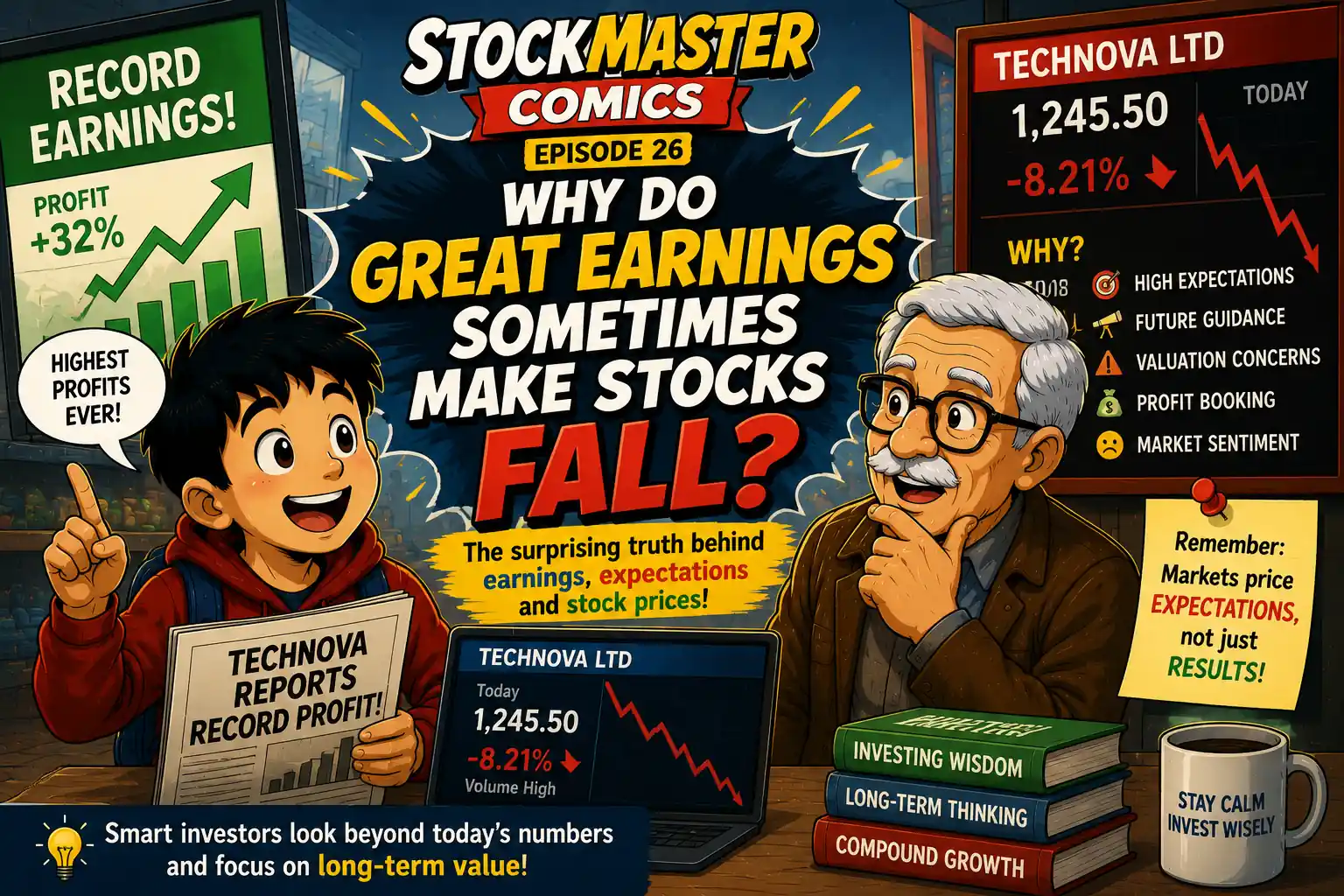
Introduction
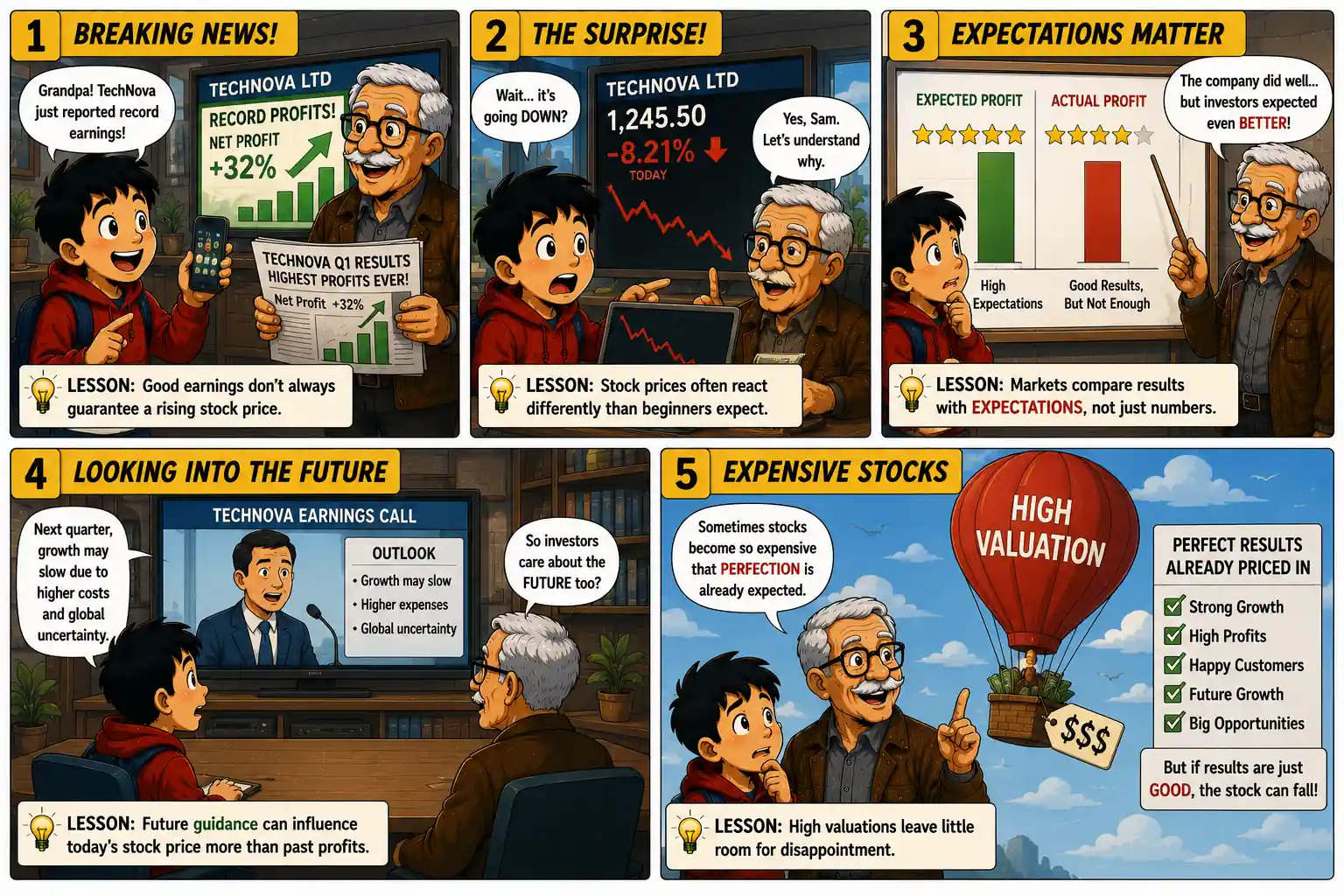
Sam rushes into Grandpa Ben’s house with a big smile.
“Grandpa! I just read that TechNova reported its highest profits ever. Their earnings beat everyone’s expectations! The stock must be soaring today!”
Grandpa Ben checks the market on his tablet and smiles.
“Actually, Sam… the stock is down 8%.”
Sam’s eyes widen.
“That doesn’t make any sense! If the company made more money than ever, why are investors selling?”
Grandpa Ben replies, “That’s one of the biggest surprises for new investors. A company’s earnings and its stock price don’t always move in the same direction.”
He explains that the stock market doesn’t reward companies simply for making profits. Instead, investors compare the results with what they were already expecting. If everyone believed the company would perform even better, then ‘great’ earnings might still disappoint the market.
Together, Sam and Grandpa Ben explore how expectations, future guidance, expensive valuations, and profit booking can all influence share prices. Sam soon discovers that the stock market is like a giant voting machine, constantly comparing reality with expectations rather than reacting only to headlines.
By the end of the lesson, Sam learns one of the most valuable investing principles: A wonderful business can report excellent earnings, yet its stock price may still fall if investors expected even more.
Lesson Summary
Earnings Are Compared with Expectations
When a company reports earnings, investors don't simply ask whether profits increased. They compare the results with what analysts and the market expected before the announcement. If investors were expecting extraordinary growth, even excellent earnings may seem disappointing. That's why a company can announce record profits while its stock price falls. The market rewards businesses that perform better than expectations, not just businesses that report good numbers.
The Market Looks Forward
Stock prices represent expectations about the future, not just today's performance. Investors pay close attention to management's future guidance, new product plans, customer demand, and economic conditions. If a company warns that growth could slow next quarter, investors may sell the stock despite strong current earnings. The market constantly tries to estimate what will happen next rather than focusing only on the past.
Think Like a Long-Term Investor
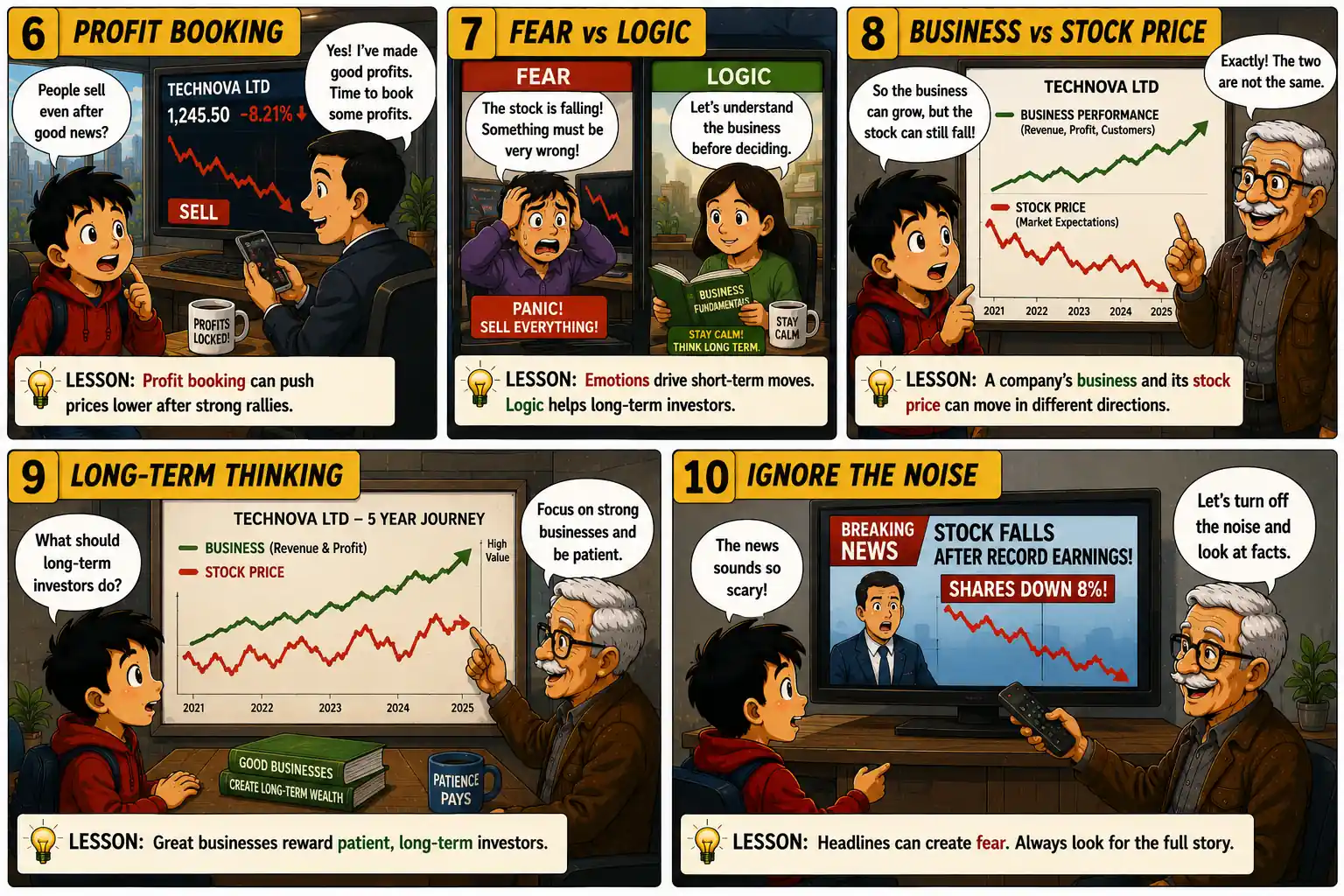
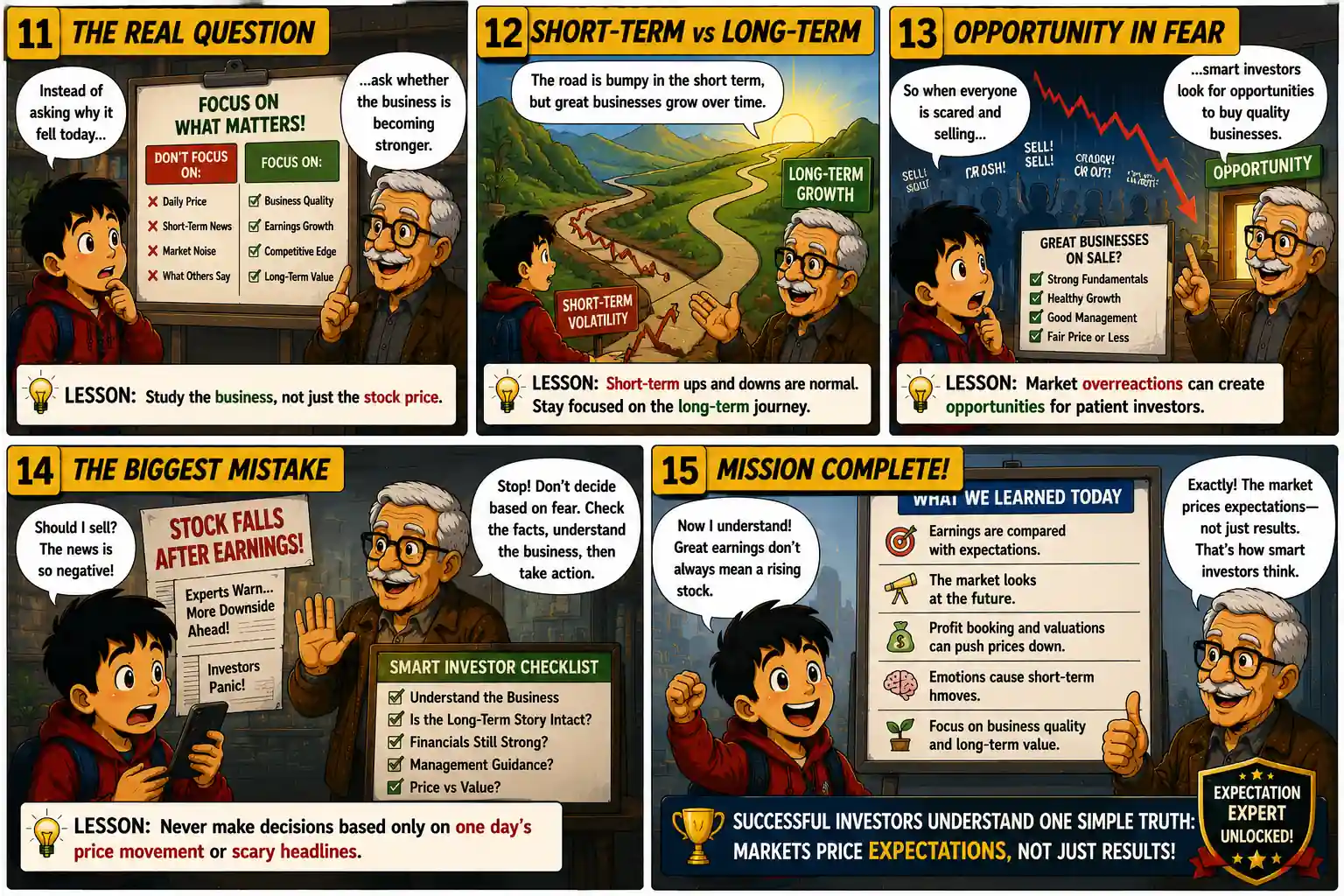
Daily price movements are influenced by expectations, profit booking, emotions, and news headlines. Long-term investors should avoid reacting to every market swing. Instead, they should ask whether the company continues to grow its business, serve customers well, innovate, and generate sustainable profits. Great businesses often experience temporary stock declines, but companies with strong fundamentals have the potential to create long-term value. Patience, discipline, and understanding market expectations are essential qualities of successful investors.
Key Takeaways
- Good earnings do not guarantee rising stock prices.
- Markets compare results with expectations.
- Future guidance is often more important than past profits.
- Profit booking can push prices lower after strong rallies.
- Headlines don’t always explain the full story.
- Long-term investors focus on business quality, not daily price movements.
Vocabulary
Earnings – A company’s profit over a specific period.
Expectations – What investors believe will happen.
Guidance – Management’s outlook for future performance.
Valuation – The market’s estimate of a company’s worth.
Profit Booking – Selling investments to lock in gains.
Volatility – Rapid changes in stock prices.
Smart Investor Tip
Don’t judge a company by one day’s stock movement. Understand whether the business itself is becoming stronger over time.
🏆 Achievement Badge Unlocked: Expectation Expert 📊🎯