Episode 30 – Debt Isn’t Always Bad

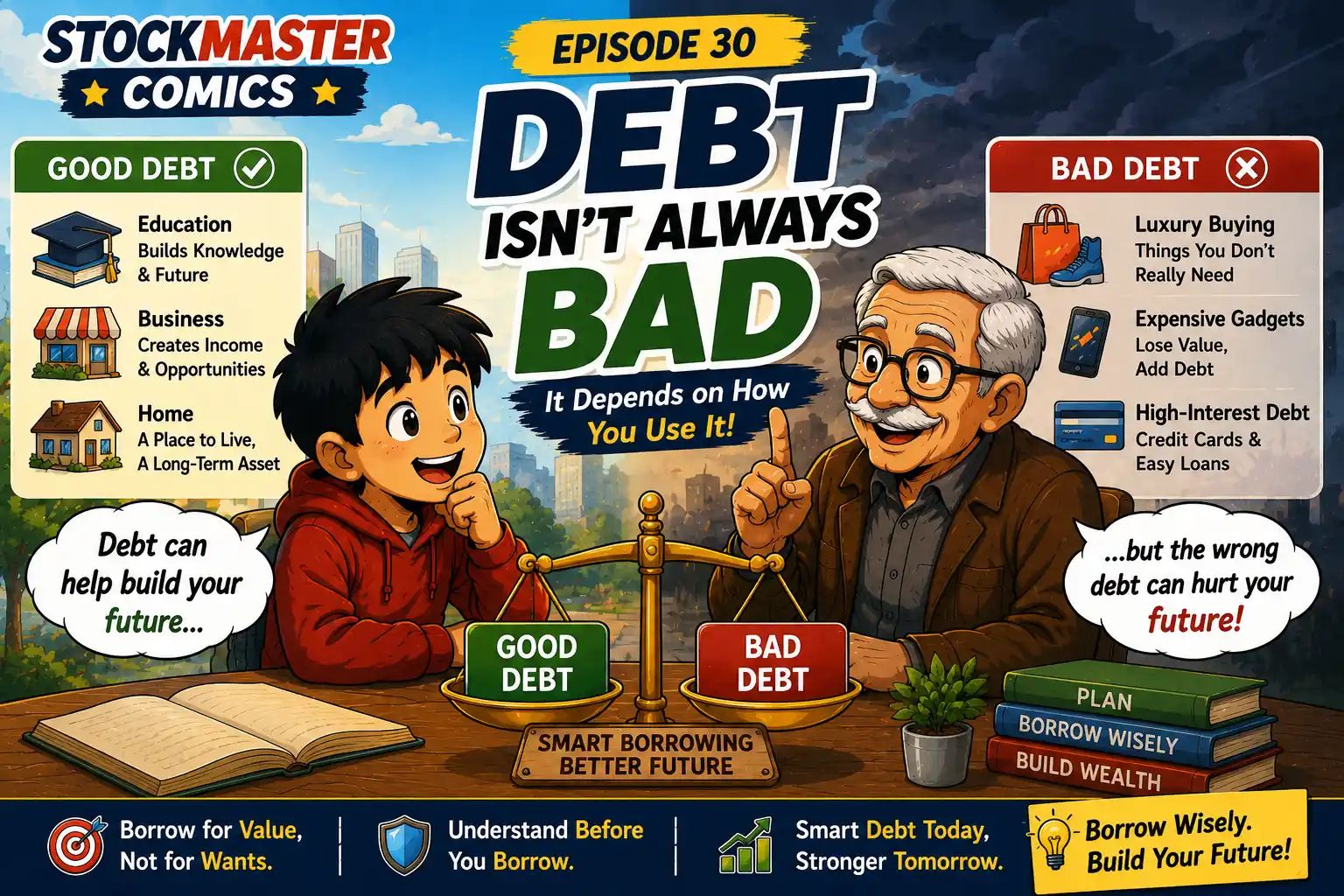
StockMaster Comics Episode 30 hero image explaining the difference between good debt and bad debt, featuring Sam and Grandpa Ben learning how smart borrowing can build long-term wealth.

Introduction

Sam has always heard one warning from adults: “Stay away from debt!” Whenever someone mentioned loans or borrowing money, it sounded like something dangerous. One afternoon, while walking through the town, Sam notices a new bakery opening next to Grandpa Ben’s favorite coffee shop. Curious, he asks the owner how she managed to build such a beautiful business.

To Sam’s surprise, the owner smiles and says, “I couldn’t have done it without a business loan.”

Sam is confused.

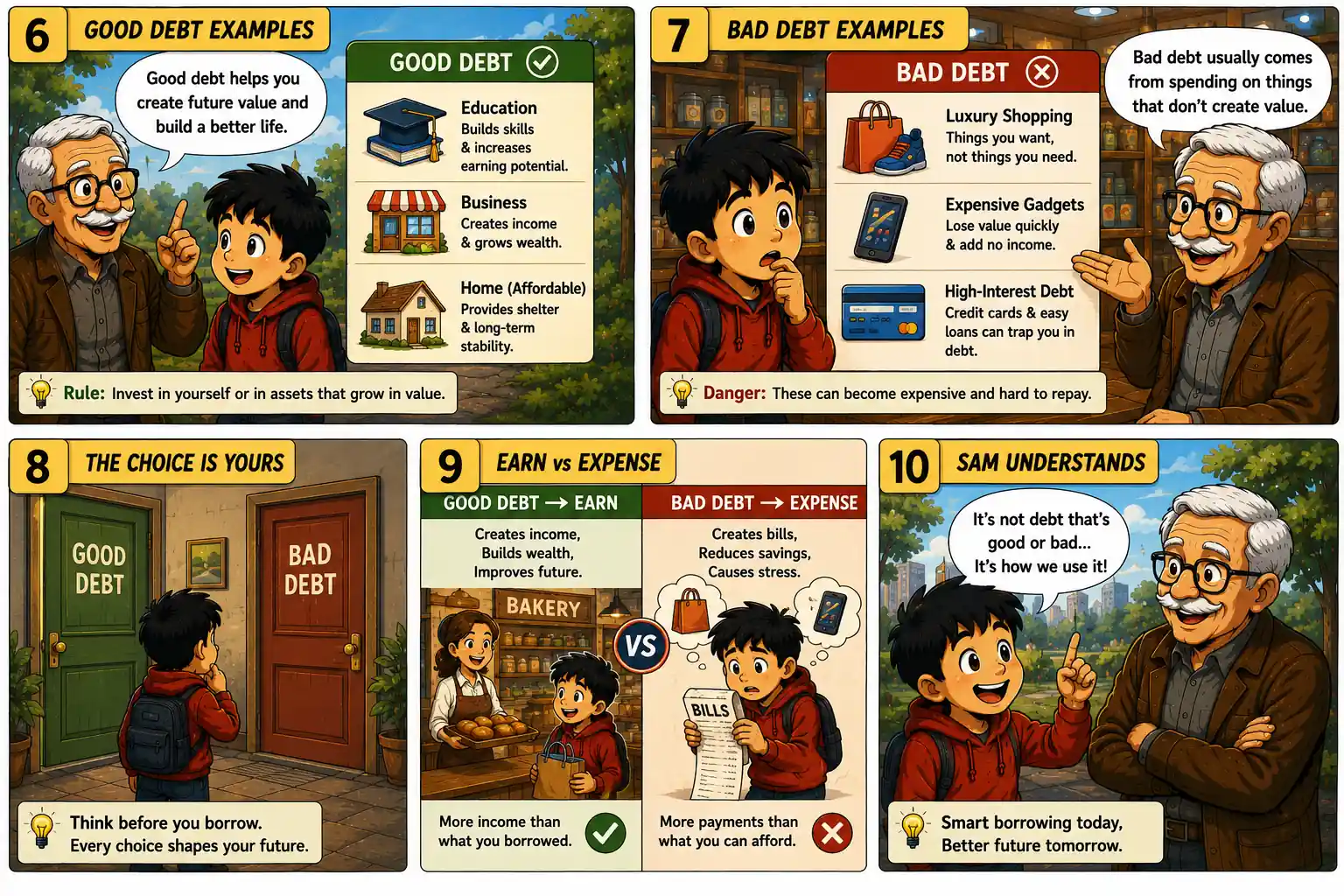
“If debt is bad, why would borrowing money help someone succeed?”

Grandpa Ben explains that debt is like fire. When used carefully, it can cook your food and keep you warm. When used carelessly, it can burn everything around you. The secret isn’t avoiding debt completely—it’s understanding when debt creates value and when it creates problems.

In this episode, you’ll discover why not all debt is the same. You’ll learn the difference between Good Debt that helps people build businesses, education, or homes, and Bad Debt that often comes from buying things we can’t afford or borrowing for unnecessary spending.

Let’s join Sam as he learns one of the biggest financial lessons every future investor should understand.
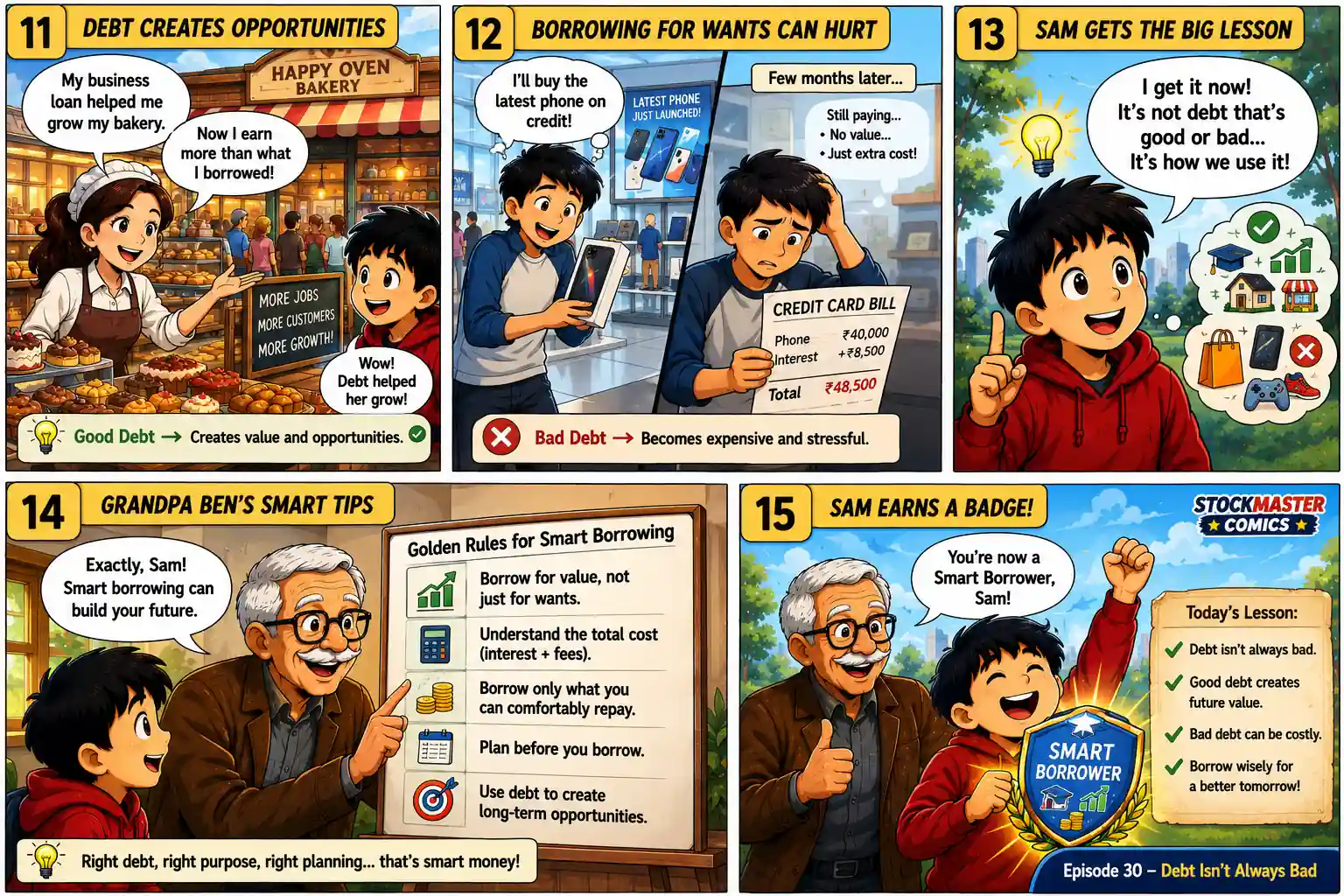
StockMaster Comics Episode 30 panels 1 to 5 showing Sam visiting a bakery and learning from Grandpa Ben that debt is like fire—it can help when used wisely and harm when used carelessly. StockMaster Comics Episode 30 panels 6 to 10 comparing good debt and bad debt with examples including education, business, home loans, luxury spending, and high-interest credit card debt. StockMaster Comics Episode 30 panels 11 to 15 showing real-life examples of good debt creating opportunities, bad debt creating financial stress, Grandpa Ben's smart borrowing rules, and Sam earning the Smart Borrower badge.

Lesson Summary

What Is Debt?

Debt means borrowing money that must usually be repaid according to agreed terms. Individuals, businesses, and governments all use debt for different purposes. Borrowing itself is not automatically good or bad. What matters is why the money is borrowed and whether the borrower can comfortably repay it.

Good Debt vs Bad Debt

Good debt is generally used to create future value or increase earning potential. Examples include financing education, starting or expanding a business, or purchasing a reasonably priced home that fits your budget. These decisions may help improve long-term financial stability. Bad debt often comes from borrowing to buy items that lose value quickly or from spending beyond your means. Examples include high-interest credit card balances, unnecessary luxury purchases, or borrowing for impulse spending. Such debt can become difficult to manage if repayments grow faster than your income.

Borrow Smart, Not Often

Before borrowing money, ask yourself three questions: Will this help me earn more or build value? Can I comfortably repay it? Am I borrowing because I need it or simply because I want it? Responsible borrowing starts with planning, budgeting, and understanding the costs involved. The goal isn't to avoid debt completely but to make informed financial decisions.

Key Takeaways

  • Debt is not automatically good or bad.
  • Good debt can help create future opportunities.
  • Bad debt often comes from unnecessary spending.
  • Always understand repayment terms before borrowing.
  • Borrow only what you can comfortably repay.
  • Smart financial decisions focus on long-term value.

Vocabulary

Debt – Money borrowed that must be repaid.

Loan – Money borrowed from a lender under agreed terms.

Interest – The cost of borrowing money.

Credit – The ability to borrow money and repay it later.

Financial Responsibility – Managing money and borrowing wisely.

Smart Investor Tip

💡 Borrow to build opportunities, not just to buy things. Before taking on debt, understand the purpose, the costs, and how you’ll repay it. Responsible borrowing can support long-term goals, while unnecessary borrowing can make them harder to achieve.


Next Episode Preview

Episode 31 – Cash Is Oxygen

Sam visits a fast-growing business that is full of customers, but suddenly the owner looks worried. “We’re making sales every day,” the owner says, “but we’re running out of cash!” Sam is confused—how can a profitable business have no money? Join Grandpa Ben as he explains why cash is often called the oxygen of a business, how cash flow keeps a company alive, and why even successful companies can struggle if they run out of cash.

Coming next: Episode 31 – Cash Is Oxygen

Scroll to Top