
The Fed Wait Game: Why Do Stock Markets Get Nervous Before an Interest Rate Decision?
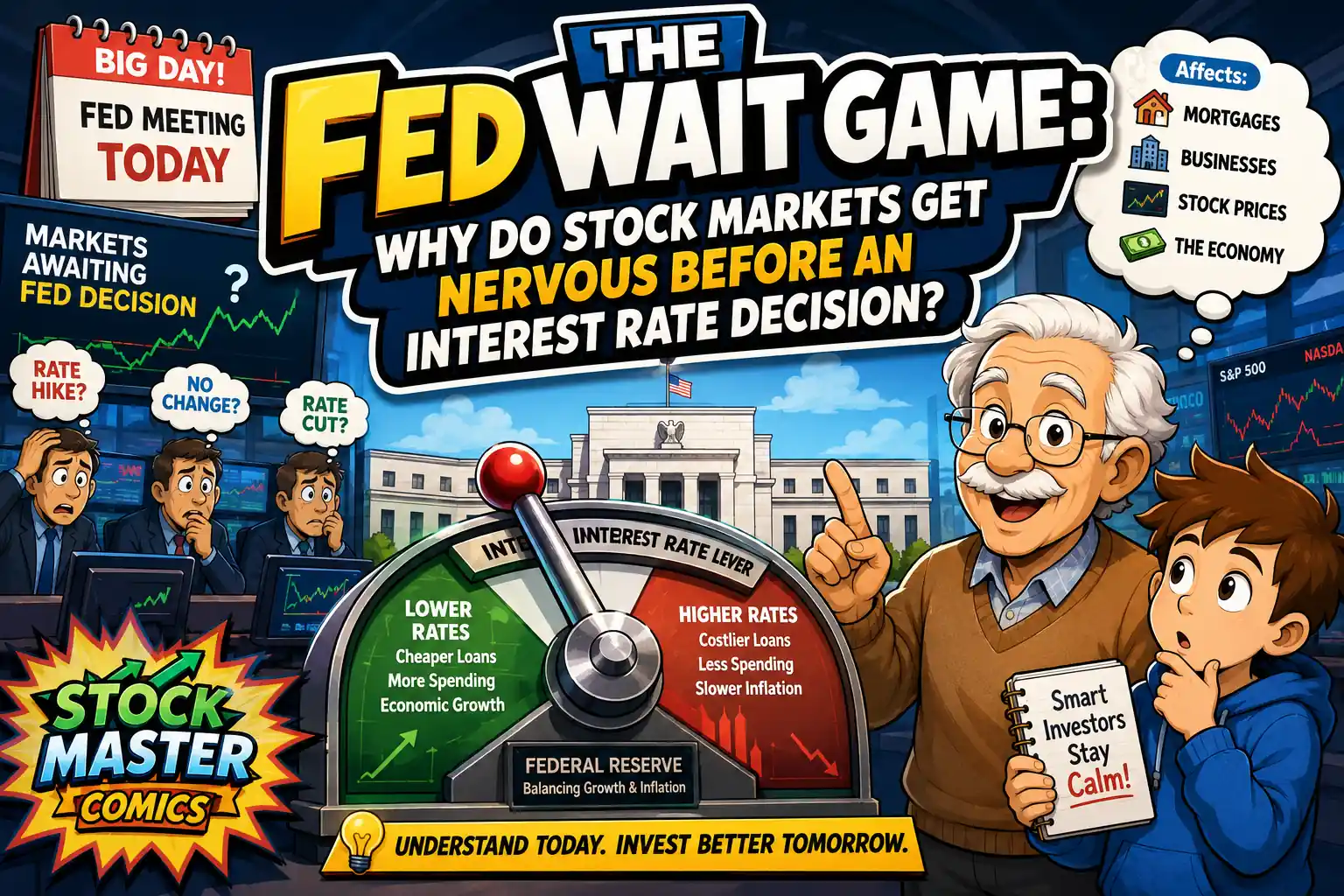
Introduction
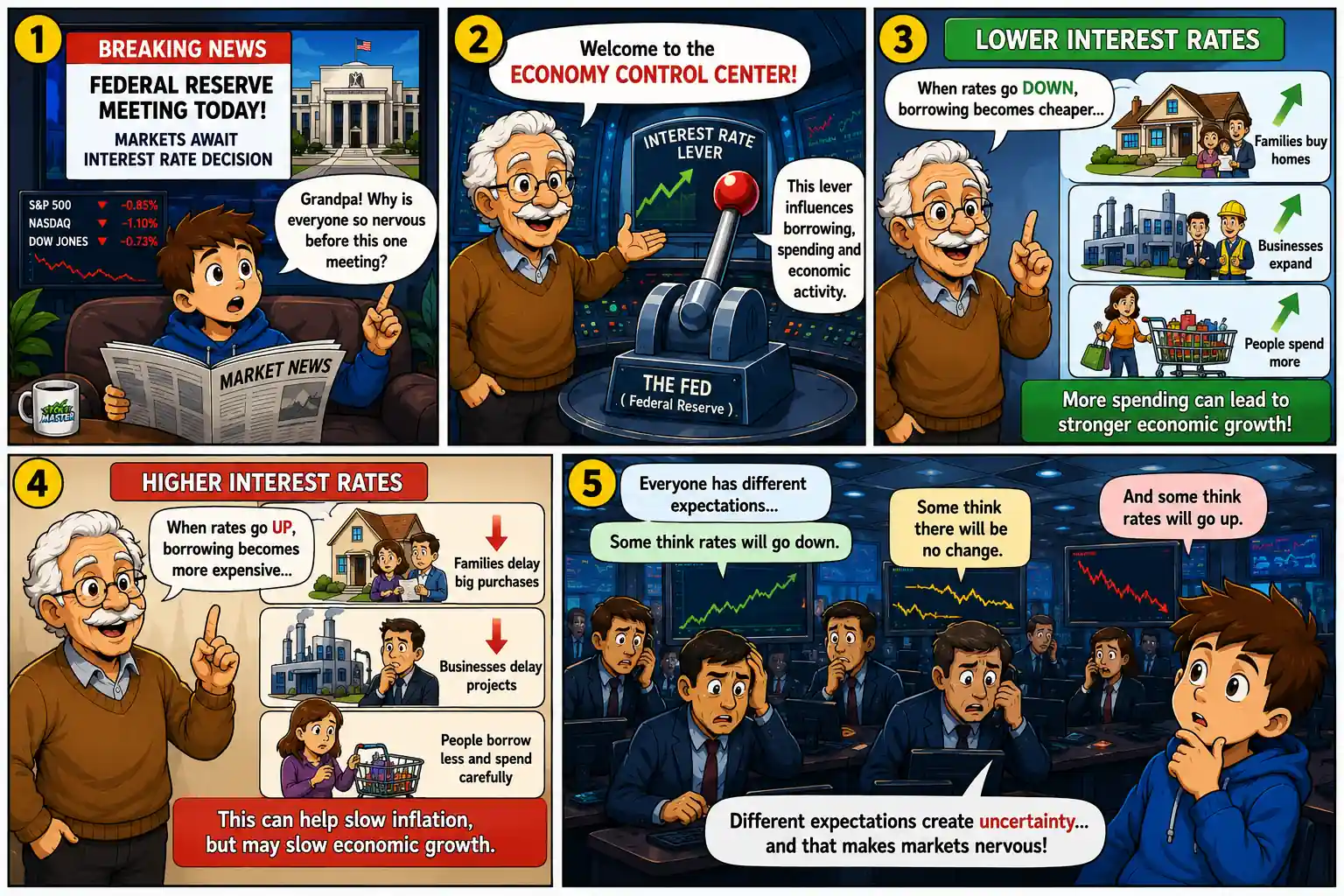
Sam notices that the stock market has become unusually quiet. News channels keep repeating the same headline:
“Investors Await the Federal Reserve Interest Rate Decision.”
Confused, Sam asks Grandpa Ben,
“Why is everyone waiting for one announcement? Nothing has happened yet!”
Grandpa Ben smiles.
“Sometimes the market moves because of what investors expect will happen, not because of what has already happened.”
He takes Sam to an imaginary control room called The Economy Control Center, where a giant lever controls interest rates.
Grandpa explains that when borrowing money becomes cheaper, families and businesses may spend and invest more. When borrowing becomes more expensive, spending often slows, helping reduce inflation.
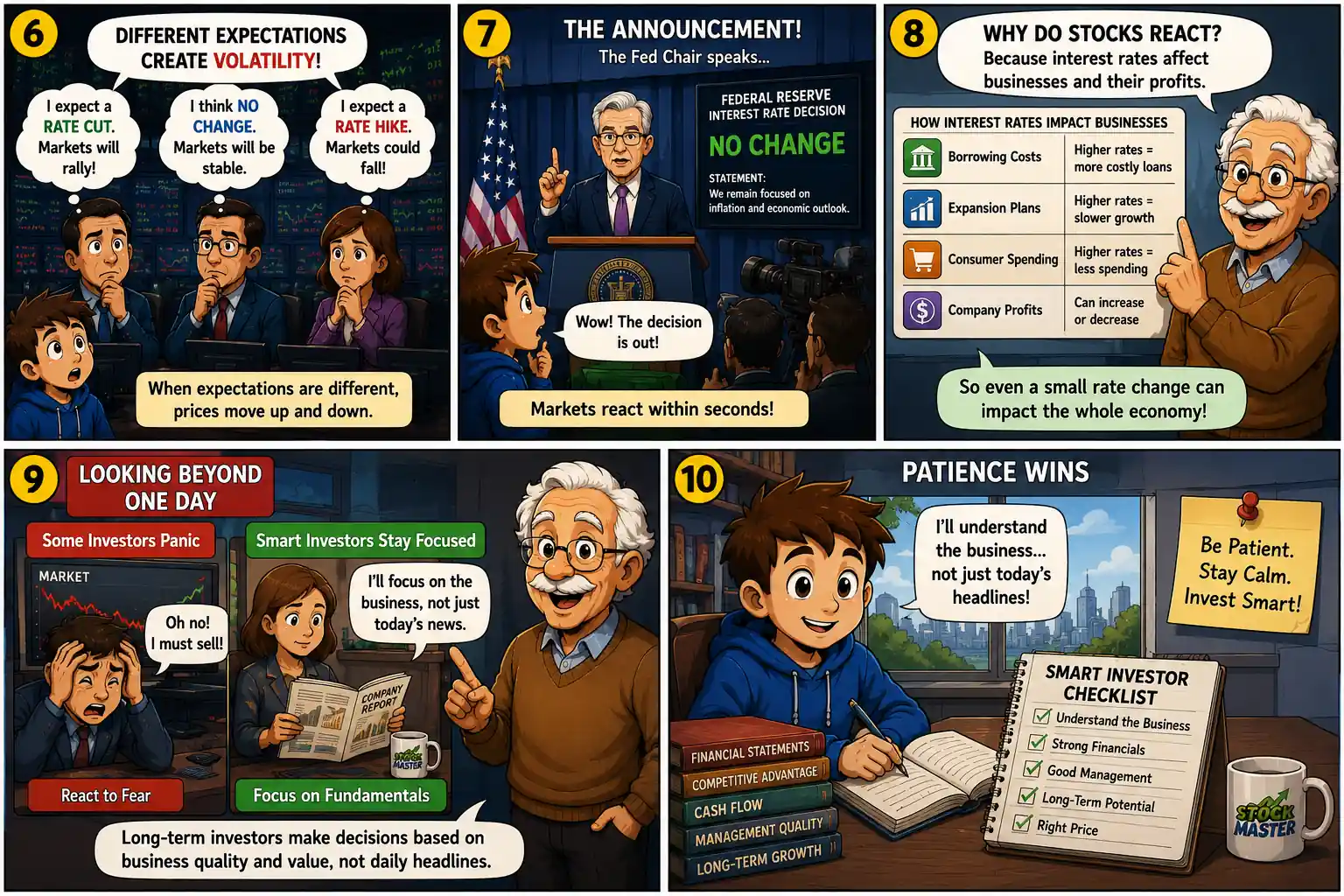
Because interest rates affect home loans, business expansion, company profits, and investor confidence, even a small decision by the Federal Reserve can influence markets around the world.
“But how do investors know what will happen?” Sam asks.
“They don’t,” Grandpa laughs. “That’s why markets become nervous before the announcement.”
Join Sam as he discovers why central-bank meetings attract worldwide attention and why successful investors stay calm while others panic over every headline.
Lesson Summary
What Does the Federal Reserve Do?
The Federal Reserve is the central bank of the United States. One of its key responsibilities is setting short-term interest rates. By raising or lowering rates, it aims to balance economic growth and inflation. Because the U.S. economy influences global finance, Fed decisions are watched by investors around the world.
Why Do Markets Become Nervous?
Before a rate decision, investors try to predict what the Fed will do. If expectations differ from the actual announcement, stock prices can move quickly. Markets often react not only to the decision itself but also to the Fed's comments about the future.
The Smart Investor's Lesson
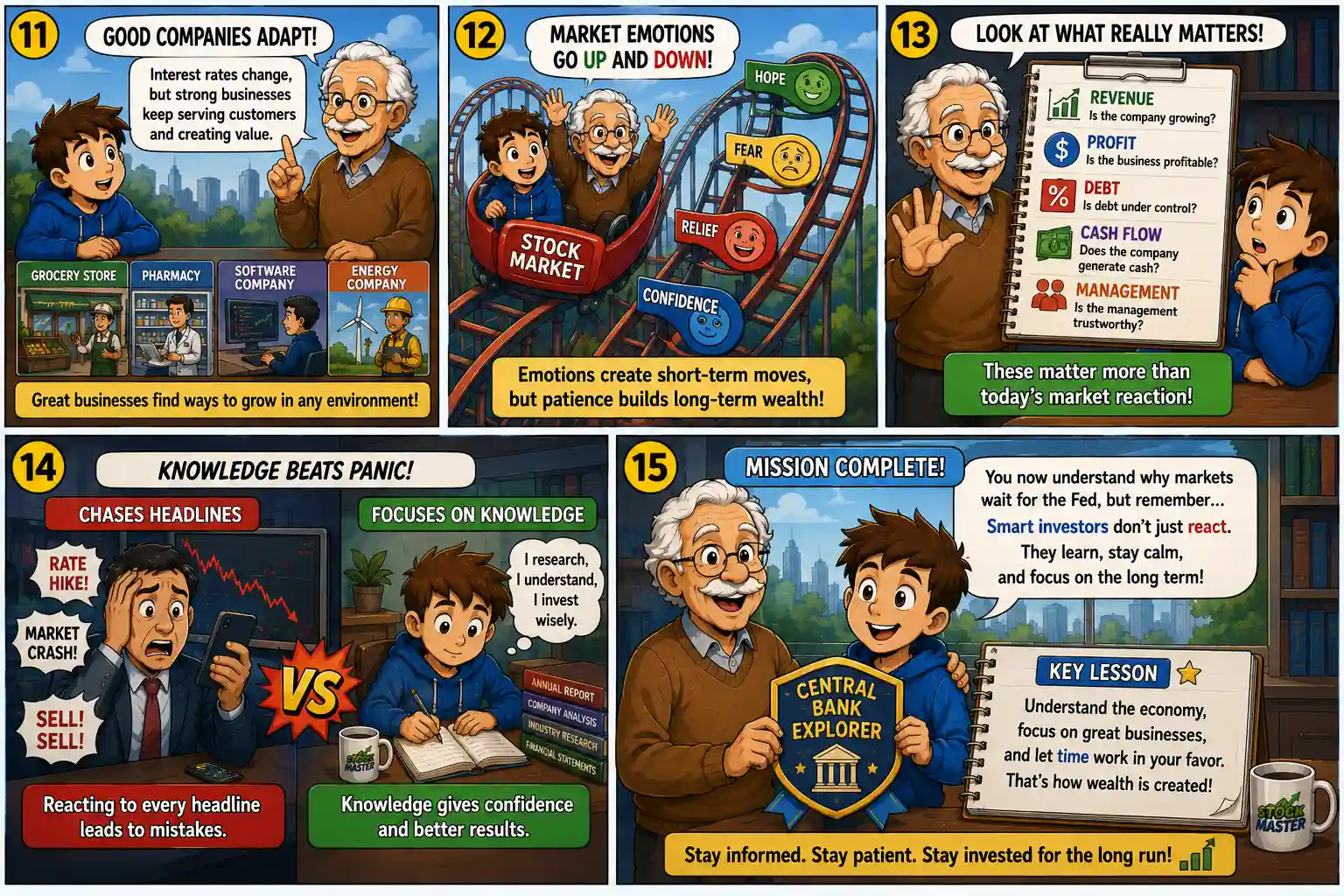
Successful investors understand that interest-rate decisions are part of the economic cycle. Instead of reacting emotionally to every announcement, they evaluate businesses based on their fundamentals, long-term growth prospects, and ability to perform through different market conditions.
Key Takeaways
- The Federal Reserve influences borrowing costs.
- Interest rates can affect businesses and stock markets.
- Markets dislike uncertainty.
- Expectations often move prices before the announcement.
- Long-term investors stay focused on business fundamentals.
Vocabulary
Federal Reserve (Fed) – The central bank of the United States.
Interest Rate – The cost of borrowing money.
Inflation – A general rise in prices over time.
Volatility – Large and rapid changes in market prices.
Central Bank – An institution that manages a country’s monetary policy.
Smart Investor Tip
🏦 Markets may react in minutes, but businesses are built over years. Don’t let one interest-rate announcement change a well-researched long-term investment plan.