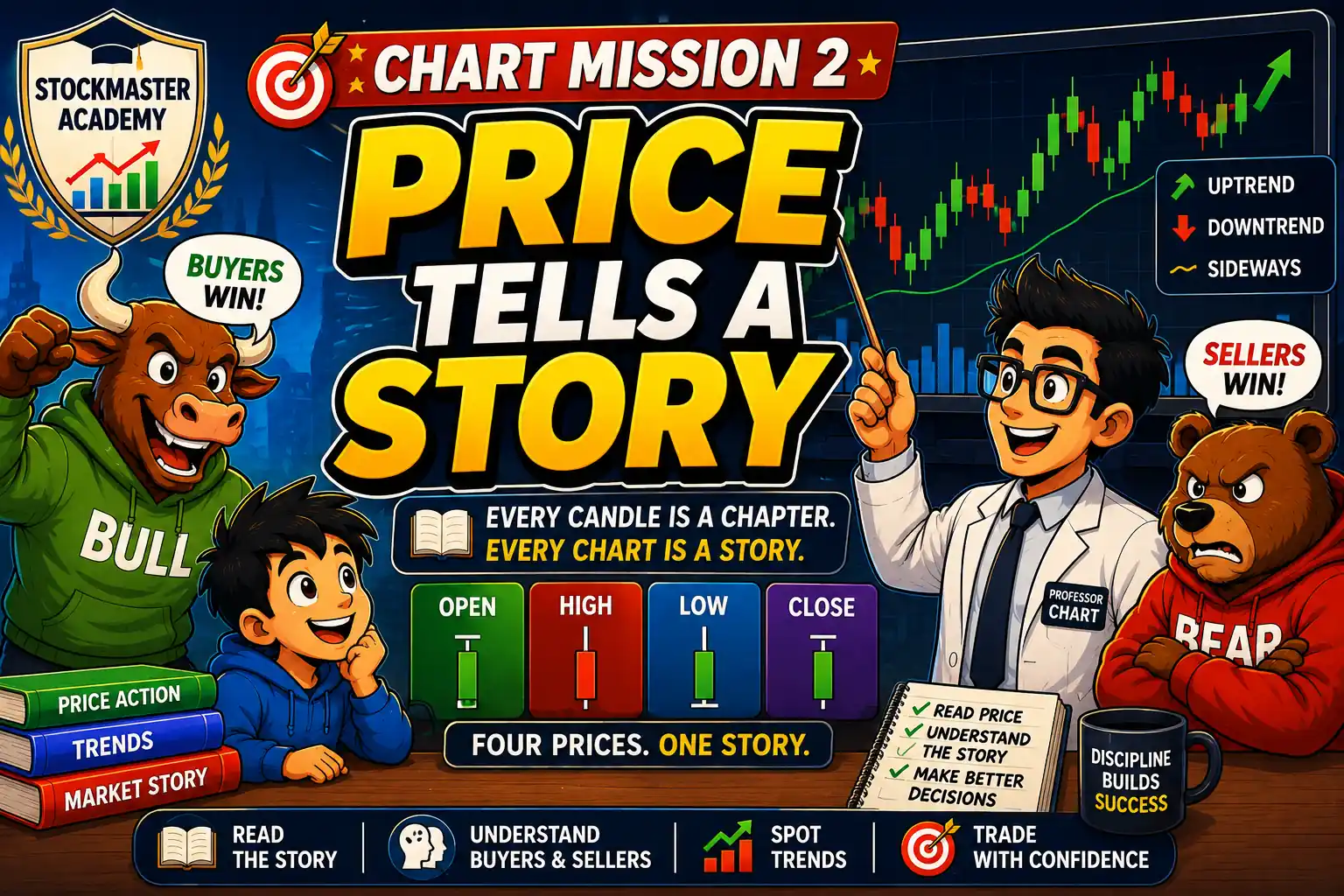
The most important lesson from this mission is that price is the foundation of technical analysis. Everything that happens in the stock market—company earnings, economic news, interest rate changes, investor expectations, and market sentiment—is ultimately reflected in the price of a stock. This is why technical analysts always begin by studying price before looking at any indicators or opinions.
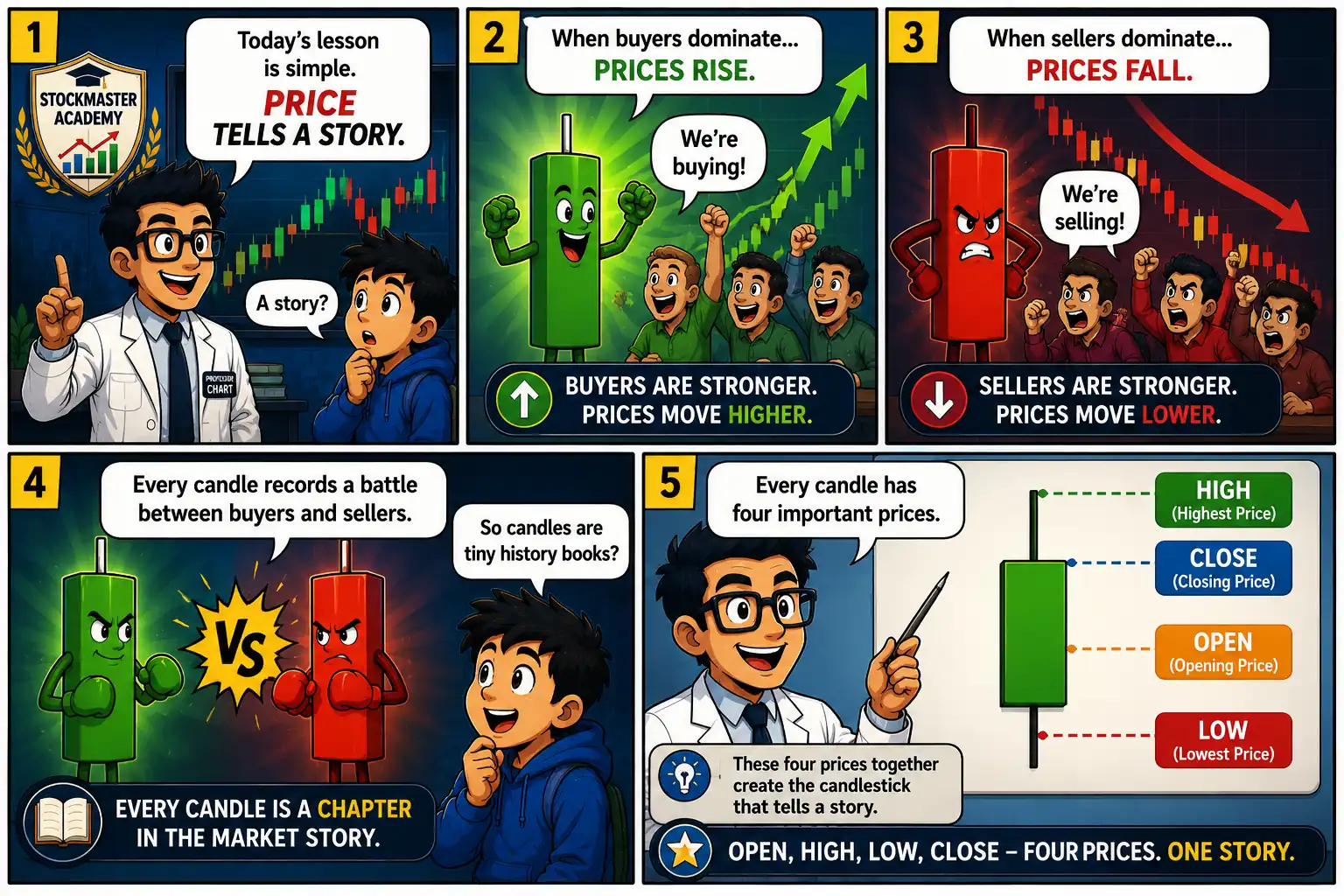
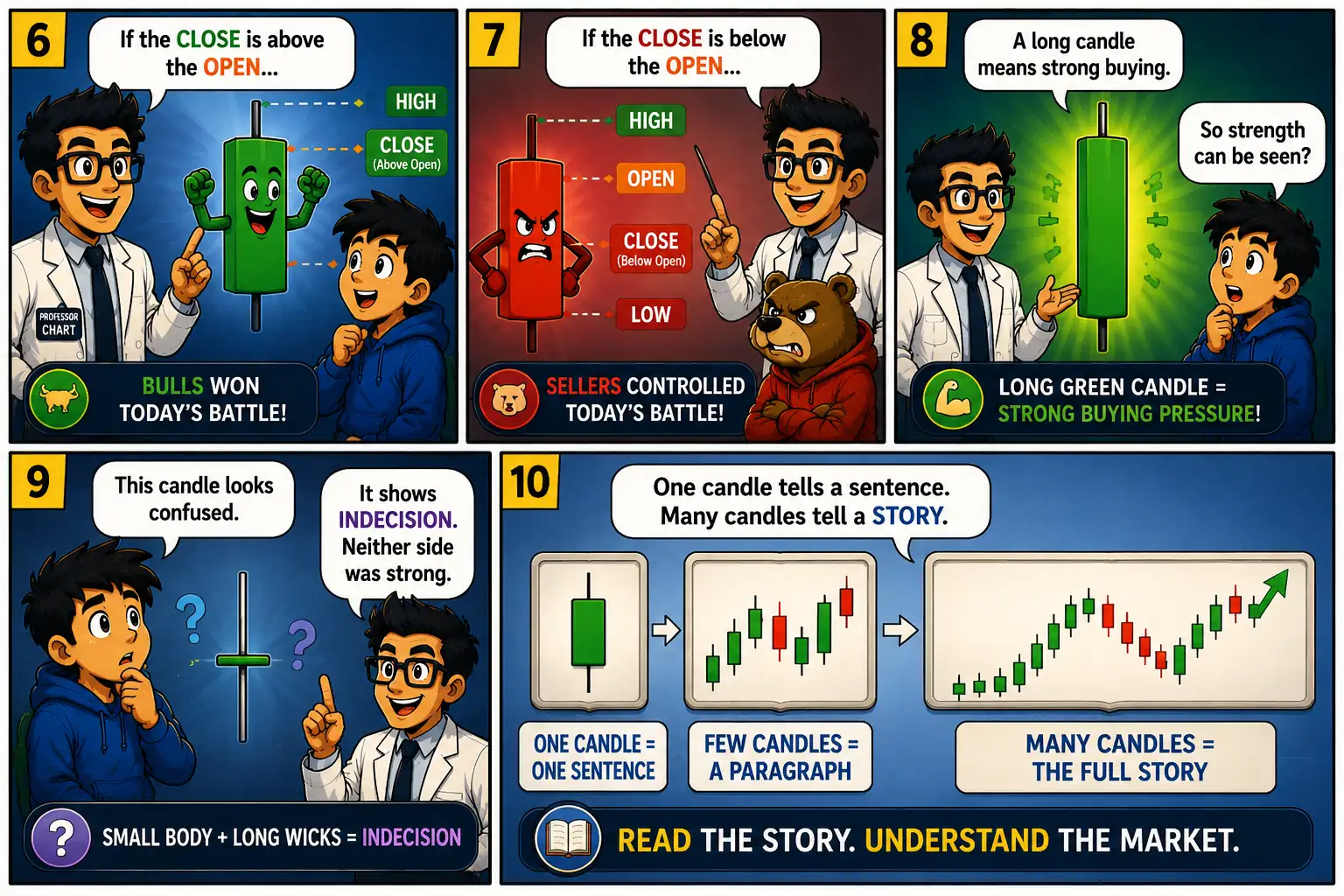
A candlestick is much more than a colorful shape on a chart. It records four important pieces of information: the Open, High, Low, and Close prices during a specific period. Together, these values tell us how buyers and sellers interacted throughout that session. If buyers gained control and pushed prices higher, the candle usually closes above its opening price. If sellers dominated, the candle typically closes lower. By studying these candles, traders can understand which side had greater strength.
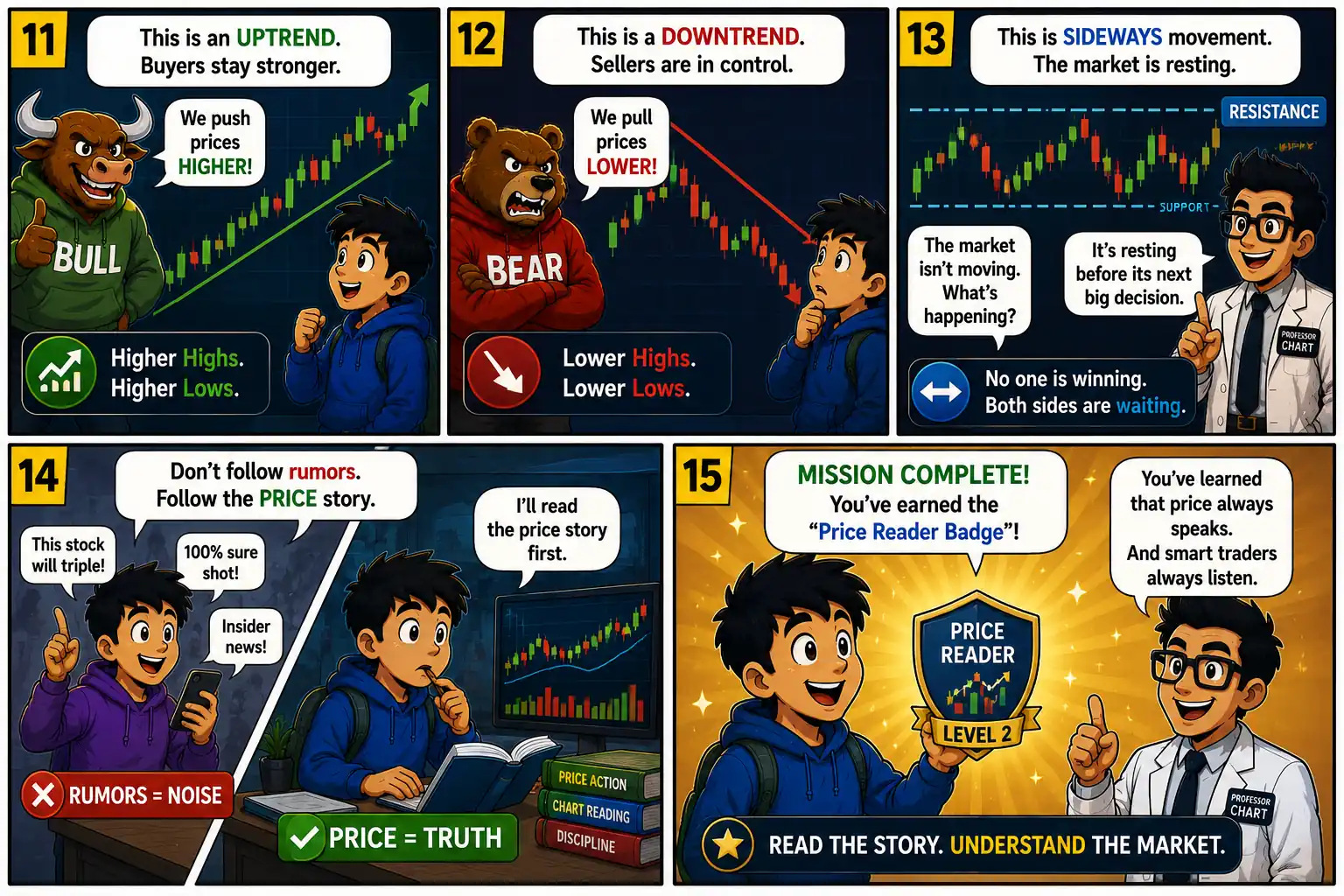
However, one candlestick tells only a small part of the story. Just as a single page cannot explain an entire novel, one candle cannot explain the complete market picture. When multiple candles are viewed together, they begin to reveal patterns, trends, momentum, and changes in market behavior. A series of higher highs and higher lows often signals an uptrend, while lower highs and lower lows may indicate a downtrend. Sideways movement can suggest that buyers and sellers are evenly matched, waiting for fresh information before making their next move.
This mission also highlights an important habit shared by successful traders: they trust price more than rumors. News headlines, television discussions, and social media posts can influence emotions, but price reflects the actual decisions made by millions of participants buying and selling in real time. Rather than asking, “What are people saying?” experienced traders ask, “What is the price telling me?”
Understanding price does not guarantee perfect predictions. Markets are influenced by many factors and can always surprise participants. Instead, reading price helps traders make more informed decisions by understanding probabilities rather than certainties. It encourages discipline, patience, and objective thinking instead of emotional reactions.
As you continue through the Chart Mission series, remember one simple rule:
The market may speak many languages, but price is its clearest voice. Learn to read it carefully, and every chart will begin to tell a meaningful story.