
JetBlue Stock in Focus: Why Investors Are Talking About Financial Pressure and Chapter 11
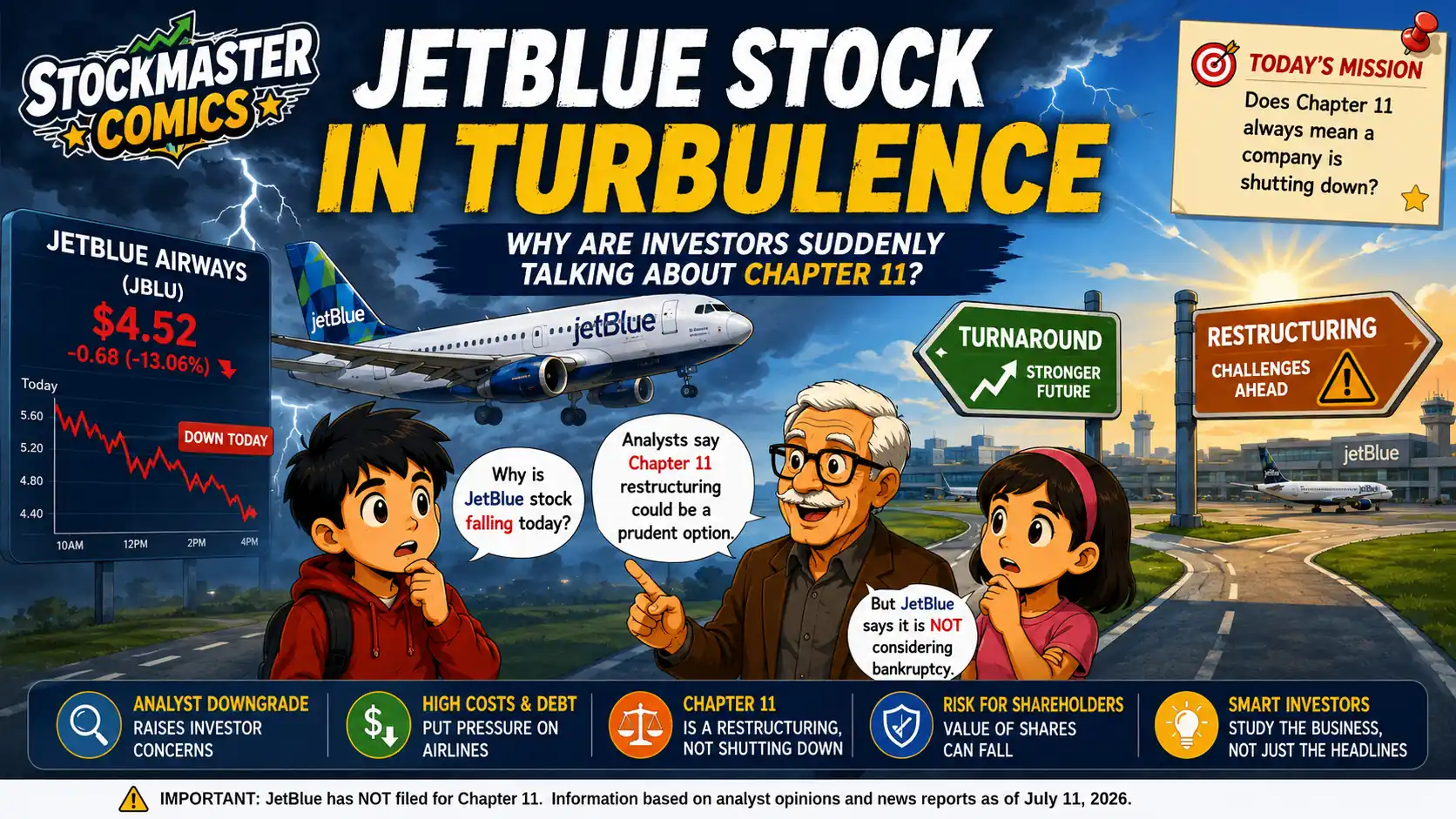
JetBlue Airways has become a hot topic among investors as concerns about the airline’s financial position, competitive pressures, and restructuring possibilities attract growing attention. The discussion has raised an important question: What happens to a company—and its shareholders—when financial pressure becomes severe?
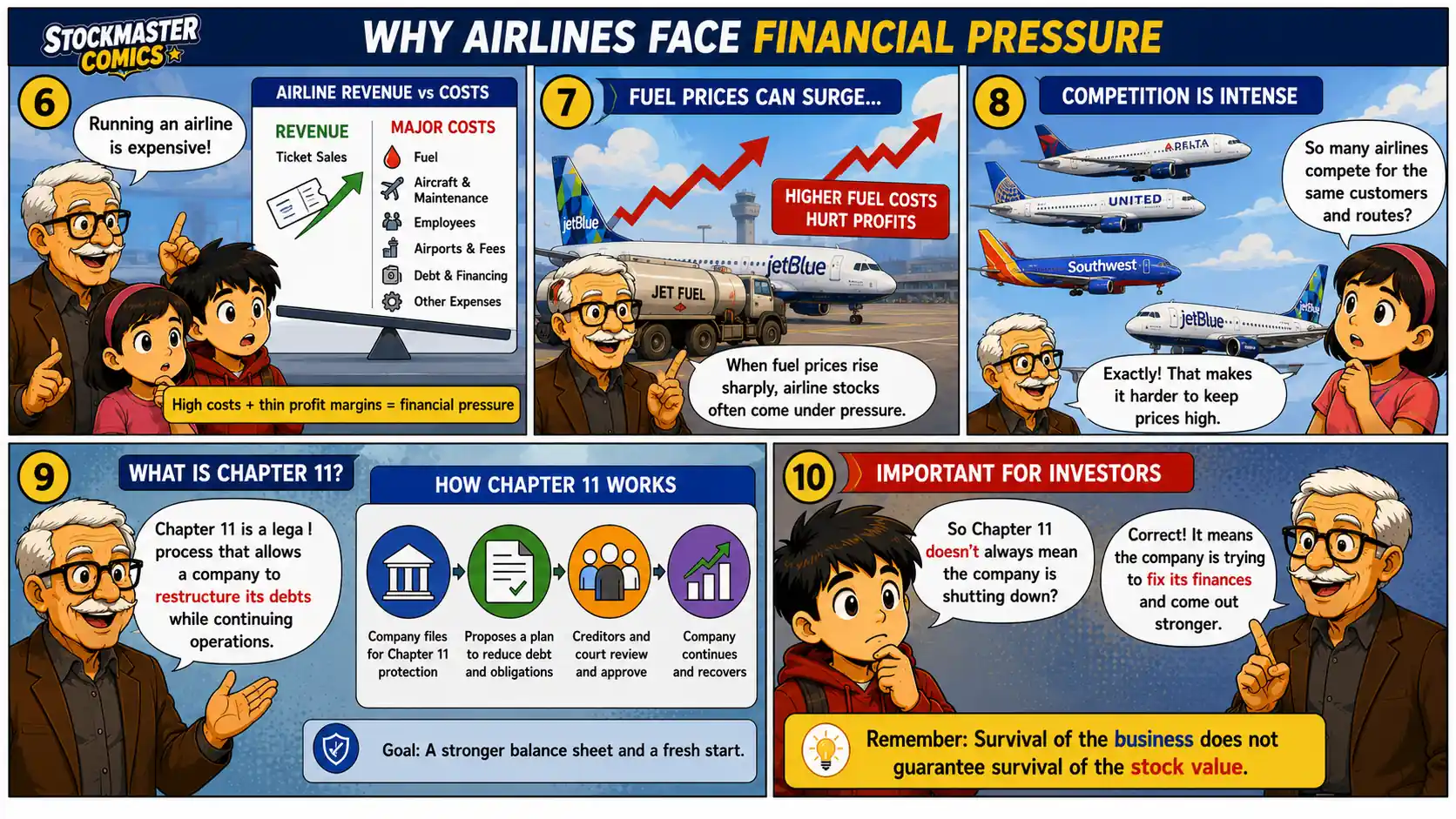
Airlines operate in one of the most challenging industries. Fuel costs, aircraft expenses, employee wages, debt, airport fees, and intense competition can quickly affect profitability. Even a well-known brand can face serious financial difficulties when costs remain high and profits come under pressure.
In this StockMaster Comics special, we use the current interest surrounding JetBlue as an educational case study to explain how airline economics work, what Chapter 11 restructuring means, and why a company surviving financial difficulties does not necessarily guarantee that existing shareholders will avoid losses.
The most important lesson for investors is simple: a famous brand or a low stock price does not automatically make a stock a good investment. Smart investors look beyond headlines and study debt, cash flow, profitability, competition, and other risks before making a decision.

What Happened to JetBlue — and What Can Investors Learn?
What Happened?
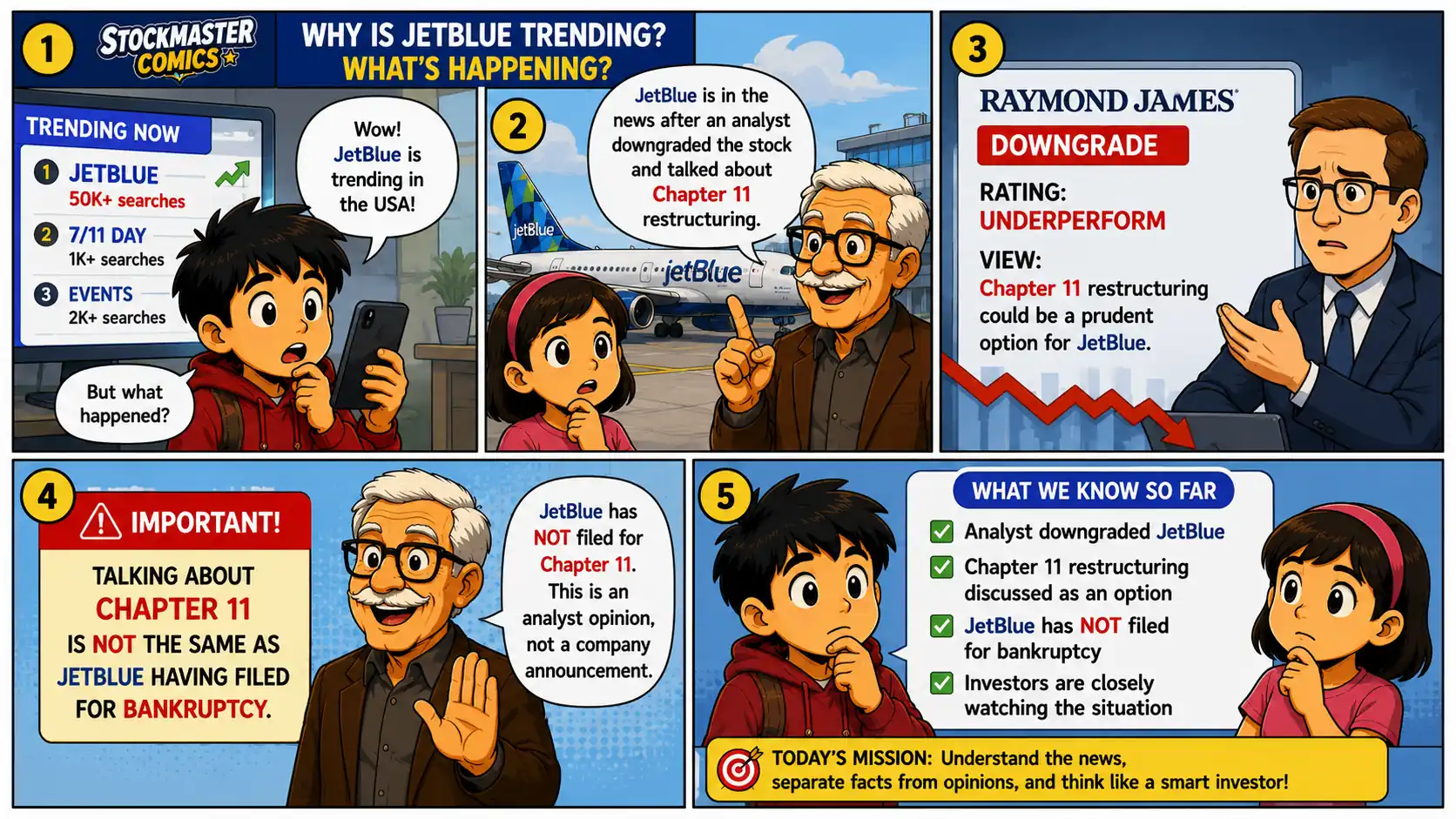
JetBlue Airways suddenly became a major topic of investor attention after Raymond James downgraded the airline’s stock to Underperform. The analysts argued that although JetBlue was not expected to face an immediate liquidity crisis in 2026, restructuring its capital structure through Chapter 11 could potentially be a prudent option. That analyst opinion helped bring JetBlue’s financial position and the risks facing existing shareholders into the spotlight.
An important distinction must be made: an analyst discussing Chapter 11 does not mean JetBlue has filed for bankruptcy. In April 2026, CEO Joanna Geraghty told employees that the airline was not considering a bankruptcy filing that year and pointed to its liquidity and access to additional capital.
The result is a situation investors often encounter in the stock market: two different views of the same company. Management may believe its turnaround strategy can succeed, while outside analysts may see serious risks in the company’s financial structure. The stock market constantly weighs these competing expectations.
Why Does This Matter?
Airlines are difficult businesses to operate. They face enormous expenses, including aircraft, maintenance, employees, airport operations and fuel. A sudden rise in fuel costs can significantly increase expenses, while competition can make it difficult to simply pass those higher costs on to passengers.
JetBlue entered 2026 continuing a turnaround strategy that began in 2024, including efforts to control costs and optimise its route network. At the same time, the airline faced financial pressure from higher fuel costs and its broader capital structure. The collapse of Spirit Airlines also created an opportunity for JetBlue to expand its position in Fort Lauderdale, showing how a company can face serious financial challenges and strategic opportunities simultaneously.
This is why investors should avoid thinking in simple terms such as “good news means buy” or “bad news means sell.” A company may gain market share while still carrying financial risks. It may have a famous brand and millions of customers while its stock remains highly speculative.
The Chapter 11 discussion is especially important for shareholders. Chapter 11 is generally designed to allow a company to reorganise while continuing operations. But the survival of the business does not necessarily mean the existing shares will retain their value. In a restructuring, existing shareholders can face severe losses.
Historical Context and the Investor Lesson
JetBlue’s current situation did not develop overnight. The airline industry has historically been vulnerable to recessions, fuel-price shocks, intense competition and high fixed costs. JetBlue itself has spent recent years trying to improve its operations and financial performance, while its proposed merger with Spirit Airlines was blocked in 2024. Its more recent strategy has included strengthening important markets and pursuing a turnaround.
The biggest lesson for investors is simple: a stock is ownership in a business, not just a ticker moving on a screen.
Before investing in a financially challenged company, investors should examine more than the share price. They should ask whether the business is profitable, how much debt it carries, whether it generates enough cash, what major costs could rise, and whether the company has sufficient financial flexibility to survive difficult periods.
JetBlue also demonstrates why a low share price does not automatically mean a stock is “cheap.” A stock trading at a few dollars can still carry substantial risk. Conversely, negative headlines alone do not prove that a company will fail.
The better approach is to separate facts, management statements, analyst opinions and speculation. In JetBlue’s case, the Chapter 11 idea currently discussed in the cited coverage is an analyst view—not an announced bankruptcy filing by the company. That distinction is essential.
Smart Investor Lesson: Never invest based only on a trending headline. Understand the business, study its financial condition, consider the risks, and distinguish between what has actually happened and what analysts believe might happen.
Disclaimer: This comic and article are created for educational and informational purposes only. They do not constitute financial, investment, legal, or professional advice. Any companies, stocks, prices, or market events mentioned are used for educational discussion. Always conduct your own research and consult a qualified financial professional before making investment decisions. Stock market investments involve risk, including the possible loss of principal.