Episode 12 – Bulls vs Bears

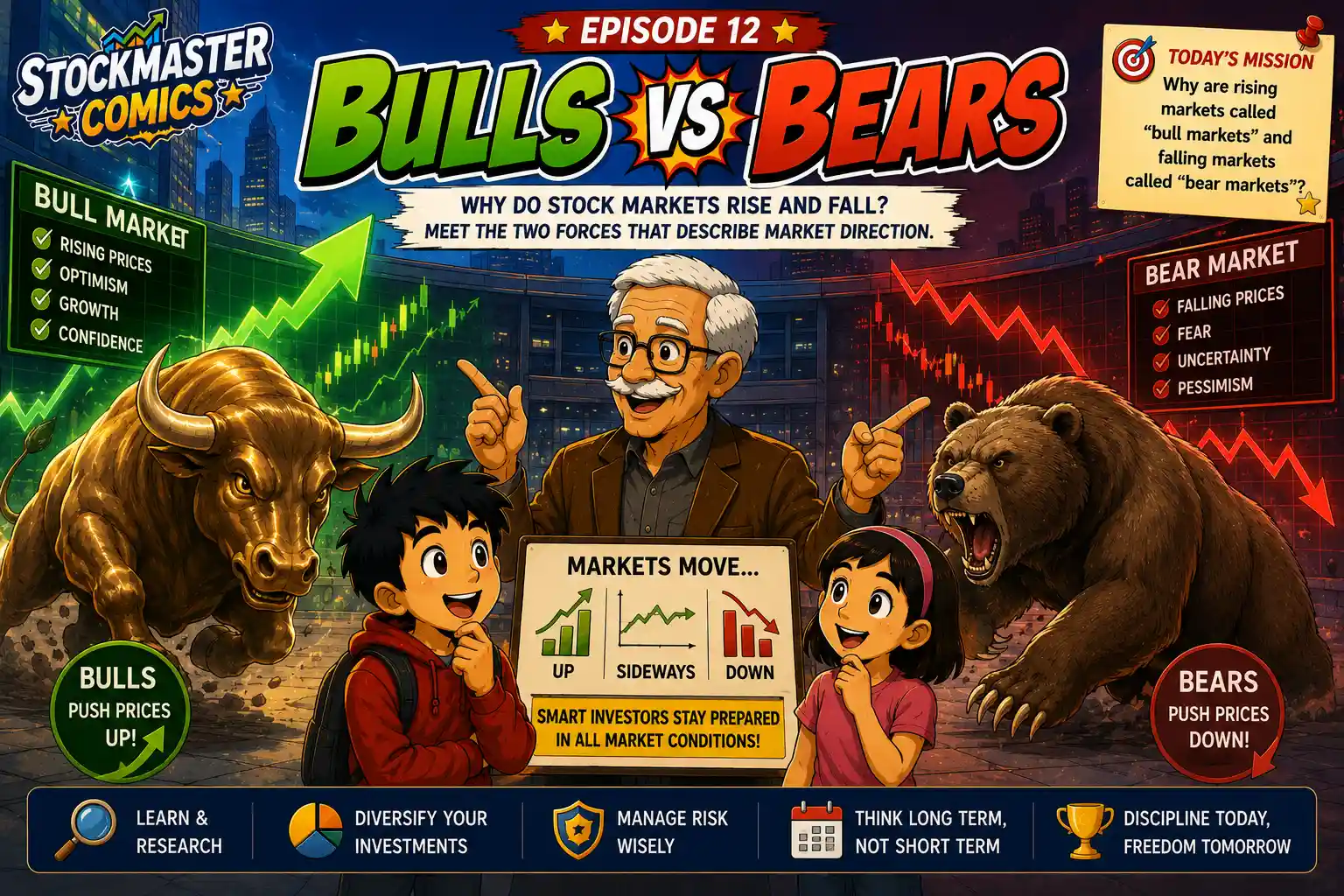
StockMaster Comics Episode 12 Bulls vs Bears hero image explaining bull and bear markets, rising and falling stock prices, market direction and smart investing.

Introduction

The stock market does not move in only one direction. Sometimes share prices rise for weeks, months, or even years. Investors become optimistic, businesses may grow, and confidence spreads through the market. At other times, prices fall, investors become worried, and uncertainty takes over.

To describe these two very different market conditions, investors use two famous animals: the bull and the bear.

A bull market generally describes a period when the overall market is rising strongly and investor confidence is high. A bear market generally describes a significant and sustained market decline, often associated with fear, economic uncertainty, or weaker expectations about the future.

But why a bull and a bear?

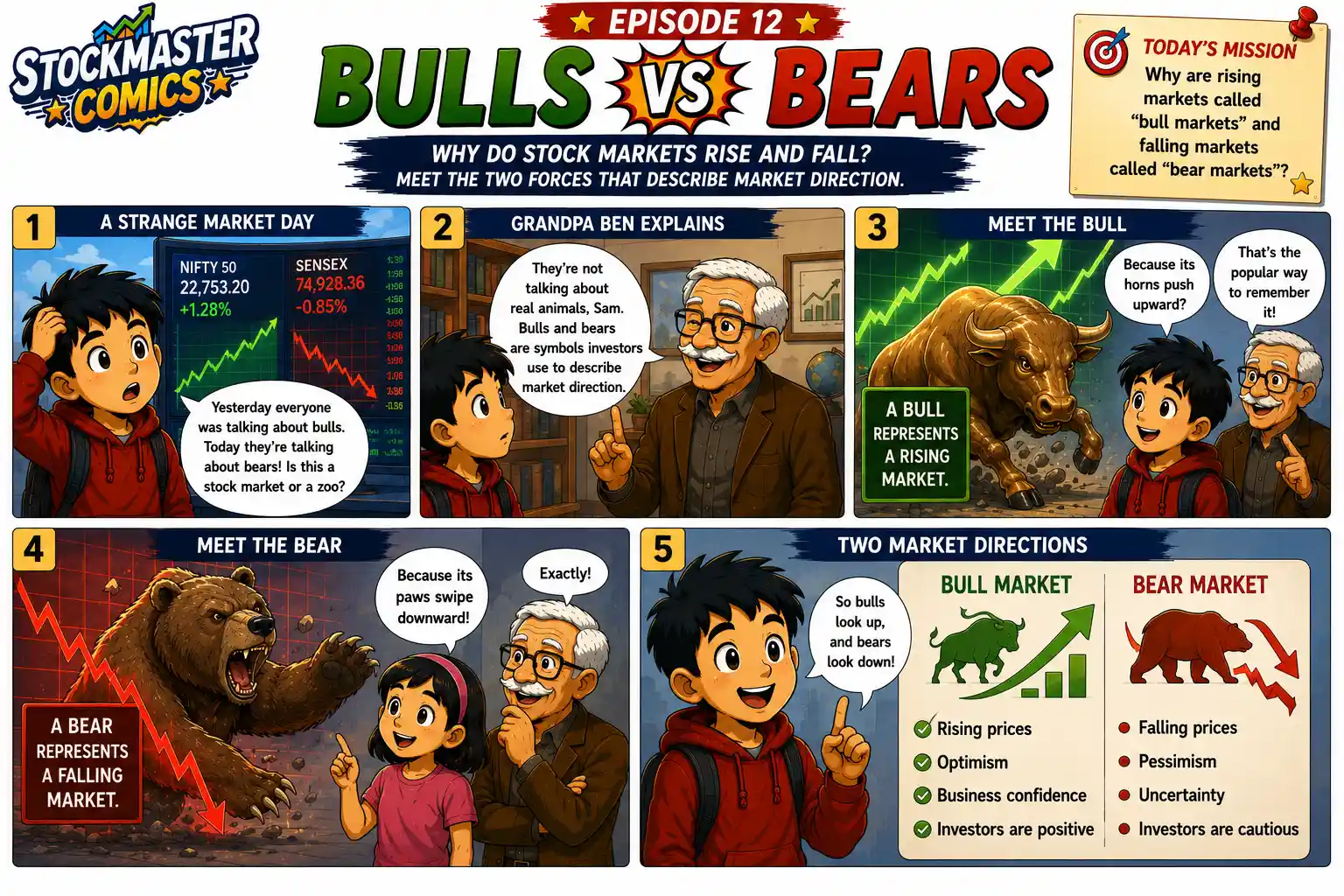
The popular explanation comes from the way the animals attack. A bull thrusts its horns upward, representing rising prices. A bear swipes its paws downward, representing falling prices.

However, markets are not always clearly bullish or bearish. Prices can move sideways, experience temporary corrections, or change direction unexpectedly. A rising market can eventually fall, and a falling market can eventually recover.

That is why smart investors do not try to predict every short-term market movement. They learn to understand businesses, manage risk, diversify their investments, and think about their long-term goals.

In this episode, Sam and Maya enter the exciting world of bulls and bears. They will discover why market sentiment changes, what can cause prices to rise or fall, and why fear and excitement should never replace careful research.

StockMaster Comics Bulls vs Bears panels 1–5 explaining the meaning of bull and bear markets, rising prices, falling prices, optimism and pessimism. StockMaster Comics Bulls vs Bears panels 6–10 showing how positive news and investor confidence can create bull markets while fear and increased selling can lead to bear markets. StockMaster Comics Bulls vs Bears panels 11–15 explaining investor emotions, market cycles, risk management, long-term investing and the importance of disciplined investment decisions.

Lesson Summary

What Is a Bull Market?

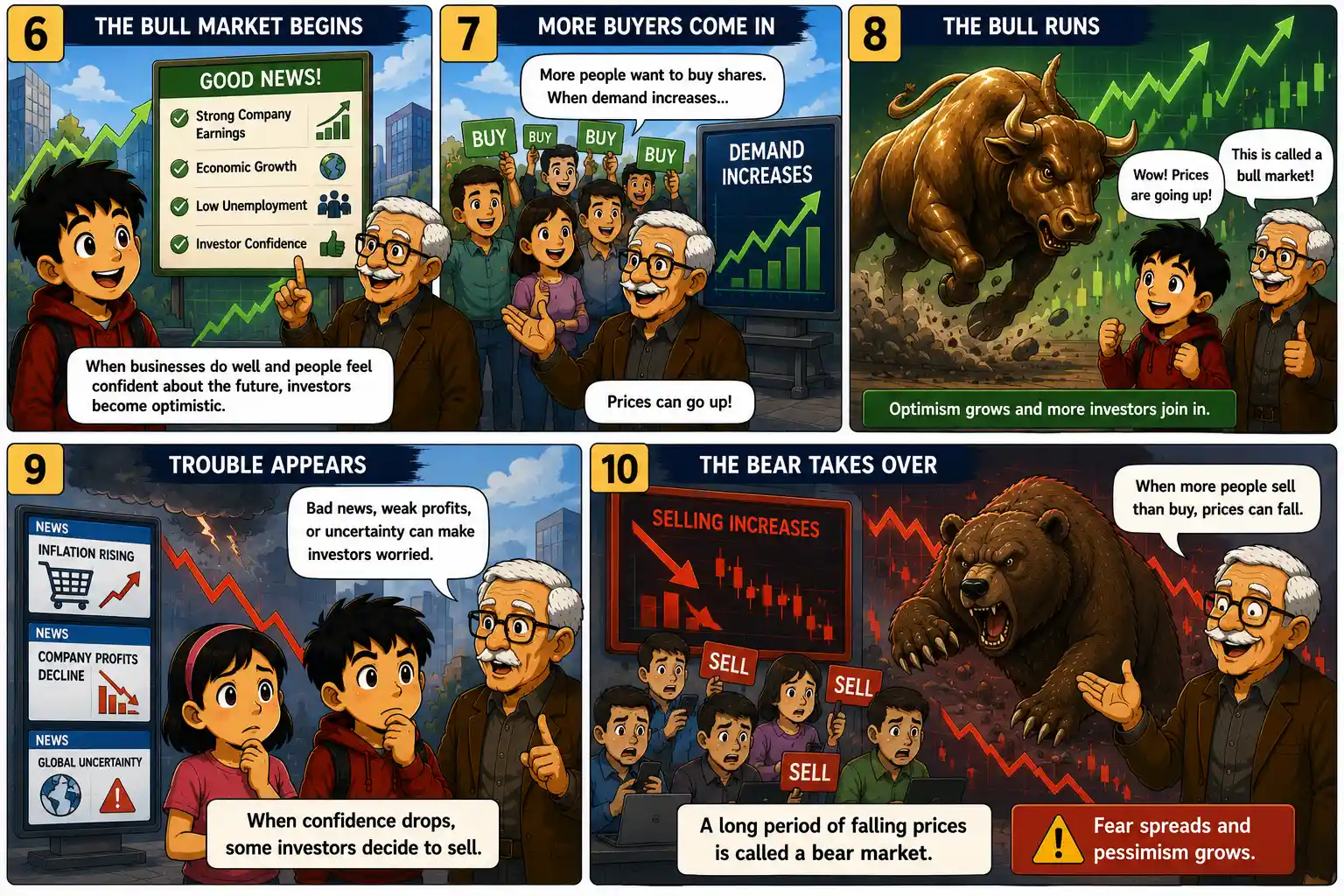
A bull market is a period of broadly rising prices and strong investor confidence. During bullish periods, investors are generally optimistic about the future. Businesses may be reporting stronger profits, economic conditions may be improving, or investors may expect future growth. As more people become interested in buying shares, demand can help push prices higher. Rising prices may then attract even more attention, creating additional optimism. The bull is an easy symbol to remember because it attacks by thrusting its horns upward. In the same way, a bull market represents an upward market direction. However, a bull market does not mean that every company rises every day. Individual shares can still fall, and temporary market declines can occur during a longer upward trend. Investors should therefore avoid assuming that a rising market guarantees profits. Buying a poor-quality company at an unreasonable price can still result in losses.

What Is a Bear Market?

A bear market refers to a significant and sustained decline in the broader market. A commonly used benchmark is a decline of 20% or more from a recent market high, although market terminology can vary depending on context. Bear markets can occur for many reasons, including economic recessions, financial crises, rising interest rates, geopolitical uncertainty, declining corporate profits, or major unexpected events. During these periods, investors may become pessimistic. Fear can lead more people to sell investments, placing additional pressure on prices. The bear represents falling markets because it is commonly pictured swiping its paws downward. Bear markets can feel frightening, particularly for new investors. However, falling prices are part of market risk. Historically, markets have experienced repeated periods of growth, decline and recovery, although past recoveries do not guarantee future results. Understanding this helps investors avoid believing that markets will always rise—or always fall.

How Smart Investors Handle Bulls and Bears

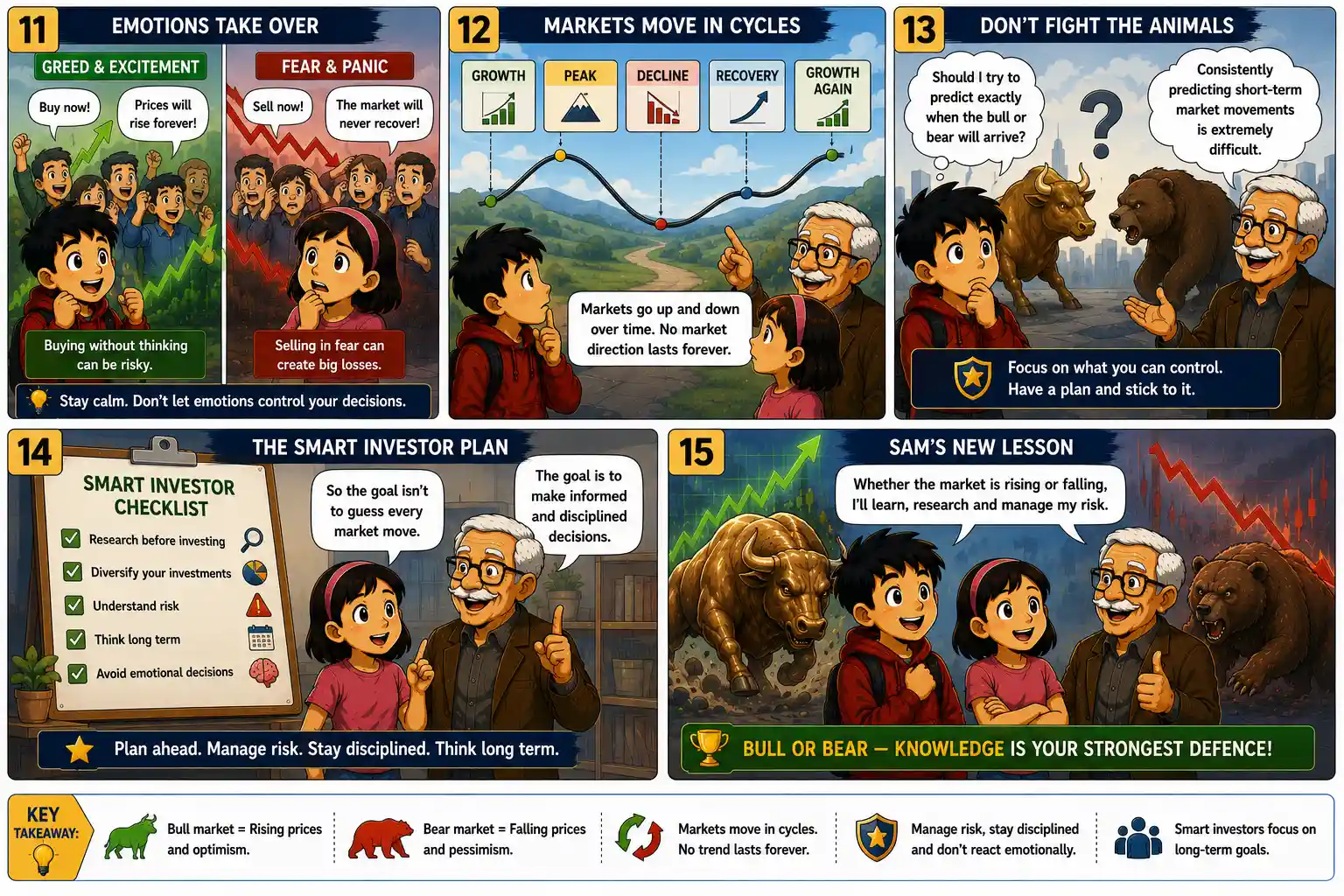
Emotions can become especially powerful during major market movements. During a strong bull market, investors may experience FOMO—the fear of missing out. They may buy shares simply because prices are rising. During a bear market, fear can create the opposite reaction, causing investors to panic and sell without considering their original investment goals. Smart investing requires a more disciplined approach. Investors should research companies, understand what they own, diversify where appropriate, consider their risk tolerance and maintain a strategy suited to their financial goals and time horizon. No one can reliably know exactly when every market peak or bottom will occur. Trying to perfectly time every market movement can be extremely difficult. The most important lesson is simple: bulls and bears describe market conditions, but they should not control your emotions. Knowledge, patience, research and risk management can help investors make more informed decisions through different market environments.

Key Takeaways

    • 🐂 Bull Market: A broadly rising market associated with optimism.
    • 🐻 Bear Market: A significant, sustained market decline associated with pessimism.
    • 📈 Markets can rise, fall or move sideways.
    • 🧠 Investor emotions can influence buying and selling behaviour.
    • 🛡️ Research, diversification and risk management are important in every market.
    • ⏳ No bull or bear market lasts forever.

Vocabulary

Bull Market: A period when the broader market is generally rising.

Bear Market: A period of significant and sustained market decline.

Market Sentiment: The overall attitude or mood of investors toward the market.

Correction: A noticeable market decline, commonly described as a fall of at least 10% from a recent high.

Volatility: The degree to which investment prices move up and down over time.

Smart Investor Tip

Never invest simply because everyone is excited, and never panic simply because everyone is afraid. Understand what you own, know the risks, and make decisions based on research rather than emotion.

Next Episode Preview

Episode 13 – The World’s Biggest Lemonade Company

How Does a Small Business Become a Giant Company?

Sam discovers how a simple lemonade stand can grow into a huge business by serving customers, earning profits, reinvesting money, hiring employees, opening new locations, and eventually raising money from investors.

Preview Question:
Can one small lemonade stand really grow into a company worth millions?

Coming Up: From one lemonade stand → more customers → business growth → expansion → a giant company! 🍋📈

Scroll to Top