
Bad Jobs News… So Why Did Stocks Rally?
Introduction
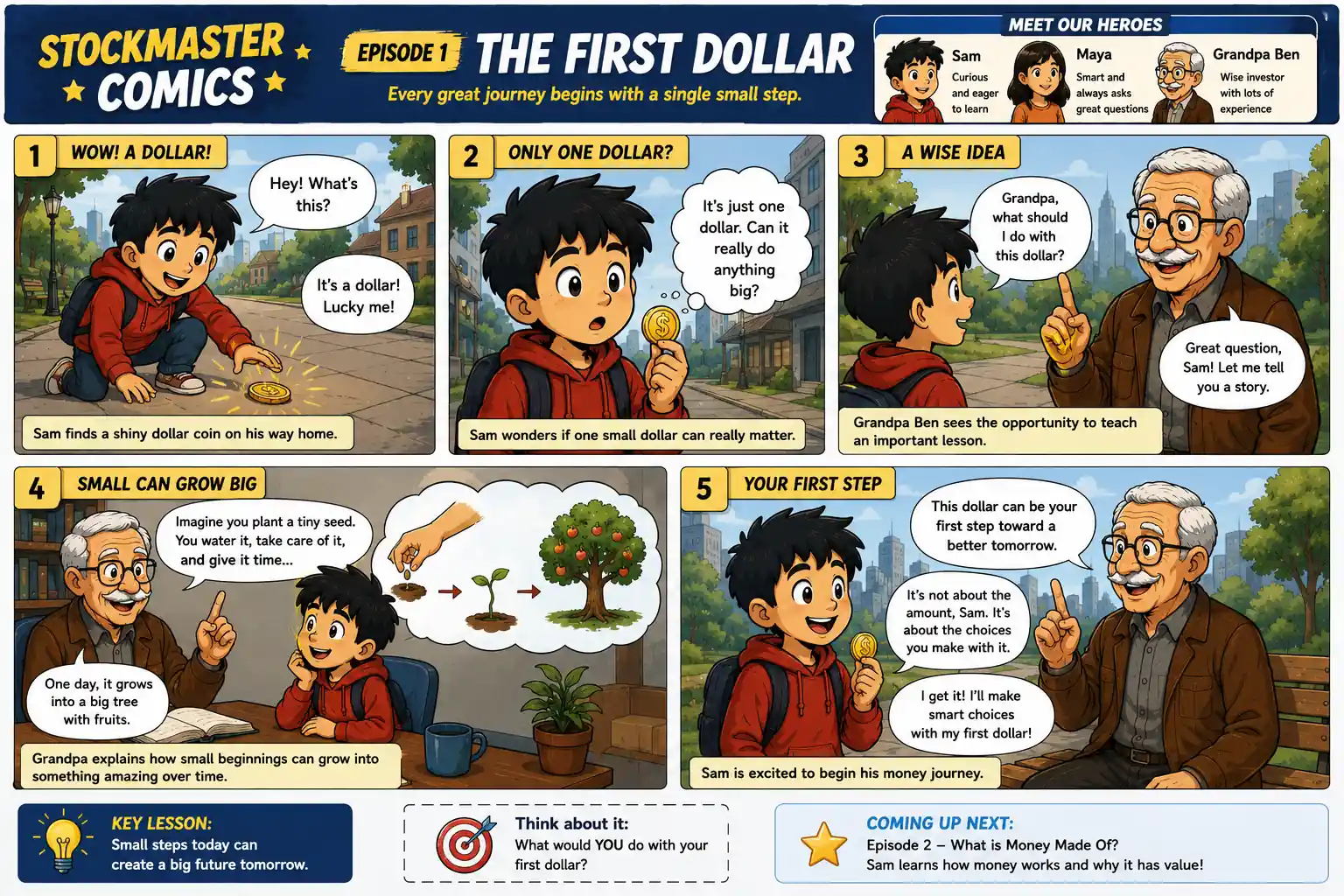
Every great journey begins with a single step, and every great investor begins with a single decision. In Episode 1: The First Dollar, we meet Sam, a curious young boy who discovers a single dollar on his way home. To Sam, it’s just a lucky find. But to Grandpa Ben, a wise and experienced investor, that dollar represents something much more valuable—the beginning of a lifelong financial journey.
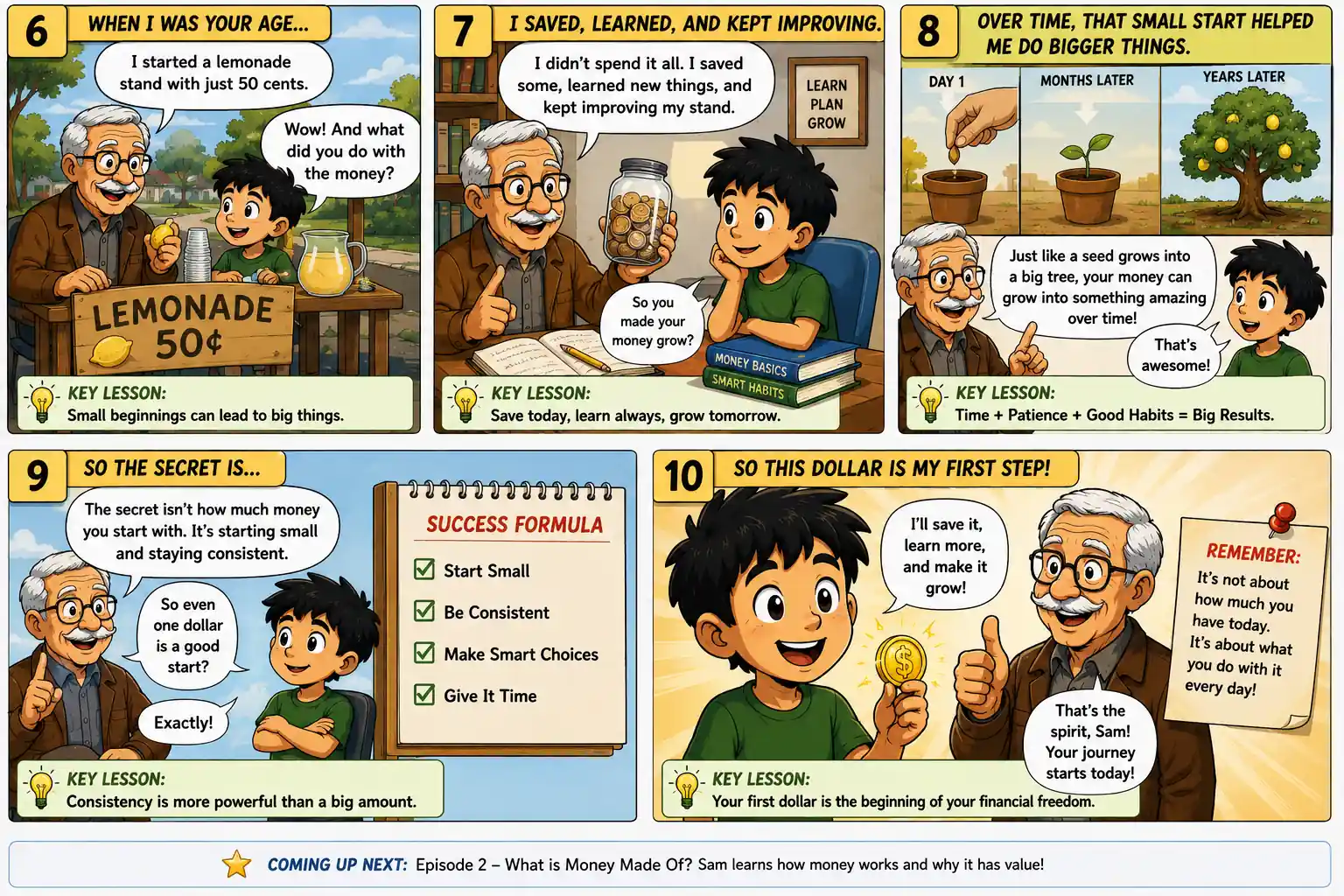
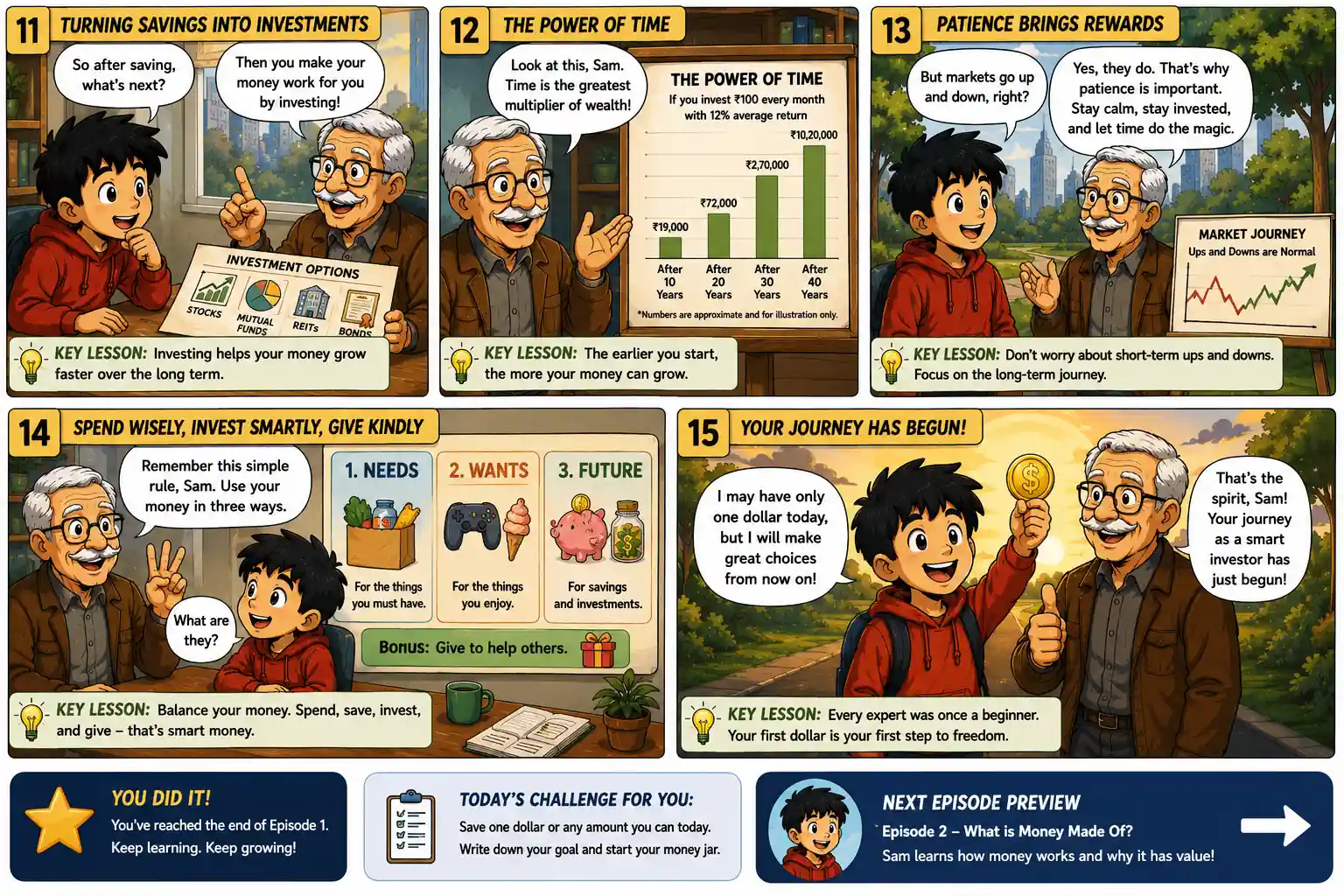
Through a fun and easy-to-follow comic adventure, you’ll discover that building wealth is not about starting with a large amount of money. Instead, it’s about developing smart habits, making thoughtful choices, and allowing time to work in your favor. Whether you choose to save, invest, or learn a new skill, every positive financial decision begins with taking that very first step.
This episode introduces the basic ideas of money, saving, investing, and long-term thinking using simple language, relatable characters, and real-life examples that readers of all ages can understand. You don’t need any previous knowledge of finance or the stock market to enjoy this story. Whether you’re a student, a parent, a working professional, or a retiree, the lessons in this episode are designed to help you build a strong financial foundation.
As you follow Sam’s adventure, ask yourself one simple question: “What would I do if I found my first dollar?” By the end of this episode, you’ll realize that the true value of a dollar isn’t determined by its size—it’s determined by the choices you make with it. Welcome to StockMaster Comics, where learning about money is fun, practical, and the first step toward building a brighter financial future.
Lesson Summary
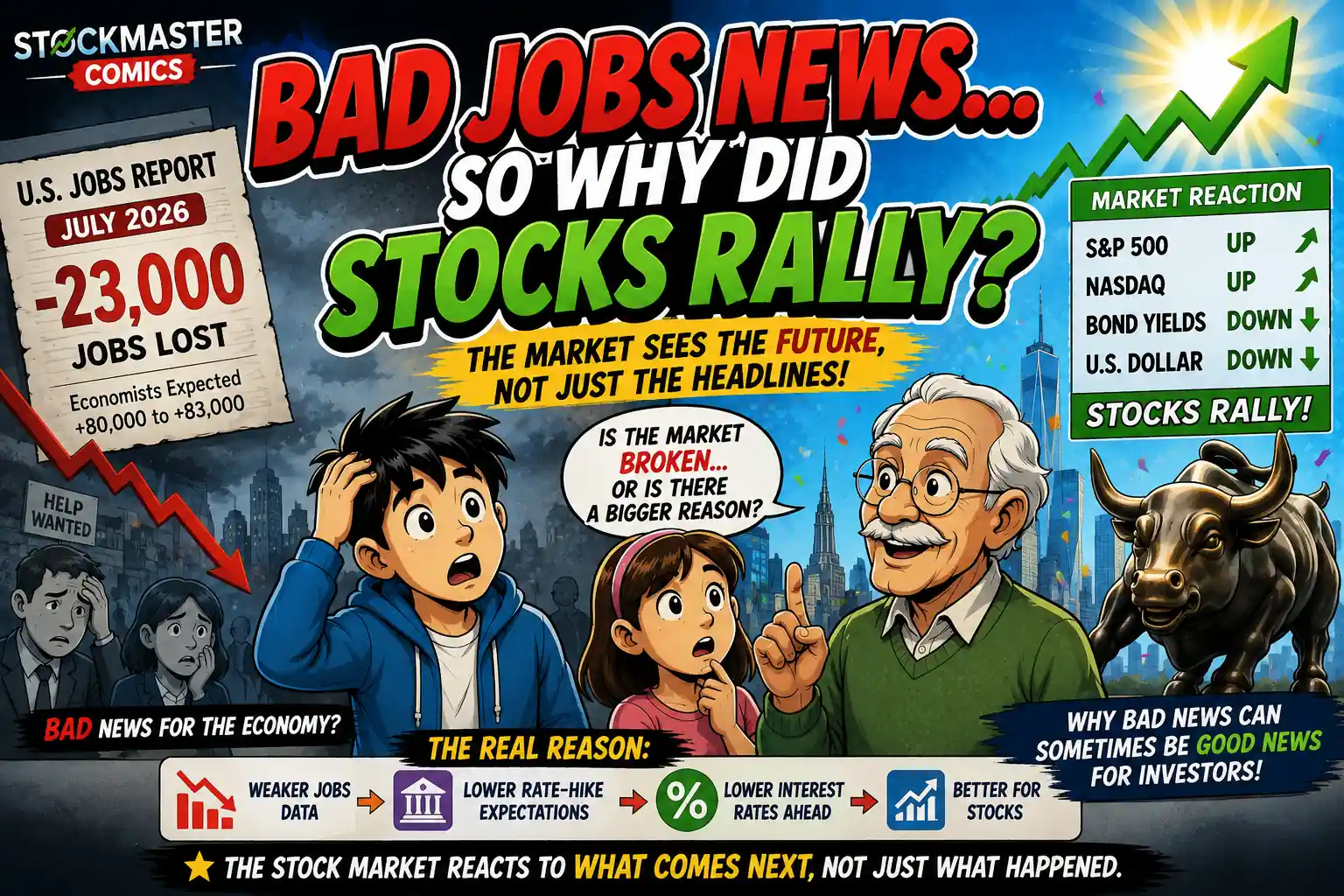
The August 2026 U.S. jobs report created a classic example of the market’s “bad news can be good news” phenomenon. The economy unexpectedly lost 23,000 jobs in July, far below expectations for job growth, while previous months were revised lower. Yet U.S. stocks rallied and the S&P 500 reached a record close.
Why?
Because investors weren’t looking only at employment. They were thinking about what weaker employment could mean for Federal Reserve policy and interest rates.
When economic activity weakens, investors may believe the central bank has less reason to tighten monetary policy. Lower expected interest rates can support stock valuations, particularly for growth-oriented companies whose expected profits lie further in the future. The August 7 market reaction reflected this shift in expectations.
But there is an important limit to this idea.
A slightly weaker economy can sometimes be welcomed by markets if it reduces inflation and interest-rate pressure. However, an economy that becomes too weak can create recession fears, falling corporate profits and declining consumer spending. At that point, bad economic news can once again become bad news for stocks.
This is why investors shouldn’t simply classify economic reports as “good” or “bad.”
They should ask:
What does this data mean for inflation?
What could it mean for interest rates?
What could it mean for corporate earnings?
And what had investors already expected?
Key Takeaways
🎯 Key Takeaways
✅ Bad economic news doesn’t automatically mean stocks will fall.
✅ Investors often react to the interest-rate implications of economic data.
✅ Strong jobs data can sometimes hurt stocks if it increases expectations for higher rates.
✅ Weak jobs data can sometimes help stocks if it reduces rate-hike expectations.
✅ Extremely weak economic data can trigger recession fears.
✅ The stock market is forward-looking.
Vocabulary
Jobs Report: A government report showing changes in employment, unemployment, wages, and other conditions in the labour market.
Employment: The condition of having a job or being engaged in paid work.
Payrolls: The number of people employed by businesses and government organisations, often used to measure job growth.
Federal Reserve (Fed): The central bank of the United States. It influences interest rates and monetary policy.
Interest Rate: The cost of borrowing money or the return earned on certain savings and investments.
Rate Hike: An increase in interest rates by a central bank, usually intended to control inflation or cool economic activity.
Rate Cut: A reduction in interest rates intended to support economic activity, borrowing, investment, and spending.
Rate-Hike Expectations: What investors believe about the possibility and size of future interest-rate increases.
Monetary Policy: Actions taken by a central bank to influence interest rates, money supply, inflation, and economic activity.
Inflation: A sustained increase in the general prices of goods and services, reducing the purchasing power of money.
Smart Investor Tip
“Don’t just ask whether economic news is good or bad. Ask what it changes.”