Introduction
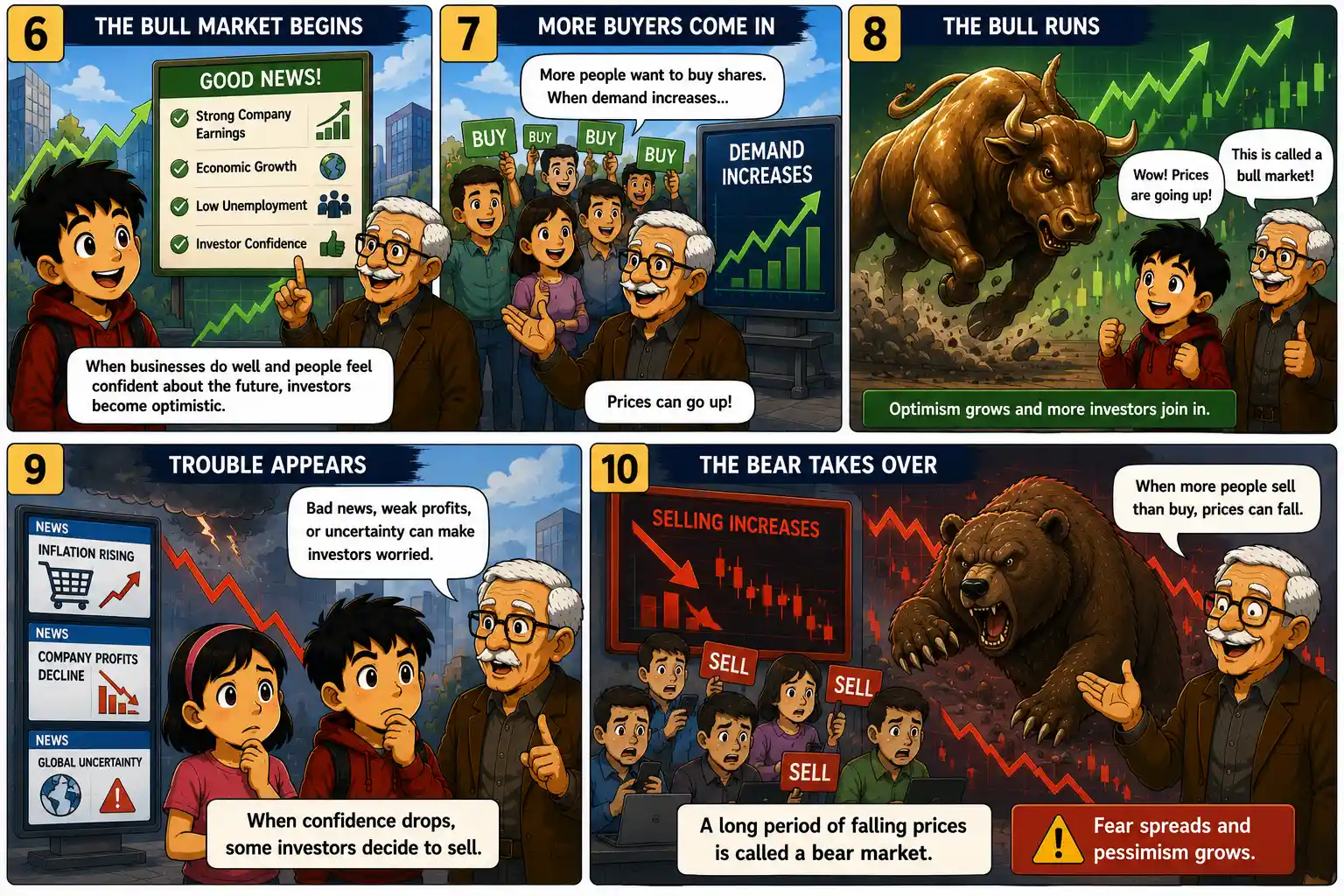
The stock market does not move in only one direction. Sometimes share prices rise for weeks, months, or even years. Investors become optimistic, businesses may grow, and confidence spreads through the market. At other times, prices fall, investors become worried, and uncertainty takes over.
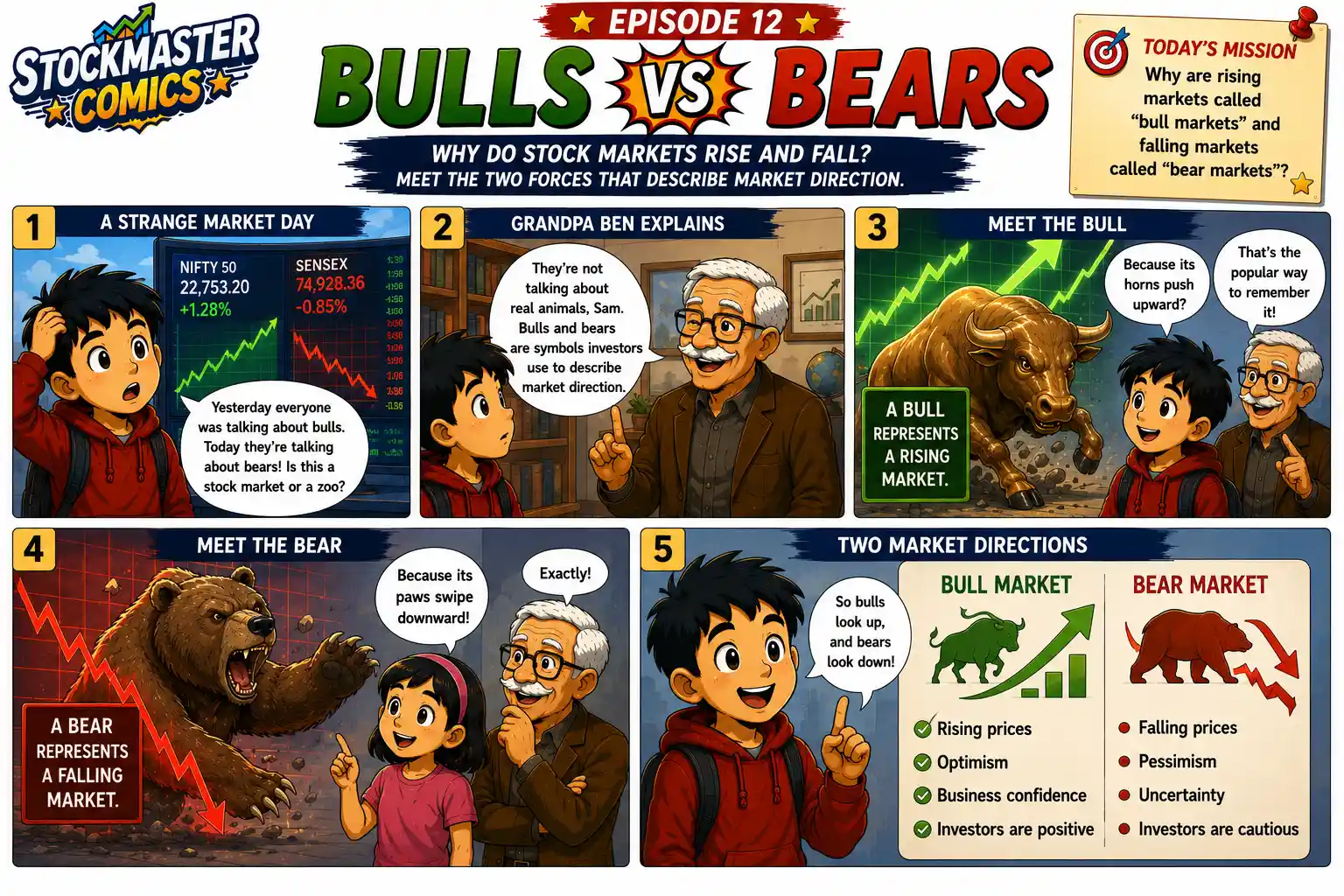
To describe these two very different market conditions, investors use two famous animals: the bull and the bear.
A bull market generally describes a period when the overall market is rising strongly and investor confidence is high. A bear market generally describes a significant and sustained market decline, often associated with fear, economic uncertainty, or weaker expectations about the future.
But why a bull and a bear?
The popular explanation comes from the way the animals attack. A bull thrusts its horns upward, representing rising prices. A bear swipes its paws downward, representing falling prices.
However, markets are not always clearly bullish or bearish. Prices can move sideways, experience temporary corrections, or change direction unexpectedly. A rising market can eventually fall, and a falling market can eventually recover.
That is why smart investors do not try to predict every short-term market movement. They learn to understand businesses, manage risk, diversify their investments, and think about their long-term goals.
In this episode, Sam and Maya enter the exciting world of bulls and bears. They will discover why market sentiment changes, what can cause prices to rise or fall, and why fear and excitement should never replace careful research.