Episode 19 – Good News, Bad News

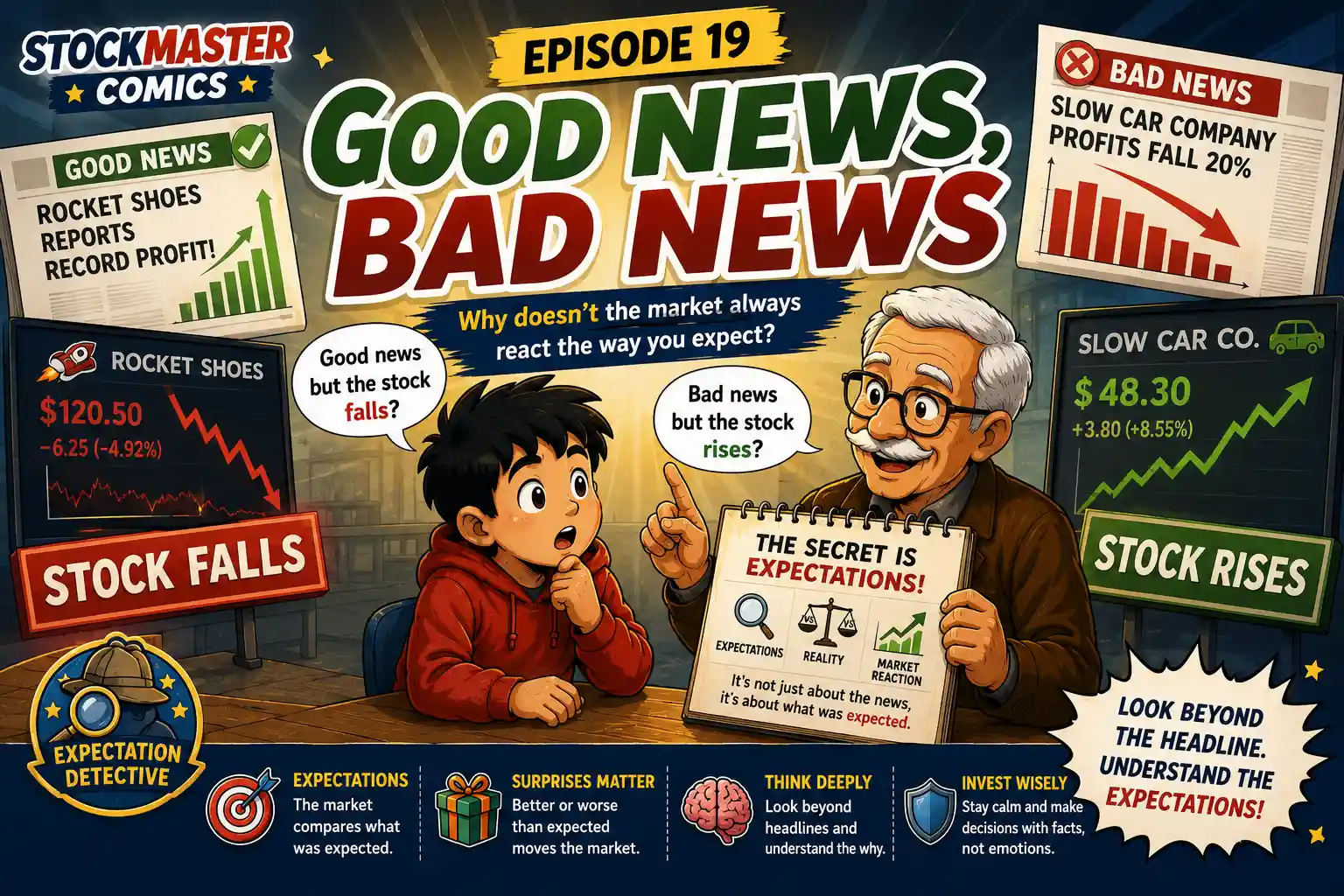
StockMaster Comics Episode 19 Good News Bad News showing Sam and Grandpa Ben explaining why stocks can fall on good news and rise on bad news due to market expectations.

Why doesn’t the market always react the way you expect?

Introduction

Have you ever seen a company announce good news, only to watch its share price fall? Or perhaps you’ve seen a stock jump after the company reported disappointing results. It can seem completely backward. Sam certainly thinks so.

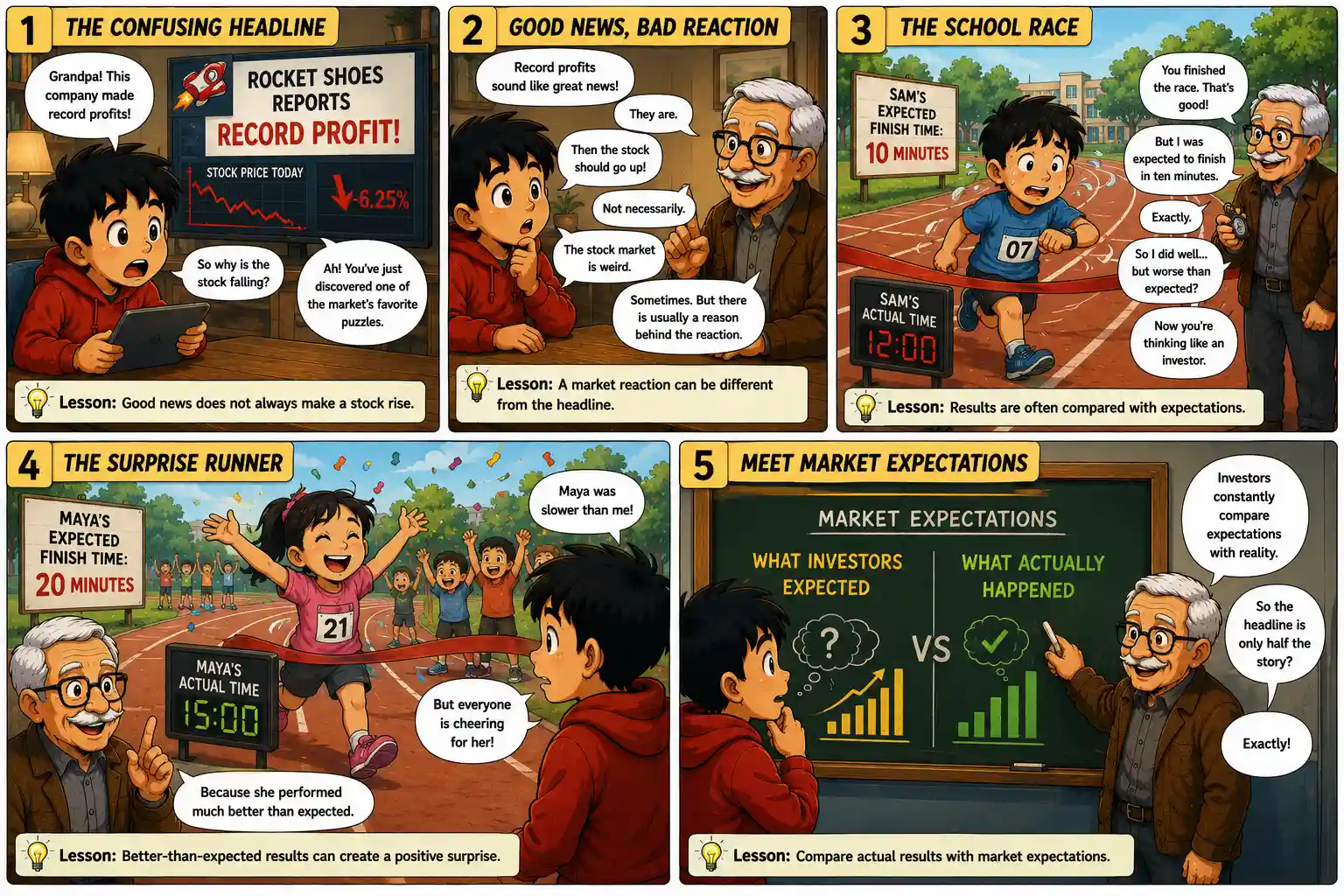
In Episode 19: Good News, Bad News, Sam discovers that the stock market doesn’t react only to whether news sounds good or bad. Investors are constantly comparing what actually happened with what they expected to happen.

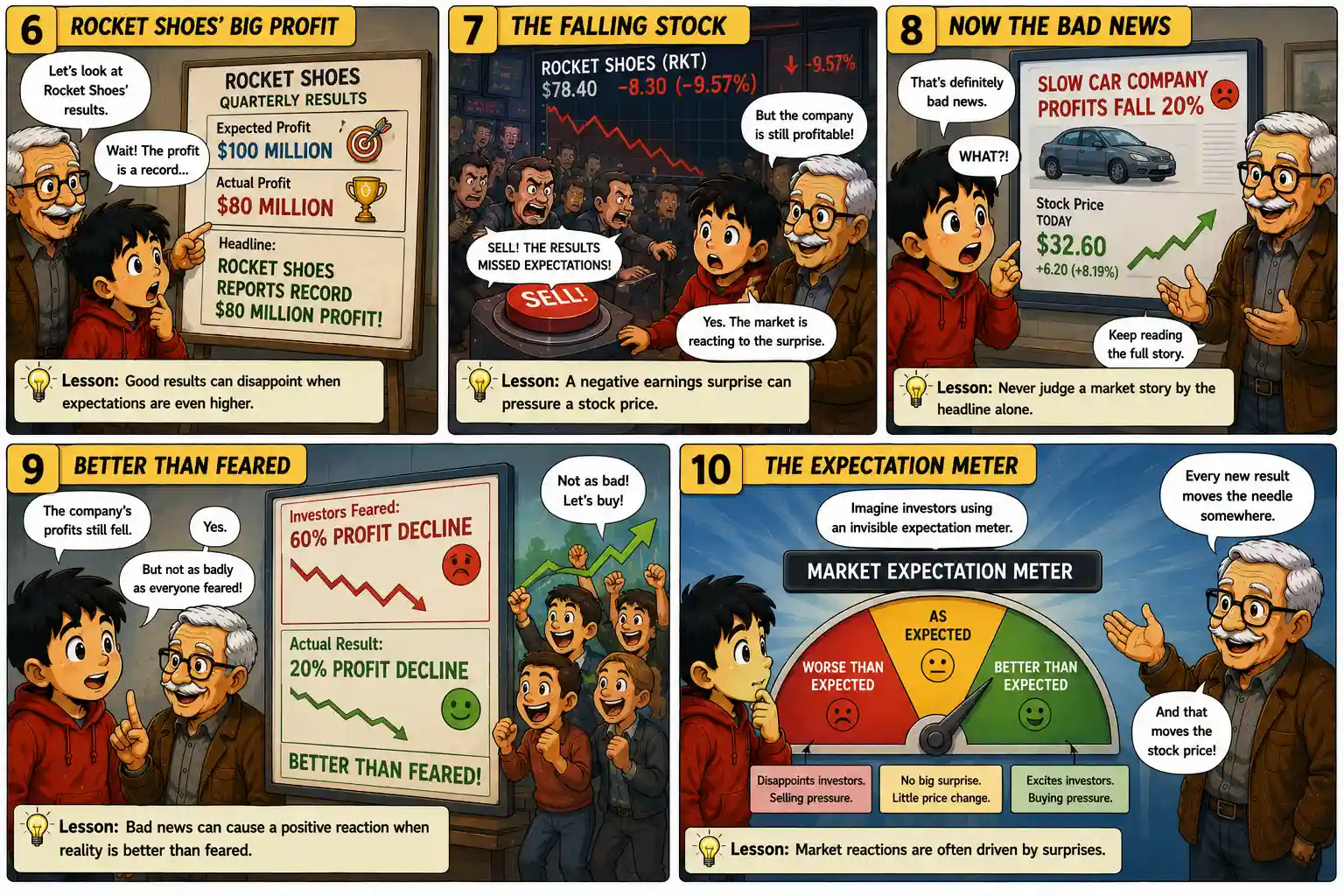
Grandpa Ben introduces Sam to a simple idea called market expectations. A company may report record profits, but if investors expected even bigger profits, the share price can fall. On the other hand, a company may report lower profits, but if the results are better than investors feared, its share price can rise.

Through a fun story involving a school race, weather forecasts, and a fictional company called Rocket Shoes, Sam learns why expectations can sometimes matter as much as the headline itself.

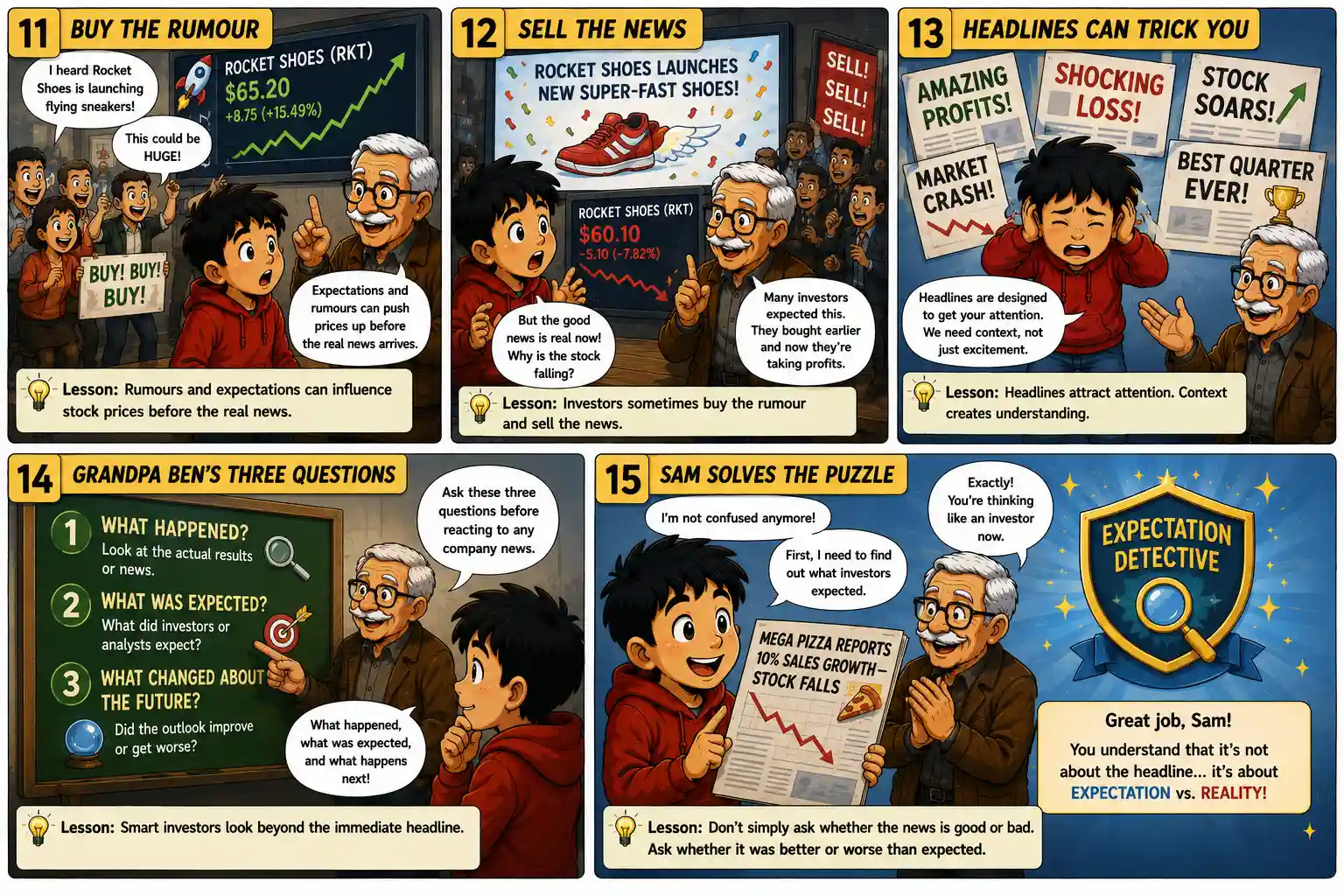
This episode also explores investor reactions, earnings surprises, rumours, and the danger of making investment decisions based only on exciting headlines.

So, when you see breaking market news, don’t immediately ask, “Is this good news or bad news?”

Grandpa Ben has a better question:

“What was the market expecting?”

Sam and Grandpa Ben explain why good news can make a stock fall and how investors compare actual company results with market expectations. Stock market comic explaining earnings surprises, better-than-feared results and how market expectations influence stock price reactions. Sam learns about buy the rumour sell the news, misleading market headlines and three questions investors should ask before reacting to company news.

Lesson Summary

Why Good News Can Make a Stock Fall

At first, the stock market appears simple. A company reports good news and its share price should rise. A company reports bad news and its share price should fall. In reality, markets are more complicated because investors often form expectations before an announcement takes place. Imagine that analysts and investors expect a company to earn $100 million. The company later reports a record profit of $80 million. The words “record profit” sound positive, but the actual result is $20 million below expectations. Some investors may become disappointed. They might reconsider how quickly the company can grow in the future. If enough investors decide to sell, the share price can fall despite the apparently positive headline. This is why investors should avoid making decisions based only on words such as record, strong, amazing, booming, or historic. Numbers need context. The important question is: How did the actual result compare with expectations?

Why Bad News Can Sometimes Make a Stock Rise

The opposite situation can also occur. Suppose investors believe a company's profits will collapse by 60%. Fear spreads through the market, and the stock price falls before the company announces its results. The company finally reports that profits declined by only 20%. Is a 20% profit decline good news? Not necessarily. The business may still be facing problems. However, the situation is much better than investors feared. Some investors may decide that the stock was punished too severely. Others may believe the company's future is improving. Buyers return, and the share price can rise. Markets often react to surprises and changing expectations rather than simply classifying news as good or bad. This is also why stock prices can move before major announcements. Investors are constantly trying to predict future sales, profits, interest rates, economic growth, and business conditions. When reality finally arrives, the market compares it with those expectations.

Look Beyond the Headline

Financial headlines are useful, but they rarely tell the entire story. When Sam sees “Record Profit!”, his first reaction is excitement. When he sees “Profits Fall!”, he immediately assumes the stock must fall. Grandpa Ben teaches him to slow down and investigate the context. A simple way to analyse company news is to ask three questions: What actually happened? Look at the real announcement, results, or event. What did investors expect? Was the result better or worse than analysts and investors anticipated? What changed about the future? Did management increase or reduce its outlook? Are sales expected to accelerate? Have risks increased? The third question can be especially important because stock markets are forward-looking. Investors are often more interested in what may happen next than in what happened yesterday. The key lesson from Episode 19 is simple: the market doesn't read headlines the same way people do. Before reacting emotionally to good or bad news, understand the expectations behind the price.

Key Takeaways

  • Good news does not guarantee that a stock price will rise.
  • Bad news does not always make a stock price fall.
  • Investors compare actual results with expectations.
  • Better-than-expected results can create a positive surprise.
  • Worse-than-expected results can disappoint investors.
  • Stock prices may move before an official announcement.
  • Headlines rarely provide the complete investing story.
  • Smart investors ask what the market expected before reacting.

Vocabulary

Market Expectations – What investors collectively anticipate may happen before actual results or news are announced.

Earnings Surprise – The difference between a company’s reported earnings and the results investors or analysts expected.

Better Than Expected – A result that is stronger than the market anticipated.

Worse Than Expected – A result that falls below market expectations.

Market Reaction – The movement in a stock or market after investors process new information.

Smart Investor Tip

💡 Never stop at the headline.

When a company announces important news, ask: What did investors already expect?

A positive headline can disappoint the market, while a negative headline can produce relief. Understanding the gap between expectation and reality can help you understand why stock prices sometimes behave in surprising ways.

Next Episode Preview

Episode 20 – Fear in the Market

Sam wakes up to flashing red screens, falling stock prices, and frightening headlines. Investors are rushing to sell, Mr. Panic is convinced the world is ending, and fear seems to be everywhere. But Grandpa Ben asks one important question: “Has the business changed—or have people’s emotions changed?”

Join Sam as he discovers how fear spreads through the stock market, why panic selling happens, and how emotional decisions can influence prices.

Coming next: Episode 20 – Fear in the Market

Scroll to Top