Episode 21 – Greed in the Market

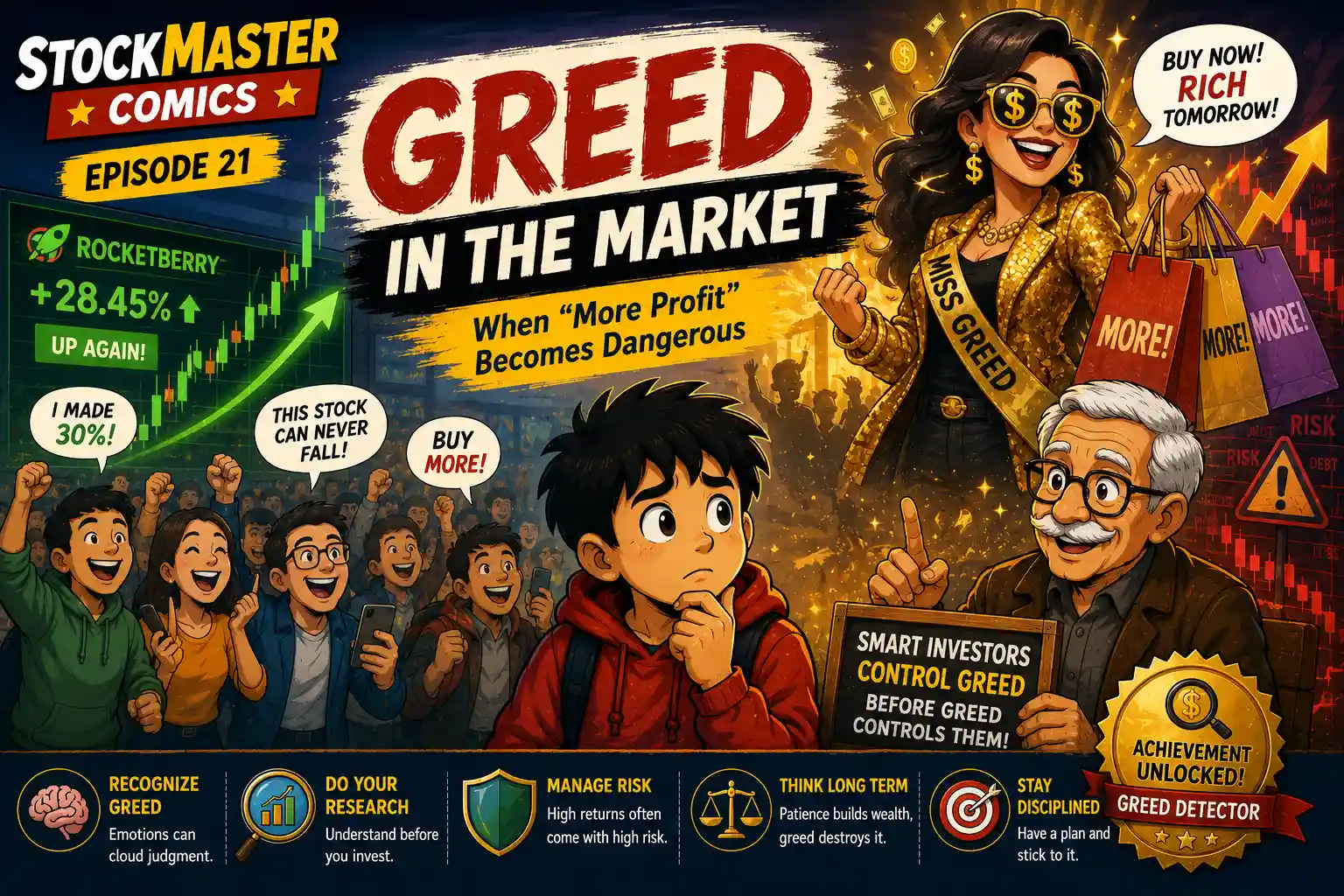
StockMaster Comics Episode 21 Greed in the Market showing Sam, Grandpa Ben and Miss Greed explaining how market greed, rising stock prices and emotions affect investor decisions.

Introduction

Every great journey begins with a single step, and every great investor begins with a single decision. In Episode 1: The First Dollar, we meet Sam, a curious young boy who discovers a single dollar on his way home. To Sam, it’s just a lucky find. But to Grandpa Ben, a wise and experienced investor, that dollar represents something much more valuable—the beginning of a lifelong financial journey.

Through a fun and easy-to-follow comic adventure, you’ll discover that building wealth is not about starting with a large amount of money. Instead, it’s about developing smart habits, making thoughtful choices, and allowing time to work in your favor. Whether you choose to save, invest, or learn a new skill, every positive financial decision begins with taking that very first step.

This episode introduces the basic ideas of money, saving, investing, and long-term thinking using simple language, relatable characters, and real-life examples that readers of all ages can understand. You don’t need any previous knowledge of finance or the stock market to enjoy this story. Whether you’re a student, a parent, a working professional, or a retiree, the lessons in this episode are designed to help you build a strong financial foundation.

As you follow Sam’s adventure, ask yourself one simple question: “What would I do if I found my first dollar?” By the end of this episode, you’ll realize that the true value of a dollar isn’t determined by its size—it’s determined by the choices you make with it. Welcome to StockMaster Comics, where learning about money is fun, practical, and the first step toward building a brighter financial future.

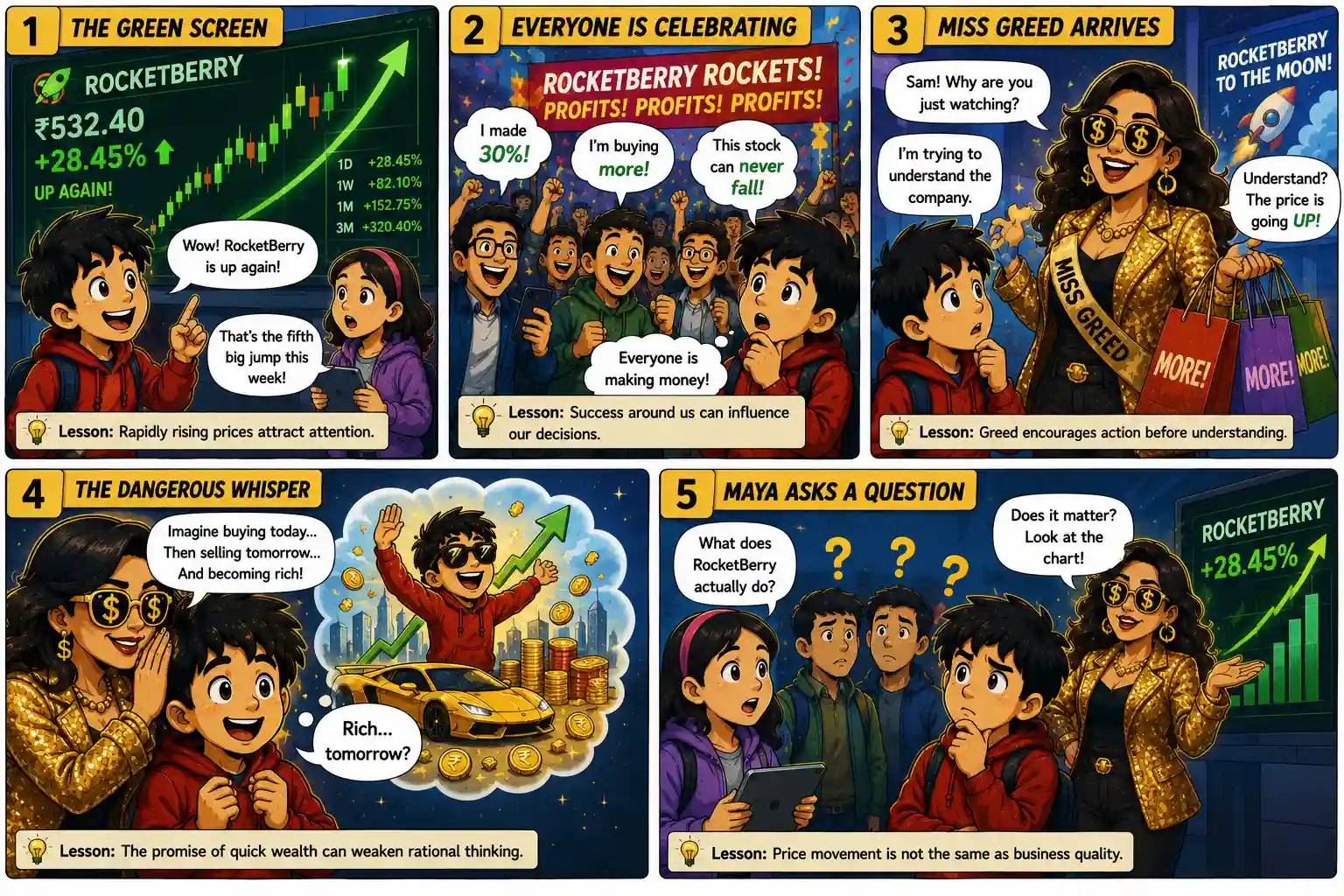
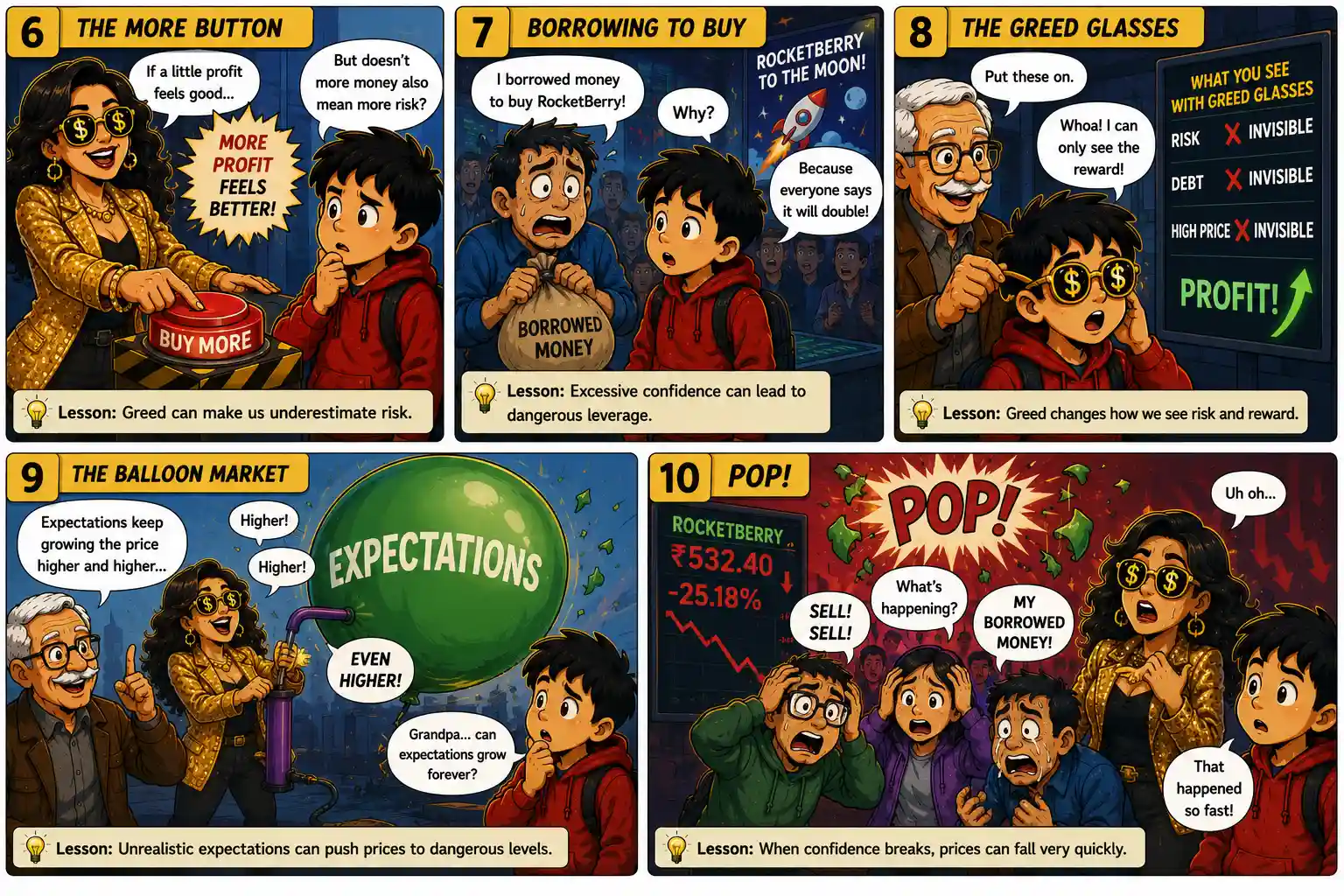
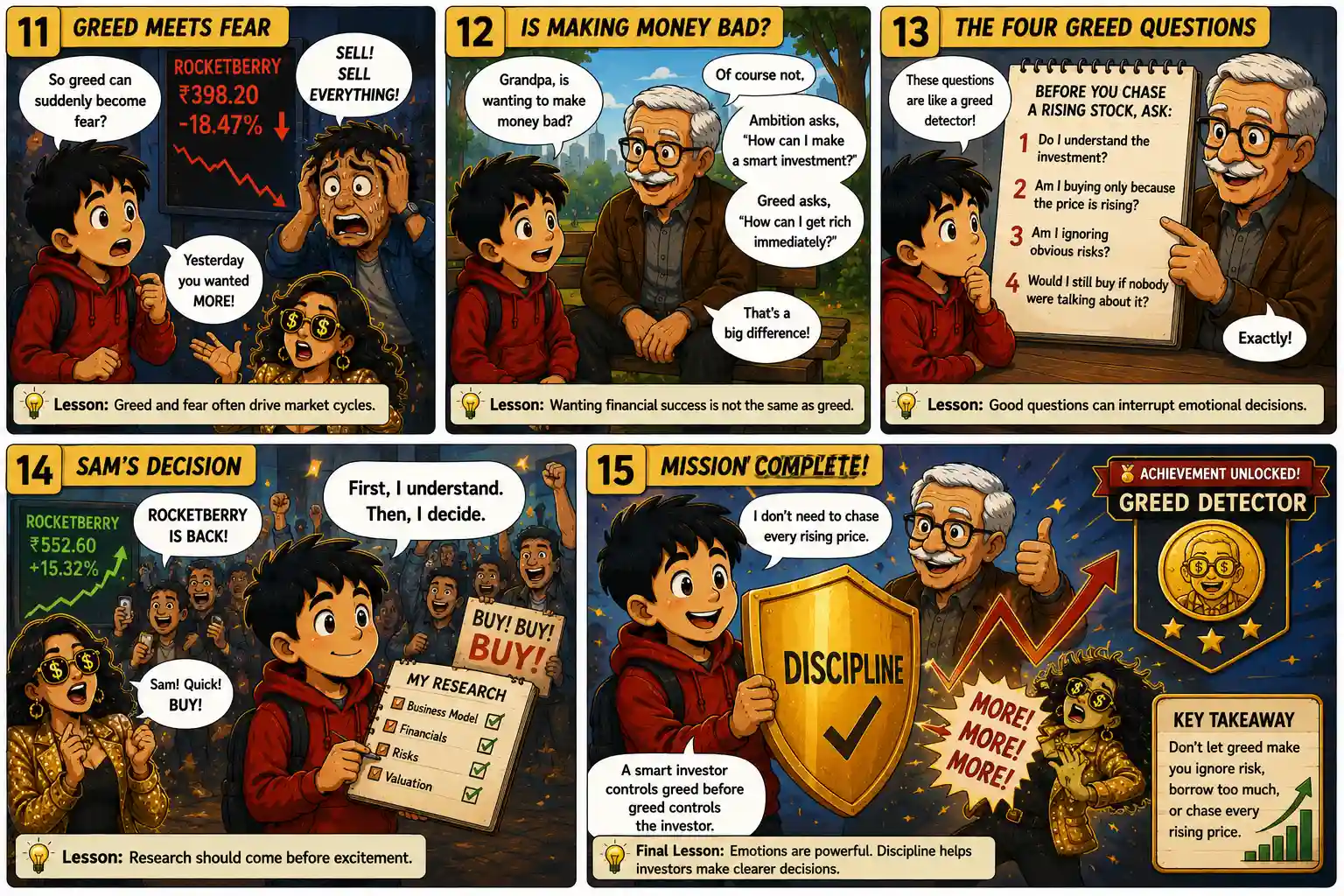
Sam and Maya watch RocketBerry stock rise as Miss Greed explains market excitement, quick profits and the danger of buying stocks without understanding the business. StockMaster comic explaining how greed can make investors underestimate risk, borrow money, ignore warning signs and chase unrealistic stock market expectations. Sam and Grandpa Ben explain fear and greed, investor discipline, stock research and four questions to ask before chasing a rapidly rising stock.

Lesson Summary

What Is Greed in the Stock Market?

Greed in the stock market is an intense desire to make more money that can begin to overpower careful thinking. An investor may see a stock rising quickly and become focused entirely on potential profits while ignoring the possibility of losses. It is important to understand that wanting to earn a return is not automatically greed. People invest because they want to achieve financial goals, build wealth, fund education, buy a home, or prepare for retirement. The problem begins when the desire for profit starts controlling the decision. A greedy investor may buy something they do not understand simply because its price is rising. They may invest more money than they can comfortably afford to lose or convince themselves that a popular stock “cannot fall.” Greed often creates a dangerous sentence in an investor's mind: “This time is different.” When investors believe normal risks no longer matter, careful analysis can disappear.

How Greed Can Create Market Bubbles

Imagine a balloon. At first, a little air enters the balloon. In the market, this could represent genuine optimism about a company, industry, or new technology. The price begins to rise. Other investors notice the increase and start buying. More attention creates more excitement. Social media discussions increase. News coverage grows. People who previously ignored the investment suddenly become interested. Some buyers may no longer care about the underlying business. They buy because they believe another person will pay an even higher price later. The balloon becomes larger. Eventually, expectations may become extremely difficult for reality to satisfy. Even a small piece of disappointing news can change investor confidence. When buyers disappear or investors rush to sell, prices can fall rapidly. This is why Grandpa Ben teaches Sam to separate price excitement from business reality. A rising stock can represent a genuinely improving business, but price movement alone does not prove that an investment is sensible.

How Smart Investors Control Greed

Smart investors are human. They can feel excitement, fear, jealousy, and greed like everyone else. The difference is that disciplined investors develop systems to prevent emotions from controlling every decision. Before investing, they ask questions. What does the company do? How does it make money? What risks could affect the business? Why am I interested in this investment? Am I buying because of research, or because I am afraid of missing an opportunity? A useful test is to imagine that the stock price disappears from your screen for one year. Would you still want to own part of the business? If your entire investment idea depends on the price rising tomorrow, you may be speculating on market excitement rather than thinking like a long-term owner. Greed becomes weaker when investors slow down, research carefully, diversify their investments, and follow clear financial rules. The goal is not to eliminate emotion completely. That may be impossible. The goal is to recognise the emotion before it makes the decision for you. As Grandpa Ben tells Sam: “You don't become a smarter investor by feeling nothing. You become smarter by understanding what you're feeling before you press Buy.”

Key Takeaways

  • Greed can make potential profits look bigger and risks look smaller.
  • Wanting to build wealth is not automatically greed.
  • Rapidly rising prices can attract emotional investors.
  • A rising stock price does not always mean the underlying business is improving.
  • Borrowing money to chase market excitement can increase risk significantly.
  • Greed and fear can quickly replace each other.
  • Researching before investing can help reduce emotional decisions.
  • Discipline is one of an investor’s strongest defences against greed.

Vocabulary

Greed – An excessive desire for more money or profit that may affect rational decision-making.

Market Bubble – A situation where asset prices may rise far beyond levels supported by fundamentals, often because of extreme optimism and speculation.

Expectation – What investors believe may happen to a company or investment in the future.

Leverage – Using borrowed money to increase investment exposure. It can magnify both gains and losses.

Discipline – The ability to follow a thoughtful investment process even when emotions or market excitement encourage a different action.

Smart Investor Tip

🧠 When everyone is shouting “Buy now!”, give yourself permission to ask “Why?”

A rapidly rising price can make investors feel that they must act immediately. But excitement is not research. Before investing, understand what you are buying, examine the risks, and decide whether the investment fits your own goals.

Never let another person’s excitement become your investment strategy.

Next Episode Preview

Episode 22 – The Long Road to Wealth

Sam dreams of building wealth quickly, but Grandpa Ben shows him that real financial success is rarely a short race. It is a long journey filled with small steps, market ups and downs, patience, discipline, and important decisions. Join Sam as he discovers why staying on the road may matter more than moving fast—and how consistent investing can help turn today’s small beginnings into tomorrow’s financial future.

Coming next: Episode 22 – The Long Road to Wealth

Scroll to Top