
Episode 41 – The Power of Reinvestment

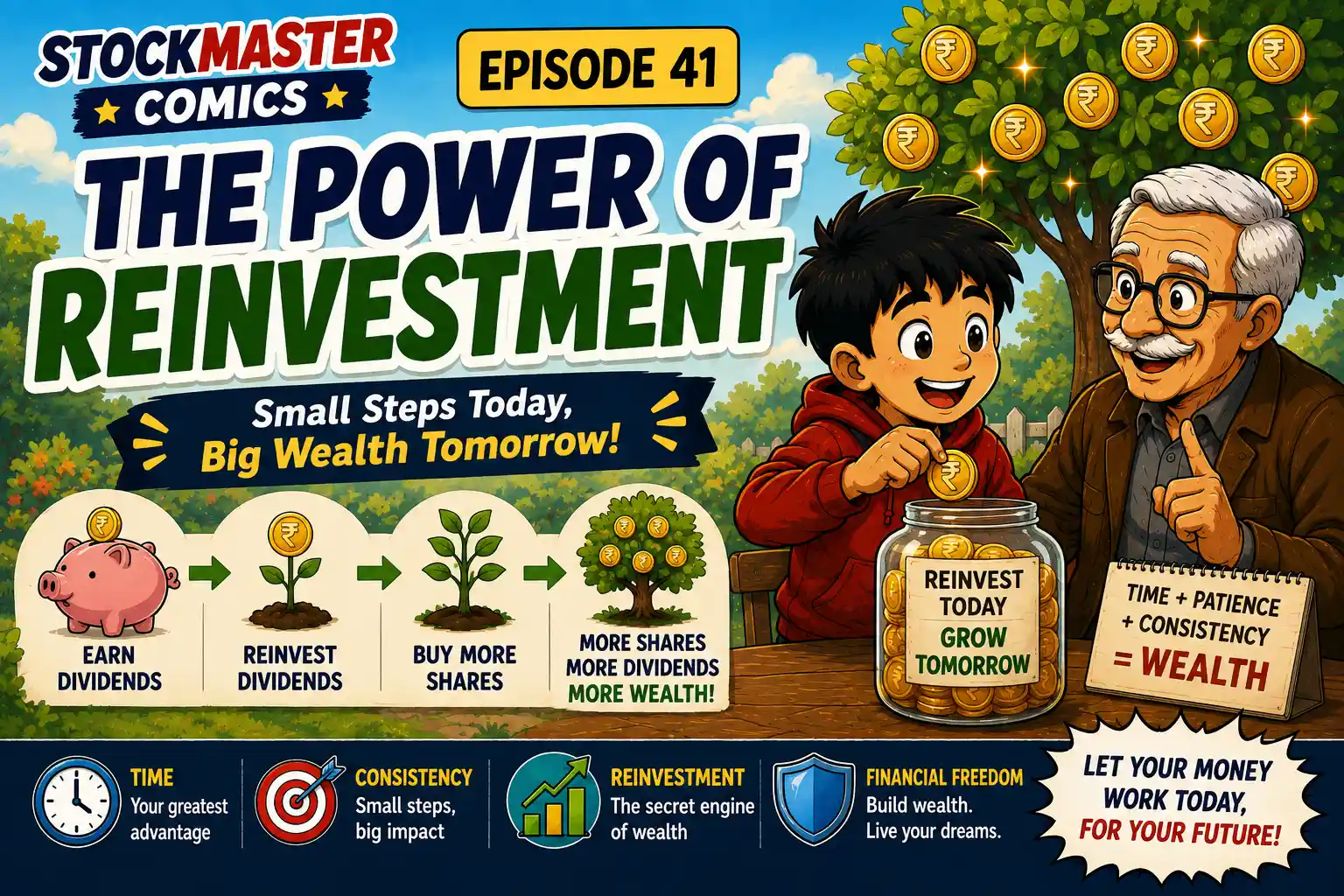
StockMaster Comics Episode 41 The Power of Reinvestment featuring Sam and Grandpa Ben explaining how reinvesting dividends helps grow wealth through patience and long-term investing.

Introduction

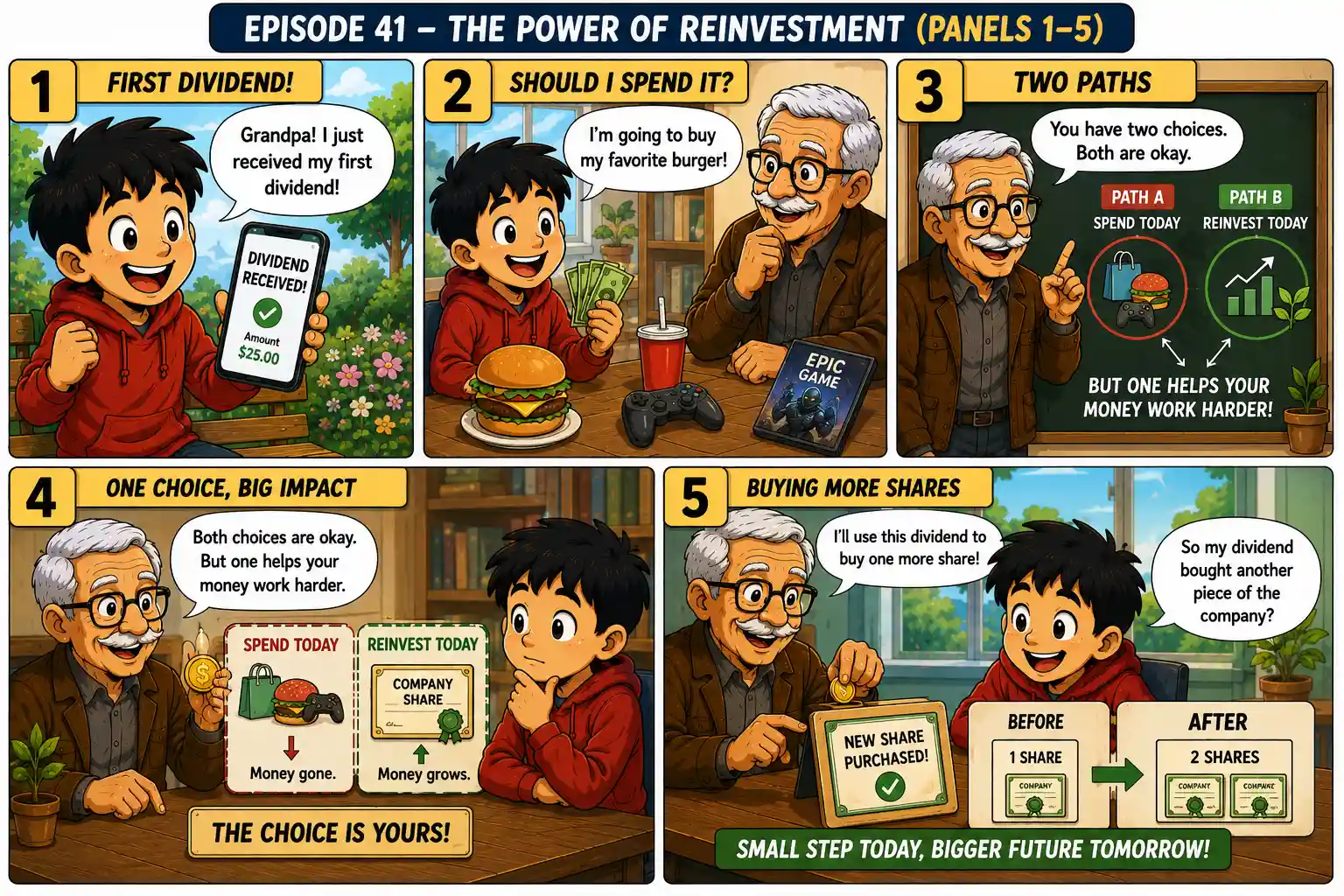
Sam is excited after receiving his first dividend from a company he owns. He rushes to Grandpa Ben and proudly says, “Grandpa, I made money without selling my shares!”

Grandpa Ben smiles and asks a simple question, “What are you going to do with it?”

Sam thinks about buying a burger, a new video game, or saving it in his wallet. But Grandpa Ben introduces him to another idea—reinvestment.

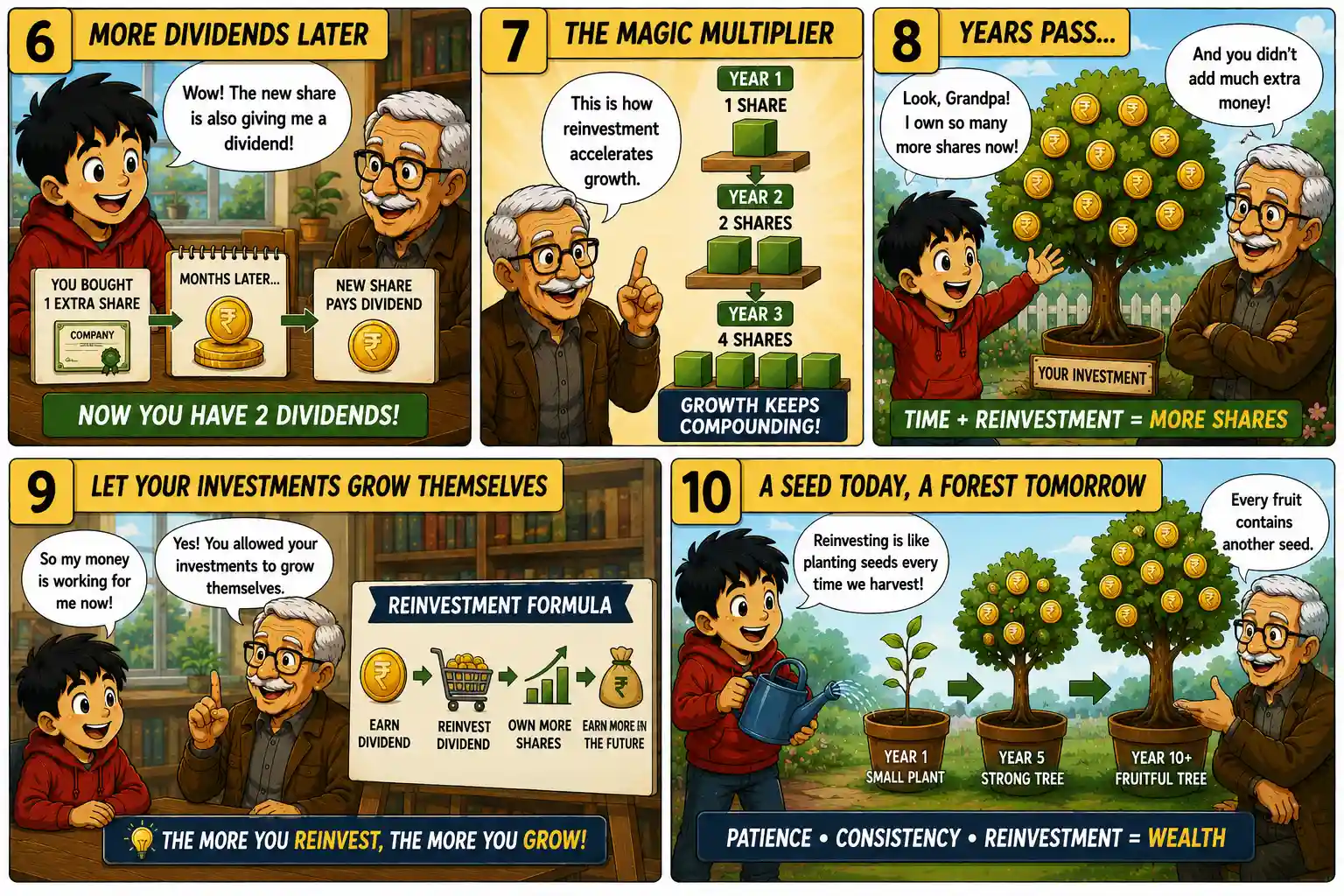
Instead of spending the dividend, what if Sam uses it to buy more shares? Those extra shares could earn future dividends too. Over many years, this simple habit can help an investment grow much faster.

Through this fun comic adventure, you’ll learn why many successful long-term investors choose to reinvest their earnings instead of spending them immediately. You’ll also discover how small decisions repeated consistently can create powerful results over time.

Let’s see why Grandpa Ben calls reinvestment “the secret engine behind long-term wealth.”

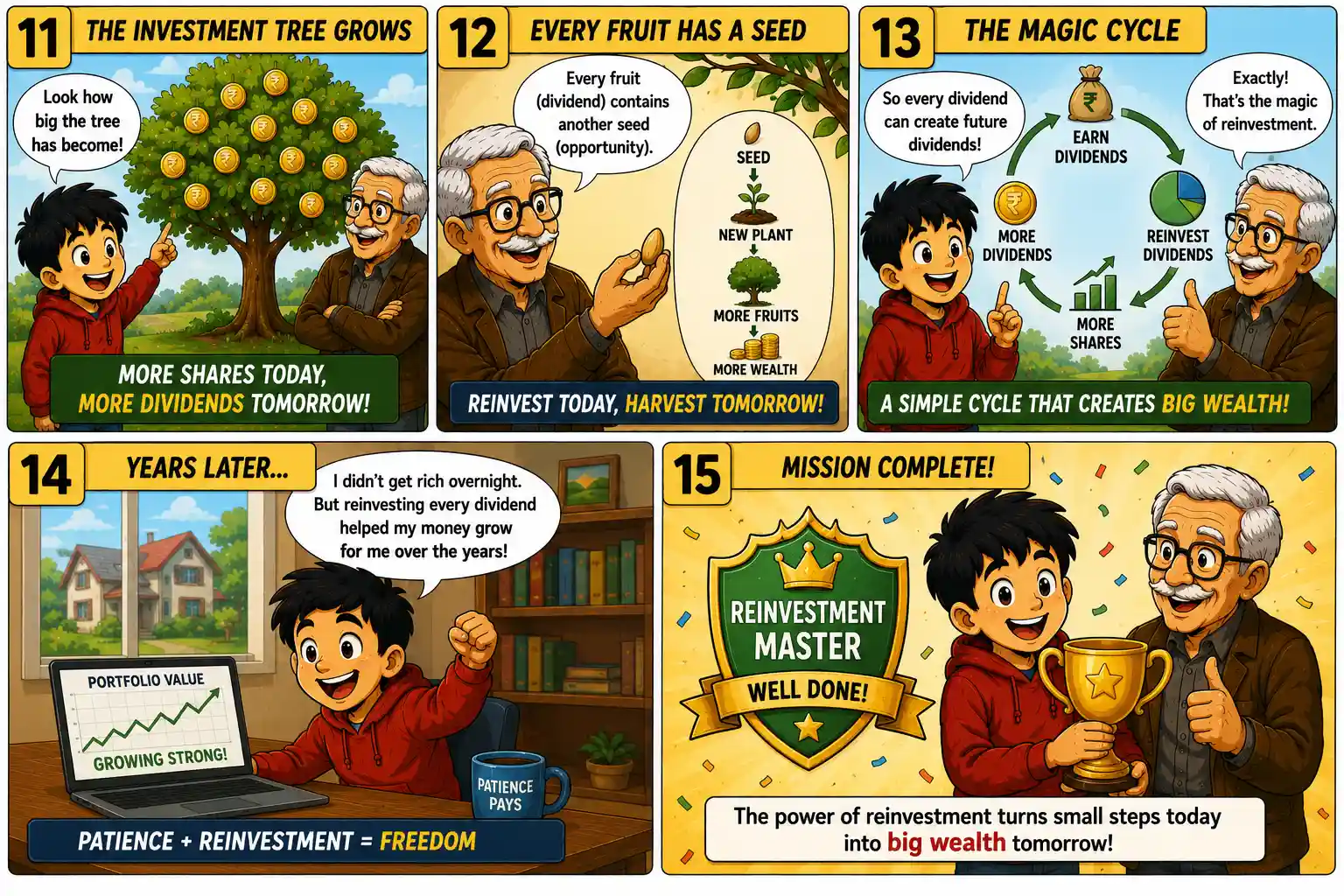
StockMaster Comics Episode 41 panels 1 to 5 showing Sam receiving his first dividend and learning the difference between spending and reinvesting dividends. StockMaster Comics Episode 41 panels 6 to 10 explaining how dividend reinvestment, compound growth, and buying more shares increase long-term wealth. StockMaster Comics Episode 41 panels 11 to 15 illustrating the investment tree, reinvestment cycle, long-term portfolio growth, and the Reinvestment Master achievement badge.

Lesson Summary

What Is Reinvestment?

Reinvestment means using the money you earn from an investment—such as dividends or interest—to buy more investments instead of spending it immediately. This allows your investment to grow not only from your original money but also from the returns it generates over time. Imagine owning a mango tree. Instead of eating every mango, you plant some of the seeds. Over the years, those seeds grow into more trees, producing even more mangoes. Reinvestment works in a similar way. Each dividend or return can become the starting point for future growth. Many successful long-term investors use dividend reinvestment because it helps increase the number of shares they own without always investing fresh money.

Why Reinvestment Is Powerful

The real strength of reinvestment comes from consistency and time. Every time you reinvest your earnings, you give your portfolio another opportunity to grow. Over many years, these additional investments may generate their own returns, creating a snowball effect. For example, imagine receiving dividends every year from a company. If you spend every dividend, your investment stays the same size. If you reinvest those dividends, you gradually own more shares, which may generate larger future dividends. This doesn't guarantee higher returns, but it demonstrates why reinvestment is considered an important strategy for many long-term investors.

Think Like an Owner

Successful investing is about more than watching daily price movements. It's about thinking like a business owner. When a company shares profits through dividends, you have a choice—spend them today or invest them back into your future. Reinvestment teaches patience, discipline, and long-term thinking. While there may be times when investors need income from dividends, reinvesting can be a useful approach for those focused on growing their investments over many years. The biggest lesson from today's episode is simple: Money can work for you—but only if you give it the opportunity to keep growing.

Key Takeaways

  • Reinvestment means investing your earnings instead of spending them.
  • Dividend reinvestment can gradually increase the number of shares you own.
  • Time and consistency make reinvestment more effective.
  • Reinvestment supports long-term wealth building.
  • Small decisions repeated over many years can have a meaningful impact.

Vocabulary

Dividend – A payment some companies distribute to shareholders from profits.

Reinvestment – Using investment earnings to purchase additional investments.

Share – A unit of ownership in a company.

Portfolio – A collection of investments owned by an investor.

Long-Term Investing – Holding investments for many years with the goal of long-term growth.

Smart Investor Tip

💡 Many long-term investors choose to reinvest dividends when they don’t need the income immediately. Reinvesting can gradually increase the number of shares owned and may enhance long-term growth potential, though all investments involve risk.

Next Episode Preview

Episode 42 – Becoming a Shareholder

After learning about reinvestment, Sam buys another share and proudly tells Grandpa Ben, “I own a tiny piece of the company now!” But what does being a shareholder really mean? Does it simply mean owning a stock, or does it make you a part-owner of the business? Join Grandpa Ben as he explains how shareholders own a small part of a company, how they can benefit from a company’s success, and why investing is about becoming a business owner—not just watching stock prices move every day.

Coming Next: Episode 42 – Becoming a Shareholder

Scroll to Top