Simple Interest vs Compound Interest
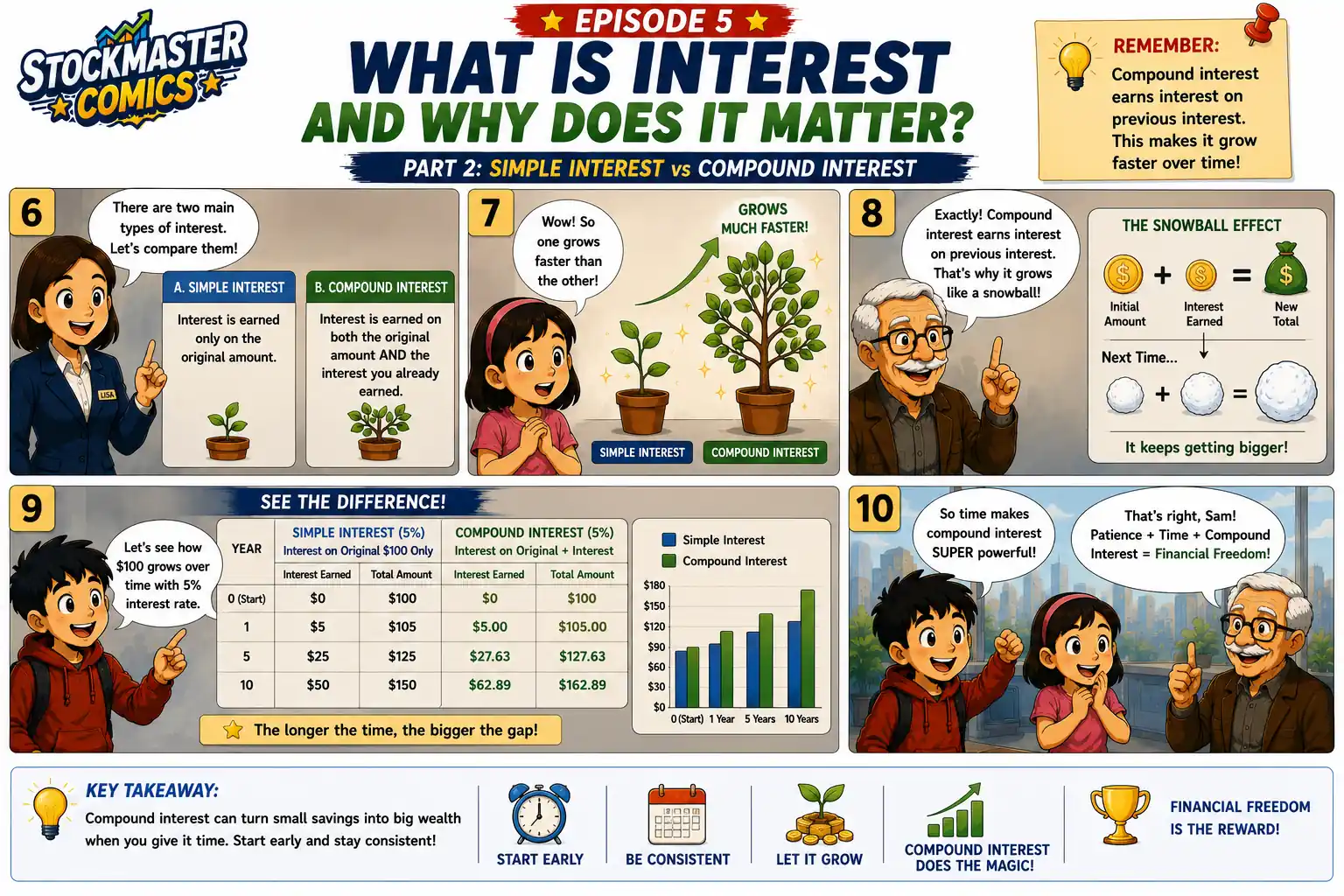
There are two main ways money can grow through interest: simple interest and compound interest.
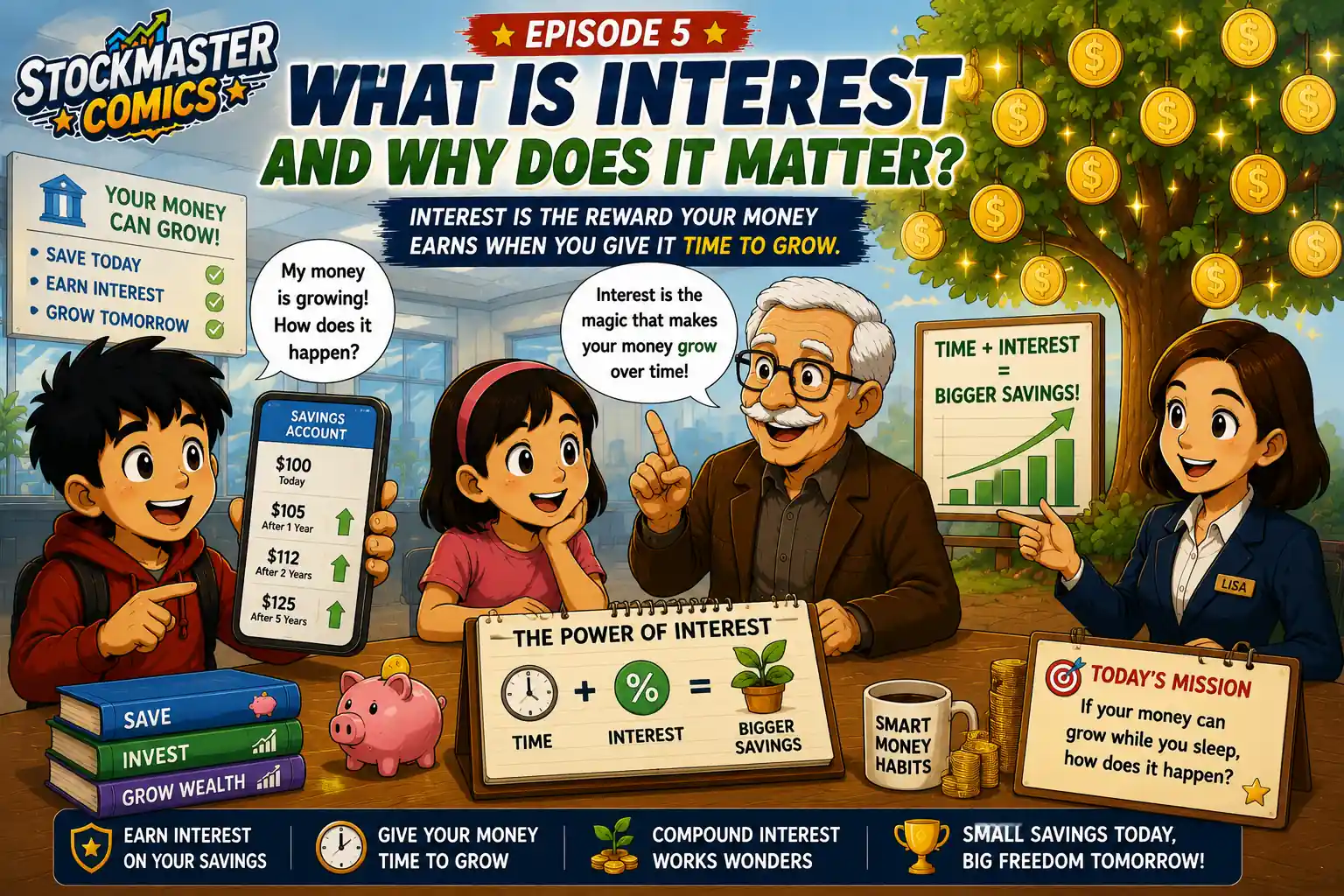
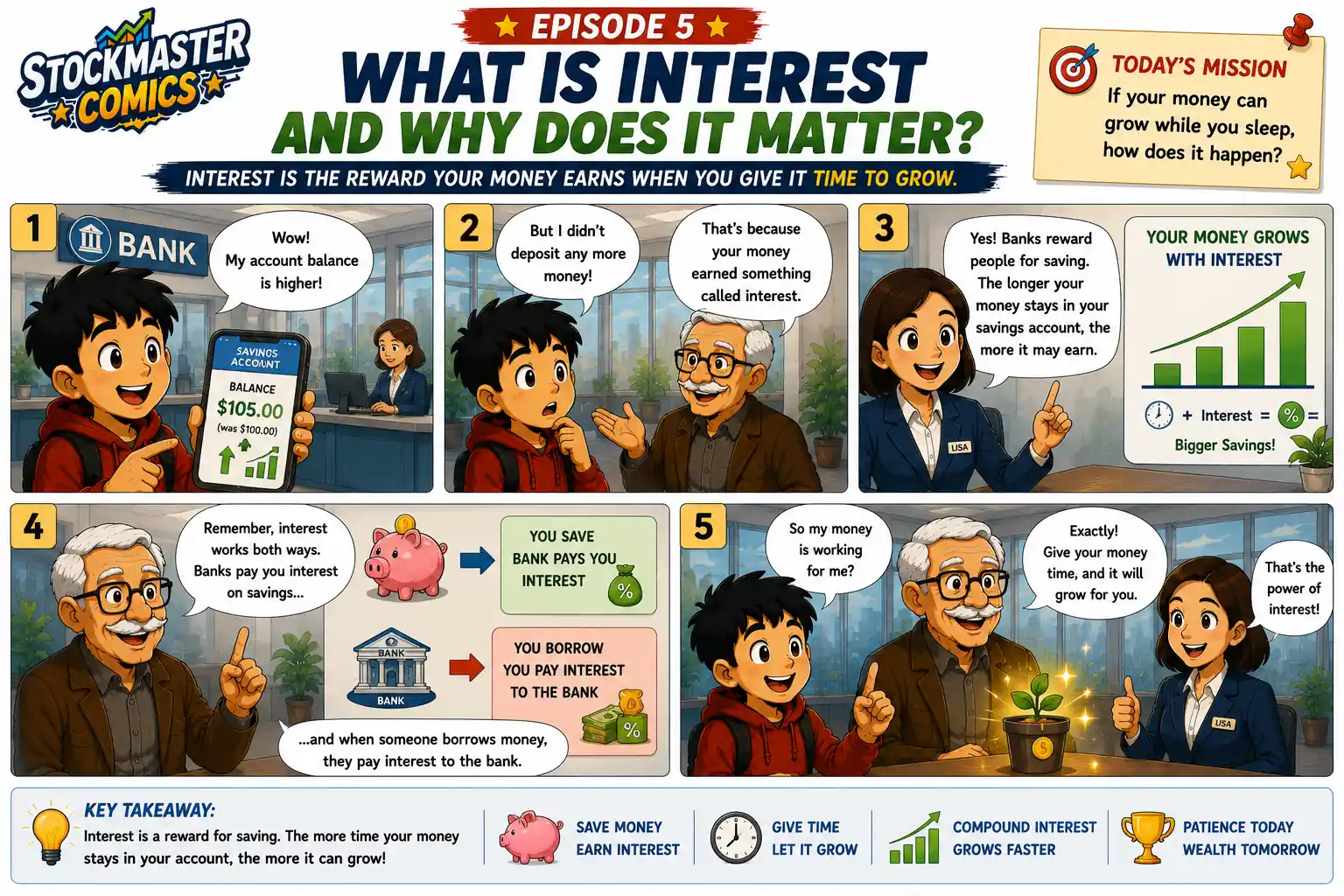
Simple interest is calculated only on the original amount of money, called the principal. If Sam saves $100 and earns 5% simple interest, he receives $5 every year. After five years, he earns a total of $25, giving him $125.
Compound interest works differently. Instead of earning interest only on the original amount, you also earn interest on the interest you've already received. This creates a snowball effect. Every year, your money grows a little faster because the balance keeps getting bigger.
For example, if Sam earns compound interest on his $100, the first year he has $105. In the second year, he earns interest on $105, not just the original $100. Over many years, this difference becomes much larger.