
The Day IBM Lost Billions Before Lunch
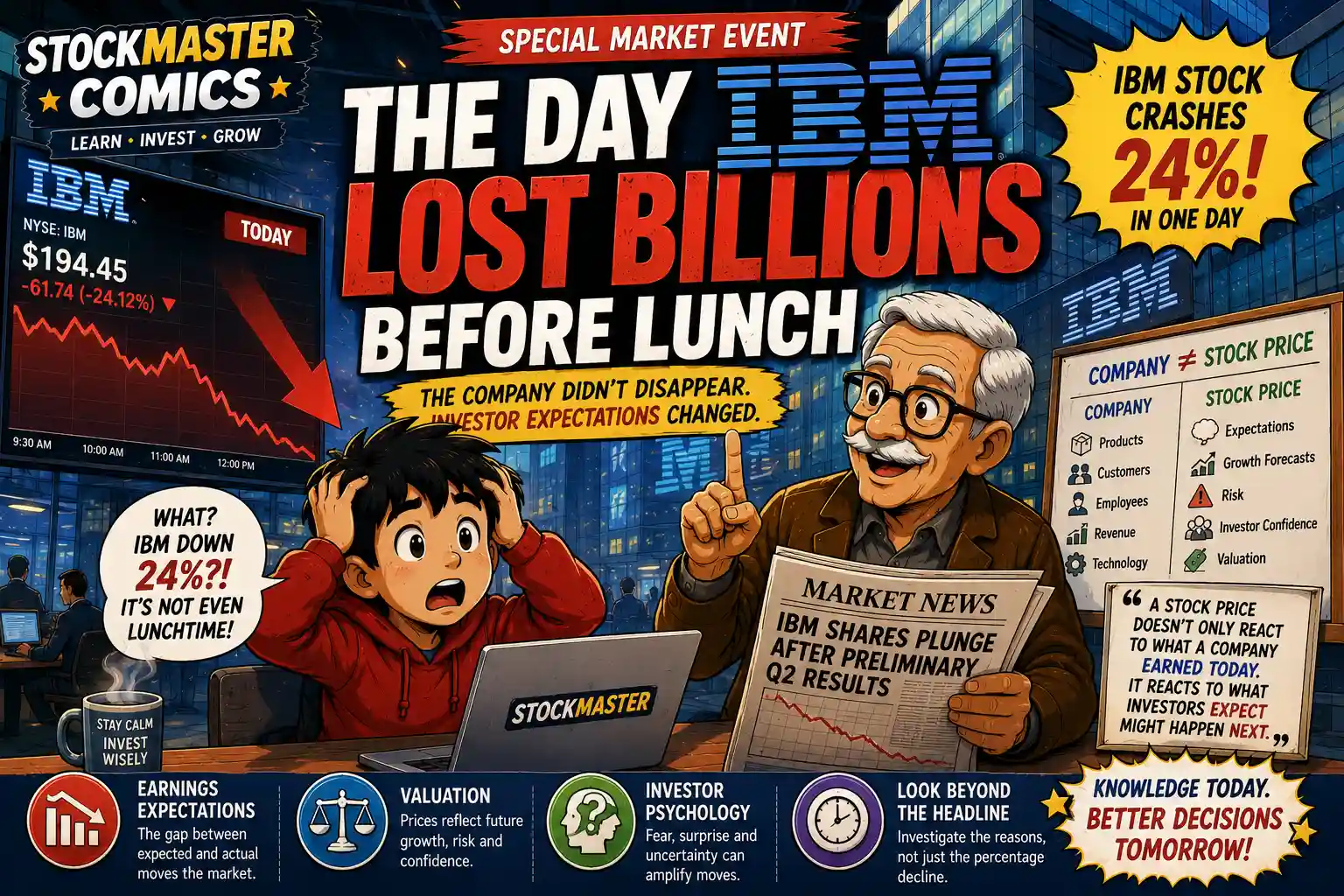
Market Event Note: This comic is inspired by IBM’s sharp stock sell-off on July 14, 2026. IBM released selected preliminary second-quarter figures ahead of its scheduled July 22 earnings announcement. Preliminary revenue of $17.2 billion and adjusted EPS of $2.93 came below Wall Street expectations cited by AP of $17.86 billion and $3.01 respectively. IBM CEO Arvind Krishna told investors, “This quarter, we faltered.” IBM shares then suffered a historic one-day plunge.
Introduction
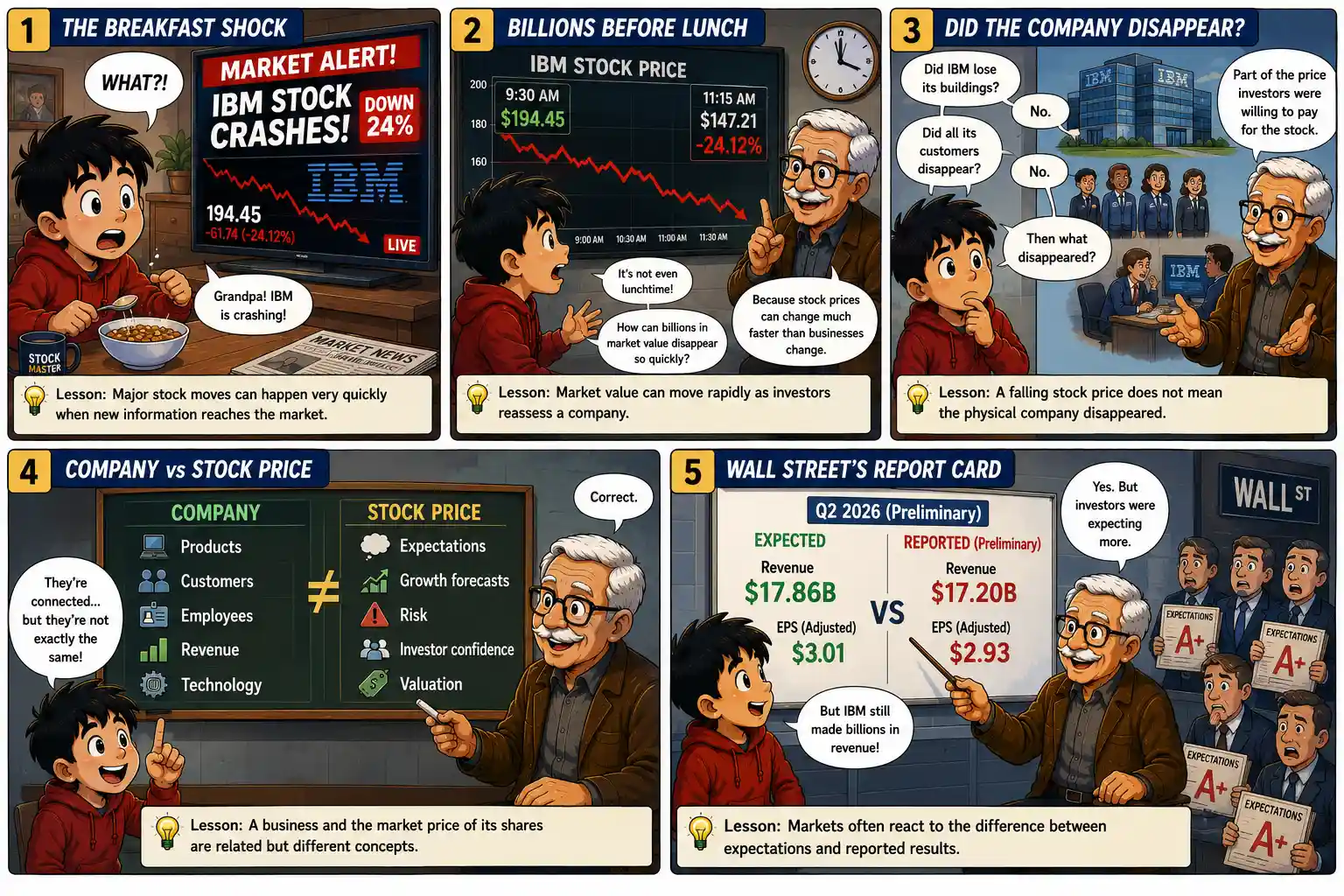
Sam is eating breakfast when a giant red alert flashes across the television:
IBM STOCK CRASHES!
The numbers on the screen are falling fast.
Sam nearly drops his spoon.
IBM is one of the world’s best-known technology companies. It still has employees, customers, technology, offices, and products. Yet billions of dollars in stock-market value appear to be vanishing in a matter of hours.
“How can a giant company lose so much before lunch?” Sam asks.
Grandpa Ben smiles. Sam has just discovered one of the most confusing ideas in the stock market: a company and its stock price are connected, but they are not the same thing.
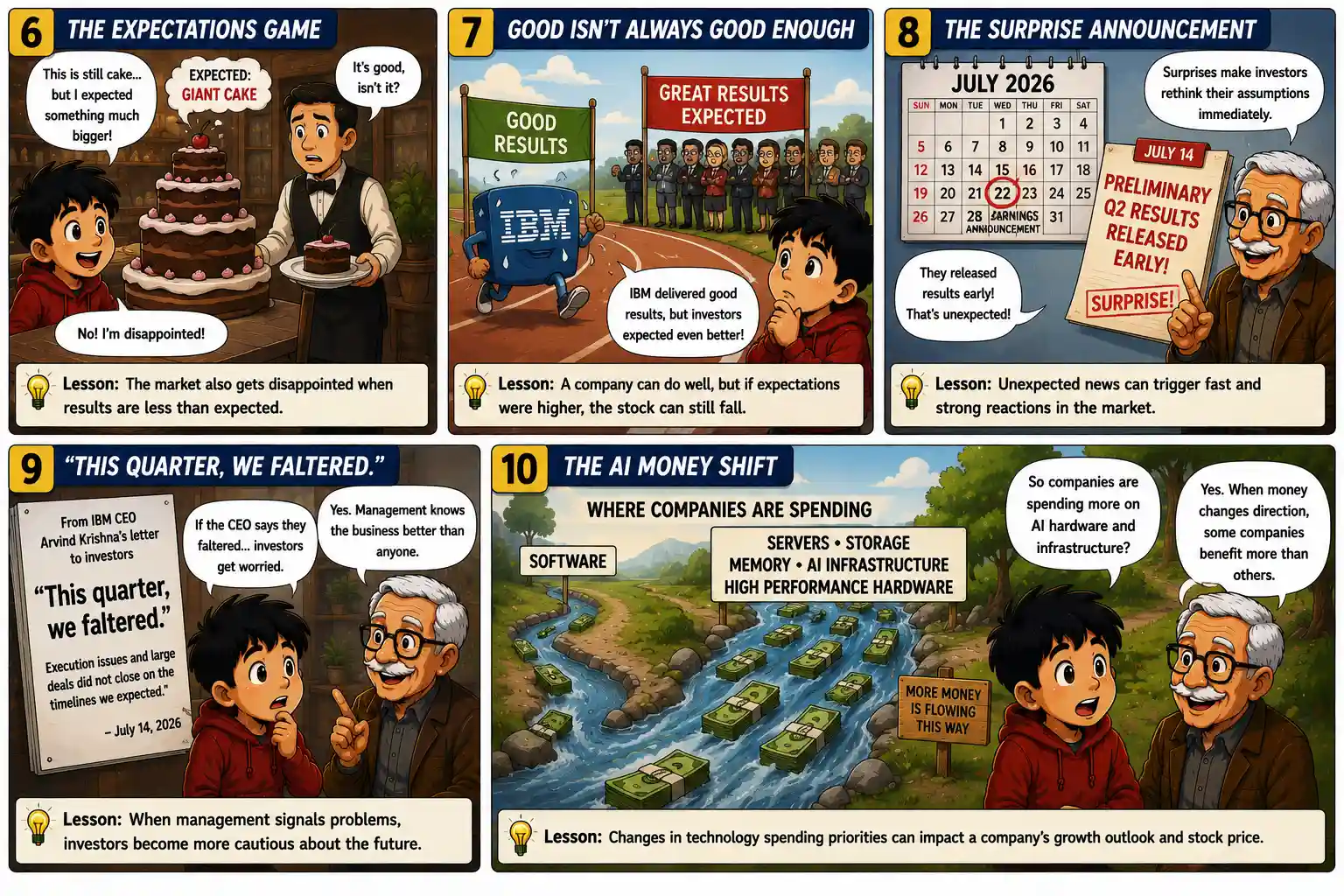
A stock price doesn’t only reflect what a company owns today. Investors also make decisions based on what they expect the business to earn, grow, and achieve in the future.
When new information suddenly changes those expectations, a stock can move incredibly fast.
In this special StockMaster Market Event Comic, Sam investigates IBM’s dramatic July 2026 sell-off and learns about earnings expectations, market surprises, valuation, investor psychology, and why even giant companies can suffer enormous one-day stock declines.
The mystery begins with one simple question:
Did one-fourth of IBM suddenly disappear—or did Wall Street change its mind?
Lesson Summary
Why Did IBM's Stock Fall So Fast?
IBM's dramatic July 14, 2026 stock decline provides a powerful lesson about how financial markets process new information. The company released selected preliminary second-quarter results earlier than its previously scheduled July 22 earnings discussion. IBM reported preliminary revenue of $17.2 billion and adjusted earnings per share of $2.93. Both were below analyst expectations cited by AP. CEO Arvind Krishna also acknowledged that IBM had “faltered” during the quarter and discussed execution problems, including large deals that did not close on expected timelines. Investors suddenly had new information. Before the announcement, stock prices reflected thousands of assumptions about IBM's revenue, profit, growth, software business, infrastructure demand, and future opportunities. When the preliminary figures challenged some of those assumptions, investors recalculated. This is why stocks can move so quickly. A factory does not need to disappear. Employees do not need to vanish. A company does not need to lose every customer. The market simply needs to change what it believes the future may be worth.
Why Expectations Can Matter More Than “Good” or “Bad”
Beginning investors often divide earnings reports into two simple categories: Profit = good. Loss = bad. The stock market is more complicated. Imagine investors expect a company to earn $10 but it earns $8. The company still earned money, yet the result may disappoint the market. Now imagine investors expect a company to lose $10 but it loses only $2. The business still lost money, but the stock might rise because the result was better than feared. This is the expectations game. Stock prices can react to the gap between: What investors expected and What actually happened. That's why Sam's birthday cake example matters. Receiving a medium-sized cake isn't necessarily bad. But if you were promised a giant cake, the medium cake feels disappointing. The same psychological principle helps explain earnings reactions. Investors continuously compare reality with forecasts.
What Investors Can Learn From IBM's Historic Drop
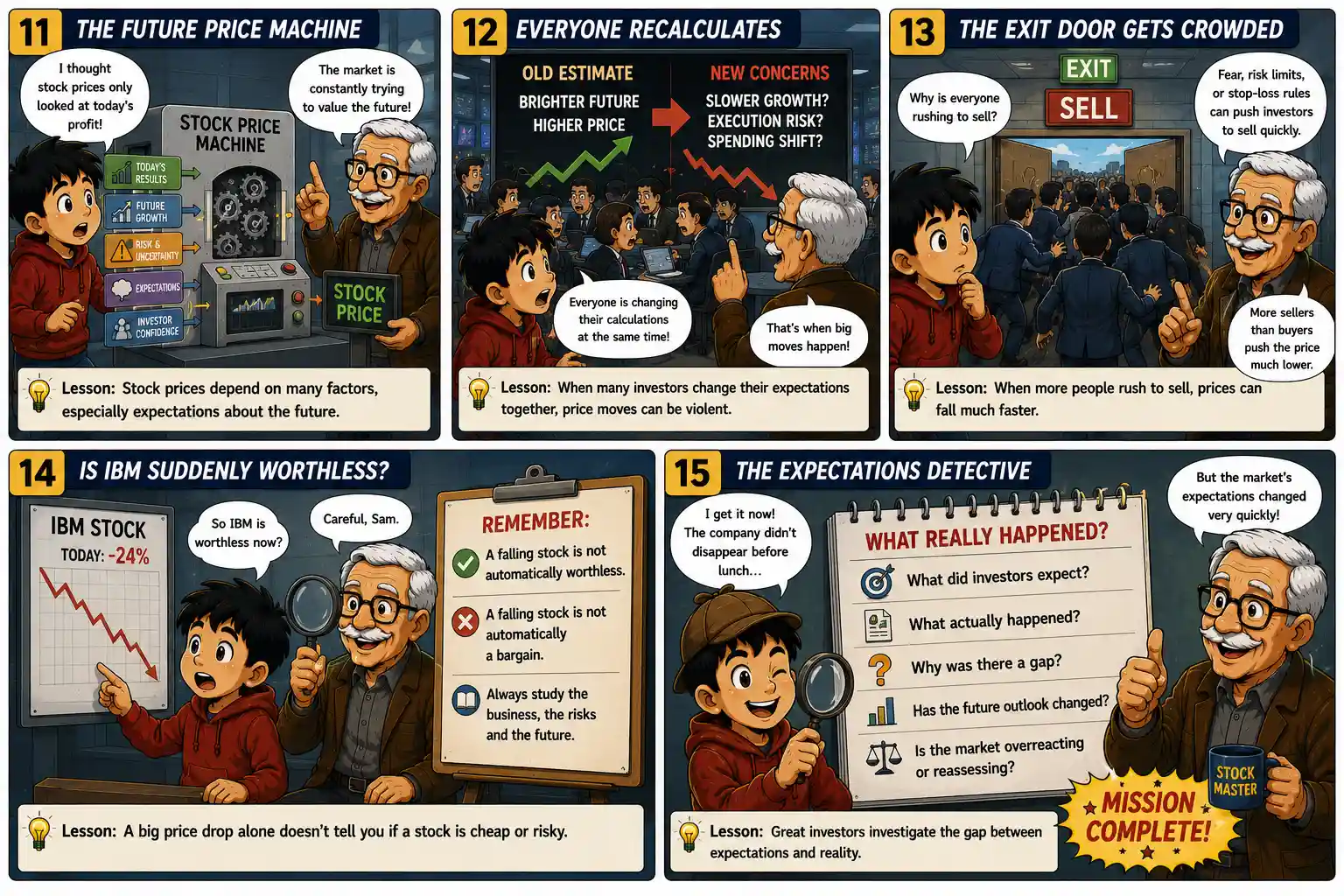
The IBM sell-off teaches a lesson that applies far beyond one company. First, famous companies can still experience enormous stock declines. Brand recognition does not remove investment risk. Second, investors should separate the business from the stock price. A great company can sometimes have an expensive stock. A struggling company can sometimes have a stock that has already priced in enormous pessimism. Third, a large decline does not automatically create a buying opportunity. After seeing IBM fall, Sam's first instinct might be: “It's 24% cheaper! Buy!” But price alone is not enough. An investor should ask why the stock declined, whether earnings expectations have changed, what management is saying, whether the problem appears temporary or structural, and how much risk remains. The most important lesson is to become an expectations detective. When a stock suddenly rises or crashes, don't look only at the percentage move. Ask: What did the market believe yesterday—and what does it believe today? That question can help you understand why billions of dollars in market value can seemingly disappear before lunch.
Key Takeaways
- Stock prices can change much faster than the underlying business.
- A company and its stock price are connected but are not identical.
- Markets compare actual results with investor expectations.
- Good results can disappoint if investors expected better.
- Bad results can sometimes lift a stock if investors feared worse.
- Management commentary can influence investor confidence.
- A 20% or 25% stock decline does not automatically make a stock a bargain.
- Always investigate why expectations changed.
Vocabulary
Market Capitalisation – The total market value of a company’s outstanding shares.
Earnings Expectations – Forecasts or estimates about a company’s financial performance.
Preliminary Results – Early financial figures released before final reporting is completed.
Valuation – An assessment of what a company or investment may be worth.
Sell-Off – A period of heavy selling that can cause a stock or market to fall rapidly.
Smart Investor Tip
🔍 When a stock crashes after earnings, don’t ask only, “How much did it fall?”
Ask:
“What did investors expect, what actually happened, and what changed about the future?”
A red chart shows the price movement.
The expectations gap often helps explain the story behind it.