
Why Did Big Tech Fall Together? When One Story Changes the Whole Market
Introduction
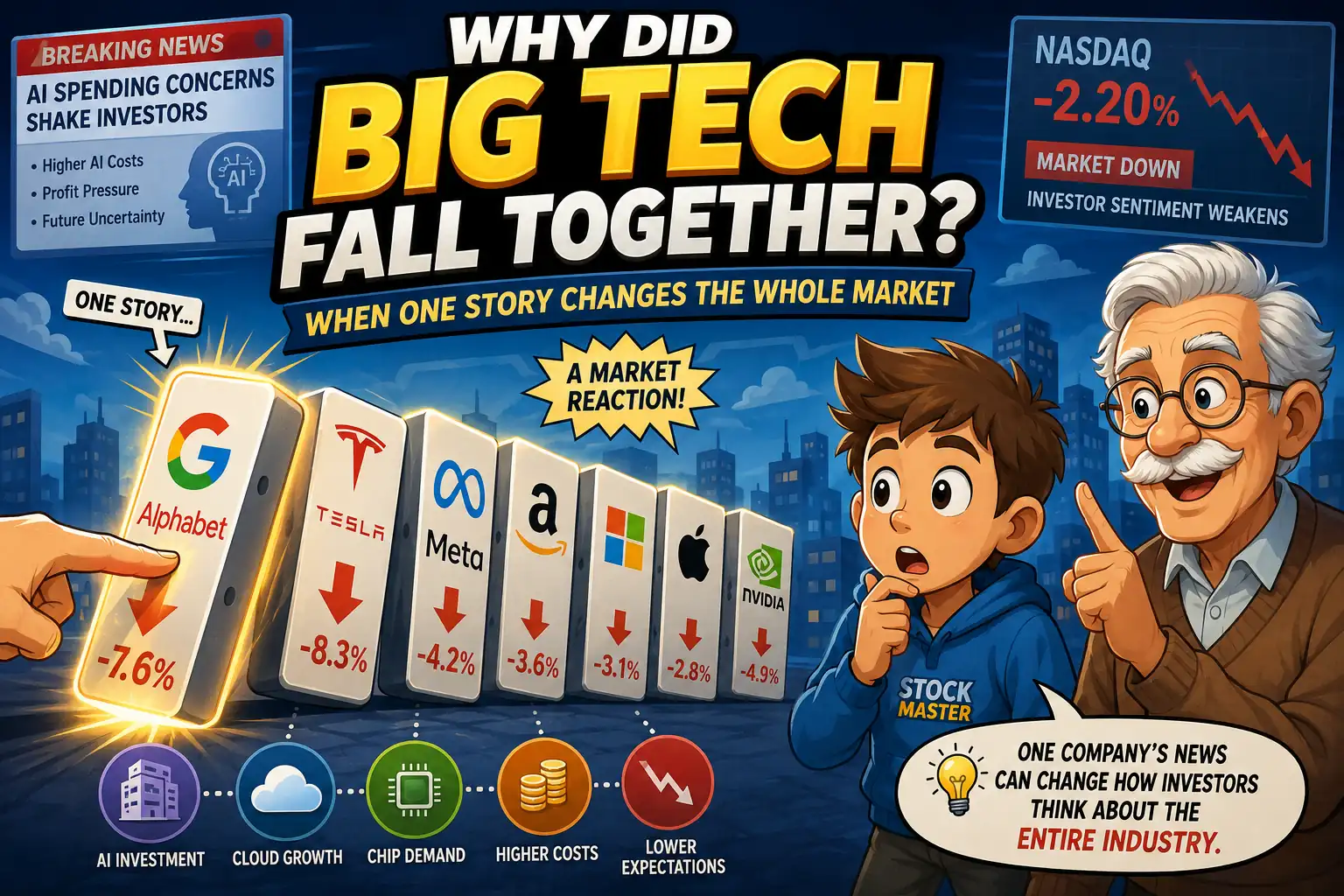
Sam wakes up excited to check the stock market. He expects to see different companies moving for different reasons. Instead, he notices something strange—many of the world’s biggest technology companies are falling on the same day.
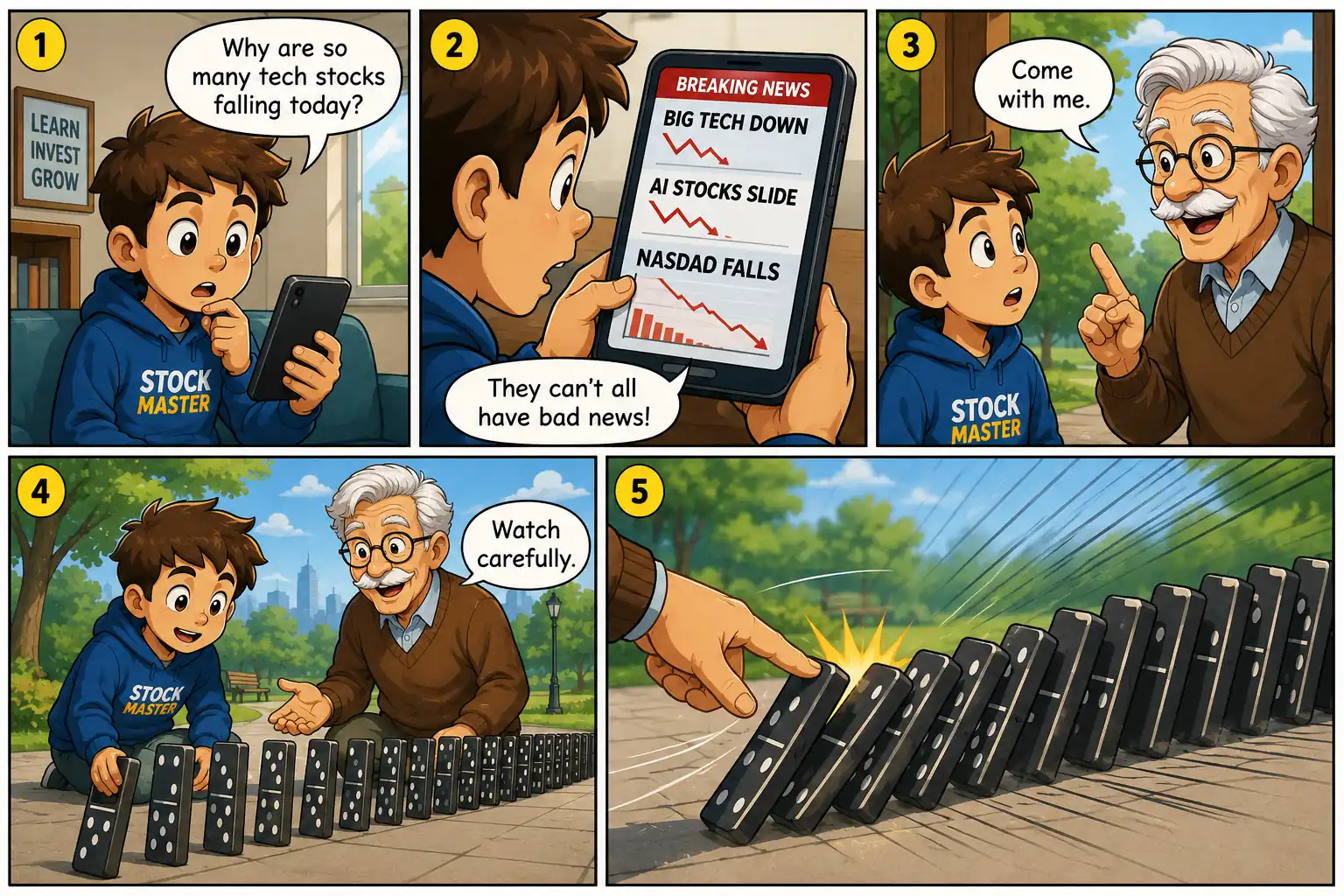
“Grandpa Ben,” Sam asks, “how can so many companies fall together? They don’t even make the same products!”
Grandpa Ben smiles and takes Sam to a nearby park where a long line of dominoes is carefully arranged.
“Watch closely,” Grandpa says.
He gently tips over the first domino.
One by one, every domino falls.
Sam is amazed.
“But only one domino was pushed!” he says.
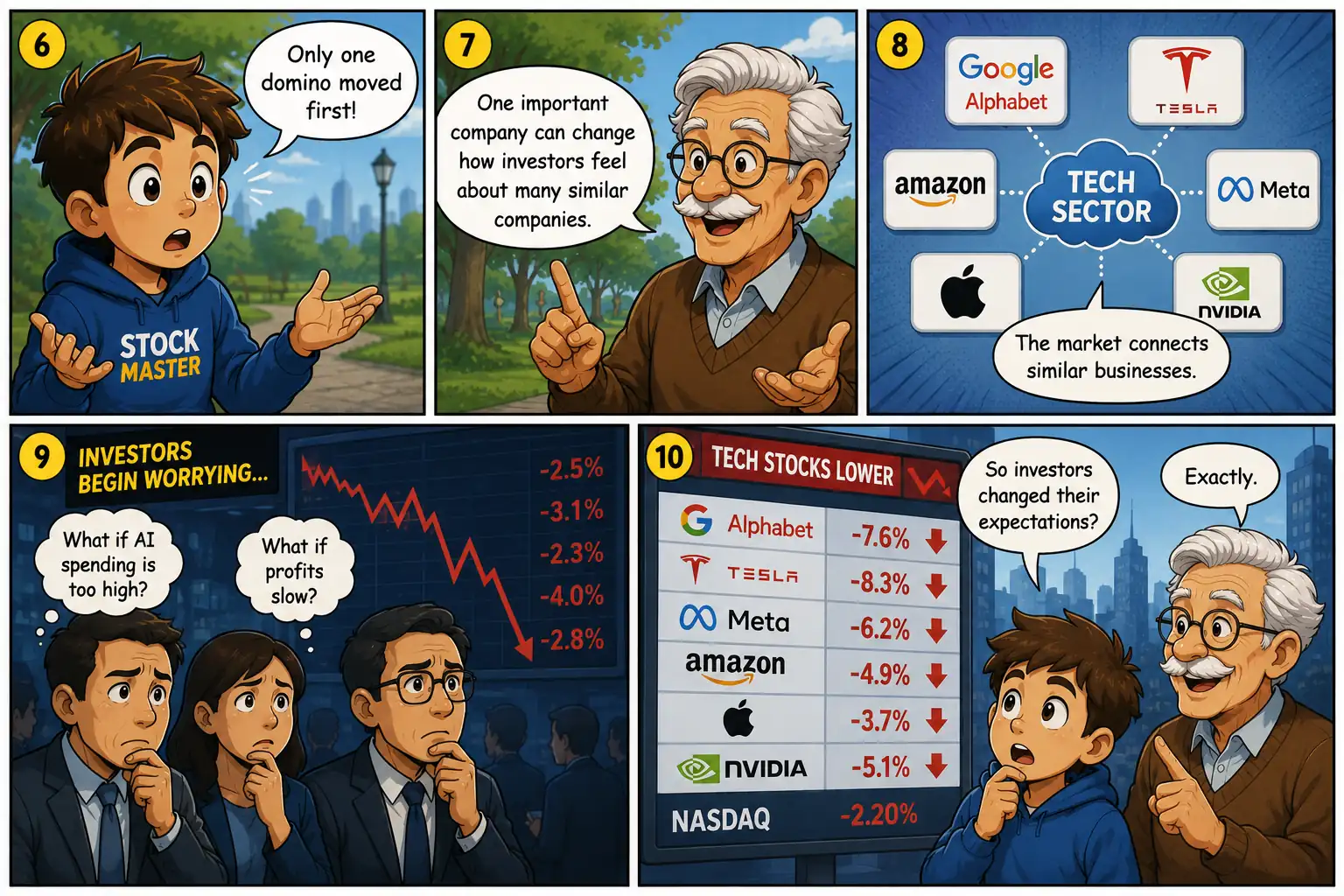
“Exactly,” Grandpa replies. “Sometimes one important event changes how investors think about an entire industry.”
In the stock market, large companies often set the mood for the whole sector. When investors become worried about one major company—whether because of earnings, spending, or future expectations—they may begin questioning similar companies as well.
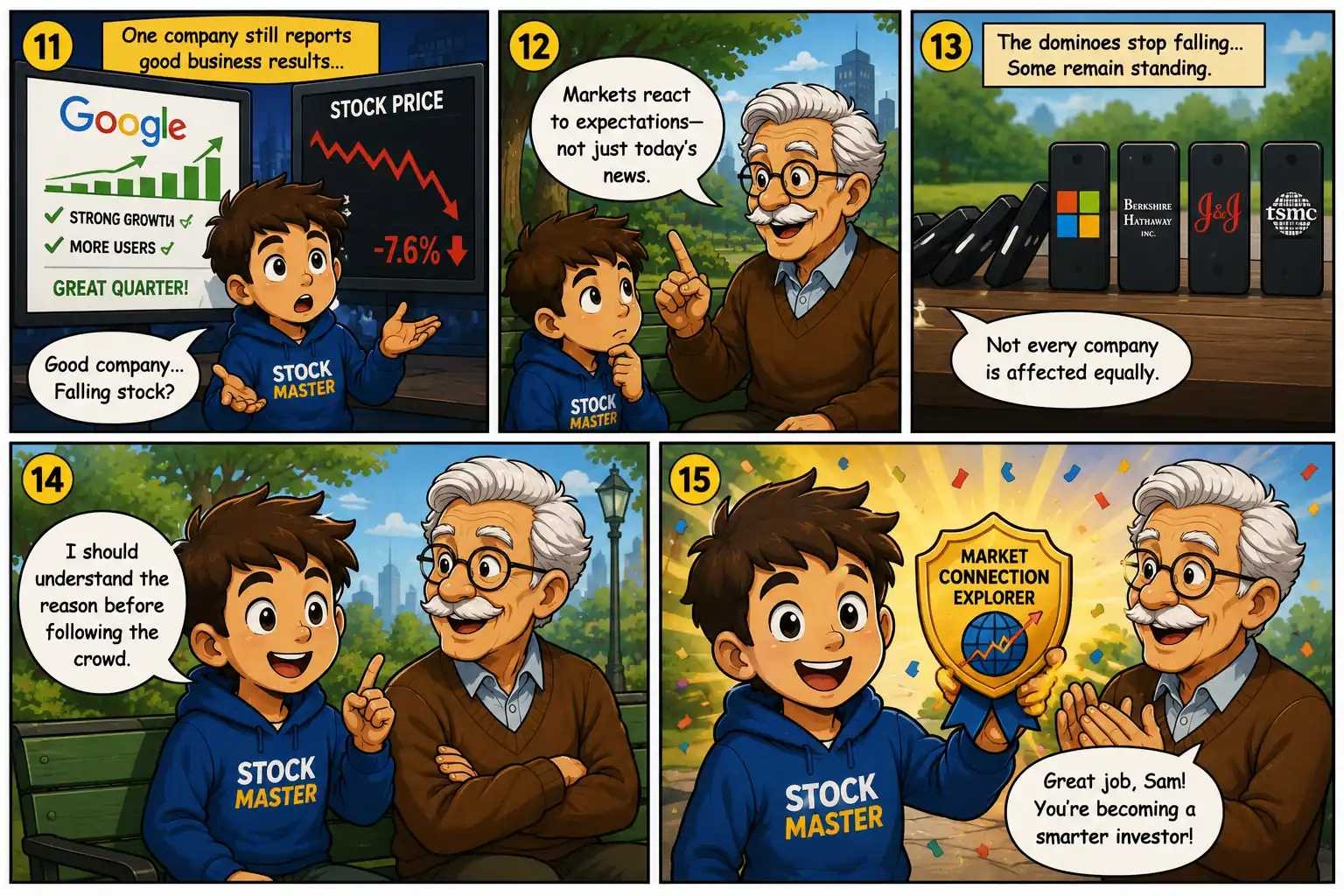
This doesn’t always mean every business has become weaker. Sometimes it simply means investor confidence has changed.
In this special StockMaster Comics, you’ll discover why a single news story can affect many stocks at once, how market sentiment spreads, and why long-term investors should look beyond short-term headlines.
Lesson Summary
Why Do Stocks Sometimes Fall Together?
Financial markets are connected. Companies in the same industry often face similar opportunities and risks. When investors become worried about one major company, they sometimes reconsider other companies in the same sector. This change in confidence is called market sentiment. It doesn't necessarily mean every business has become weaker. Sometimes investors are simply becoming more cautious.
Why Big Companies Influence the Whole Market
Large technology companies have a significant influence on major stock indexes because of their size. When these companies report earnings or announce major spending plans, investors often use that information to reassess the entire industry. If they believe future growth may slow or costs may rise, they may reduce investments across similar companies. This is why a single news story can affect many stocks on the same day.
Think Before Following the Crowd
Short-term market movements are often driven by changing expectations and emotions. Successful investors try to understand why prices are moving instead of reacting to headlines alone. Looking at a company's long-term business, financial health, and competitive position can provide a clearer picture than following market sentiment during a single trading session.
Key Takeaways
- One important news event can influence an entire sector.
- Large companies often shape investor sentiment.
- Market expectations affect stock prices.
- Good companies can experience temporary declines.
- Long-term investors focus on business fundamentals.
- Avoid making decisions based only on headlines.
Vocabulary
Market Sentiment – The overall attitude or mood of investors toward the market or a sector.
Sector – A group of companies that operate in the same industry, such as technology or banking.
Earnings – A company’s profit over a specific period.
Expectation – What investors believe is likely to happen in the future.
Volatility – The degree to which prices move up and down over time.
Smart Investor Tip
💡 Not every market decline is a reason to panic. Before making an investment decision, understand whether the move is driven by short-term sentiment or by a meaningful change in a company’s long-term business.