
Why Does Oil Above $100 Shake the Stock Market?
Introduction
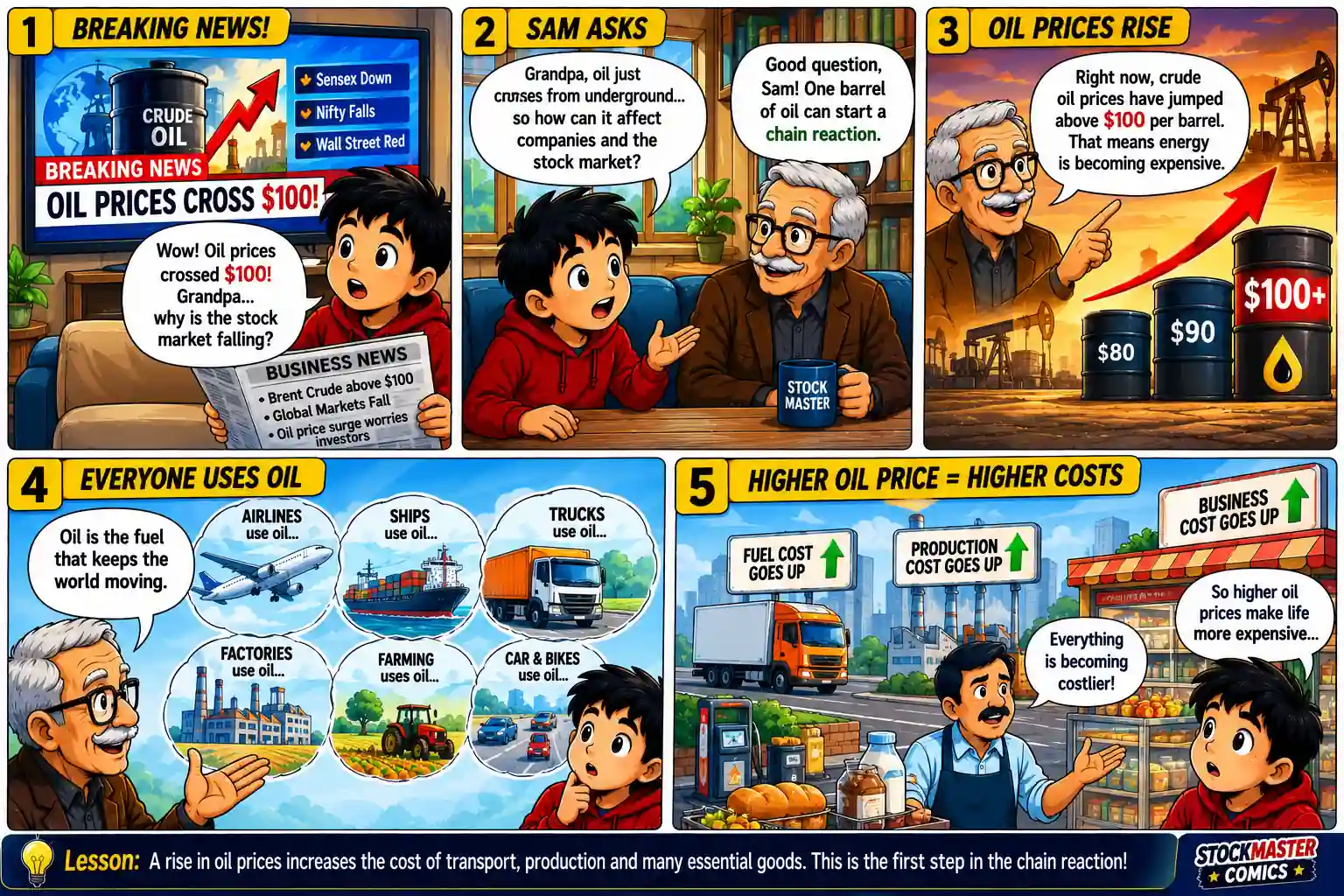
Sam wakes up to alarming headlines on his phone:
“Oil Prices Cross $100!”
“Global Stock Markets Fall!”
Confused, he rushes to Grandpa Ben.
Sam: “Grandpa, oil comes from underground. Why are stock markets around the world falling?”
Grandpa Ben smiles.
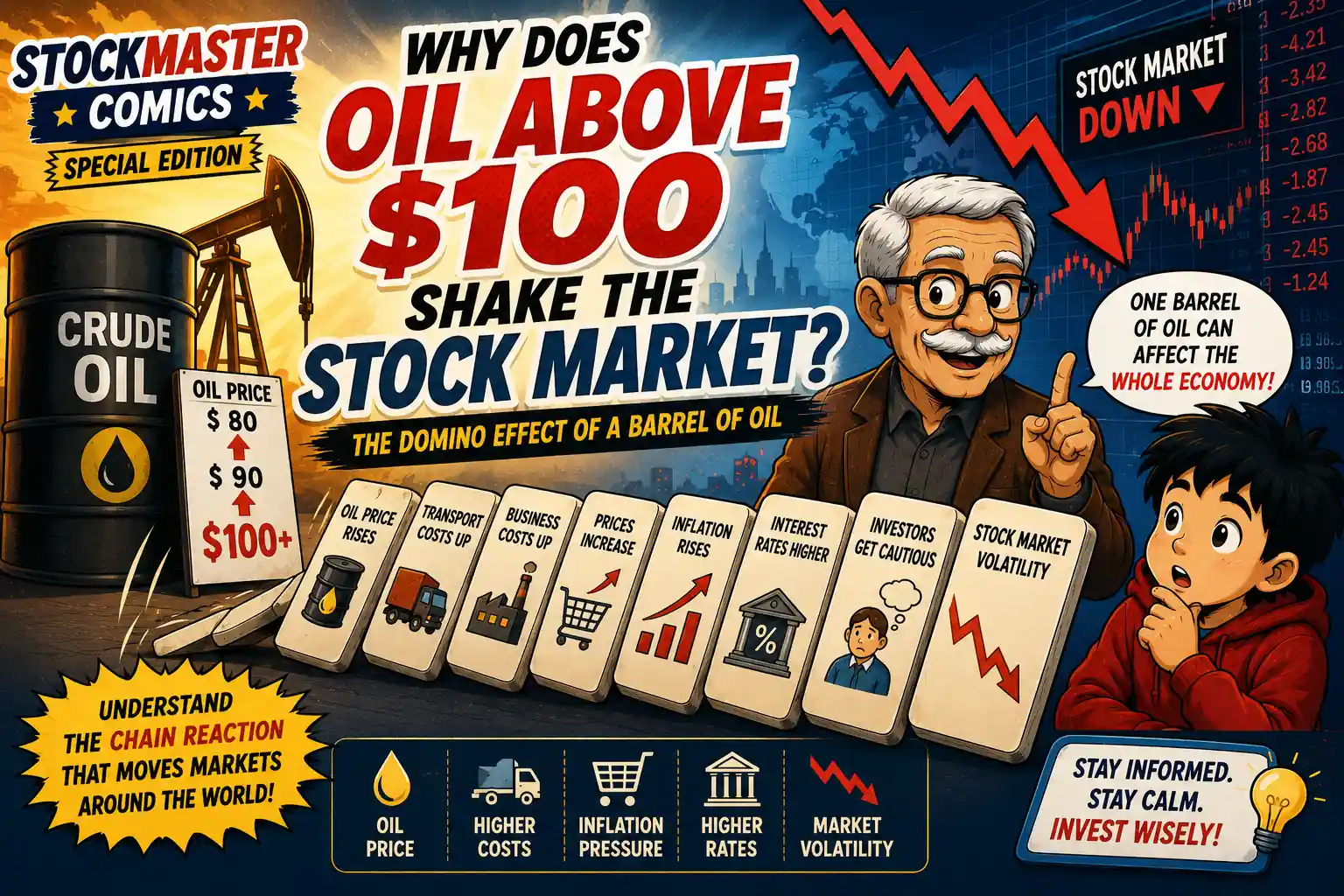
“That’s because one barrel of oil can start a chain reaction across the entire global economy.”
In today’s special StockMaster Comics, Sam learns how rising oil prices affect transportation, businesses, inflation, interest rates, and ultimately the stock market. By the end of the story, you’ll understand why investors everywhere pay close attention whenever crude oil prices rise sharply.


Lesson Summary
Why Oil Matters
Oil is used to power transportation, manufacturing, farming, airlines, shipping, and many industries around the world. When crude oil prices rise sharply, businesses often face higher operating costs. Some companies absorb these costs, while others increase the prices of their products and services.
How Oil Affects the Stock Market
Higher oil prices can contribute to inflation by increasing transportation and production costs. If inflation remains high, central banks may decide to keep interest rates elevated for longer. Higher borrowing costs can affect consumers, businesses, and investor confidence, leading to increased stock-market volatility.
The Smart Investor's Lesson
Oil price spikes often create uncertainty, but experienced investors avoid making emotional decisions based only on headlines. Instead, they focus on understanding the broader economic picture, the quality of businesses they own, and their long-term investment goals. Market reactions are common, but history shows that economies and businesses adapt over time.
Key Takeaways
- Oil is an important part of the global economy.
- Rising oil prices can increase business costs.
- Higher costs may contribute to inflation.
- Inflation can influence interest-rate decisions.
- Stock markets often react to expectations before economic changes are fully visible.
- Long-term investors focus on business quality rather than daily headlines.
Vocabulary
Crude Oil – Natural oil extracted from the earth and refined into fuels and other products.
Inflation – A general increase in the prices of goods and services over time.
Interest Rate – The cost of borrowing money or the return earned on savings.
Volatility – The tendency of market prices to move up and down.
Central Bank – An institution that manages a country’s monetary policy and helps maintain economic stability.
Smart Investor Tip
💡 Don’t let dramatic headlines make your decisions for you. Learn how economic events affect businesses, then stay focused on your long-term investment strategy.