
Why Oil Prices Can Crash the Stock Market: The Strait of Hormuz Explained
Introduction
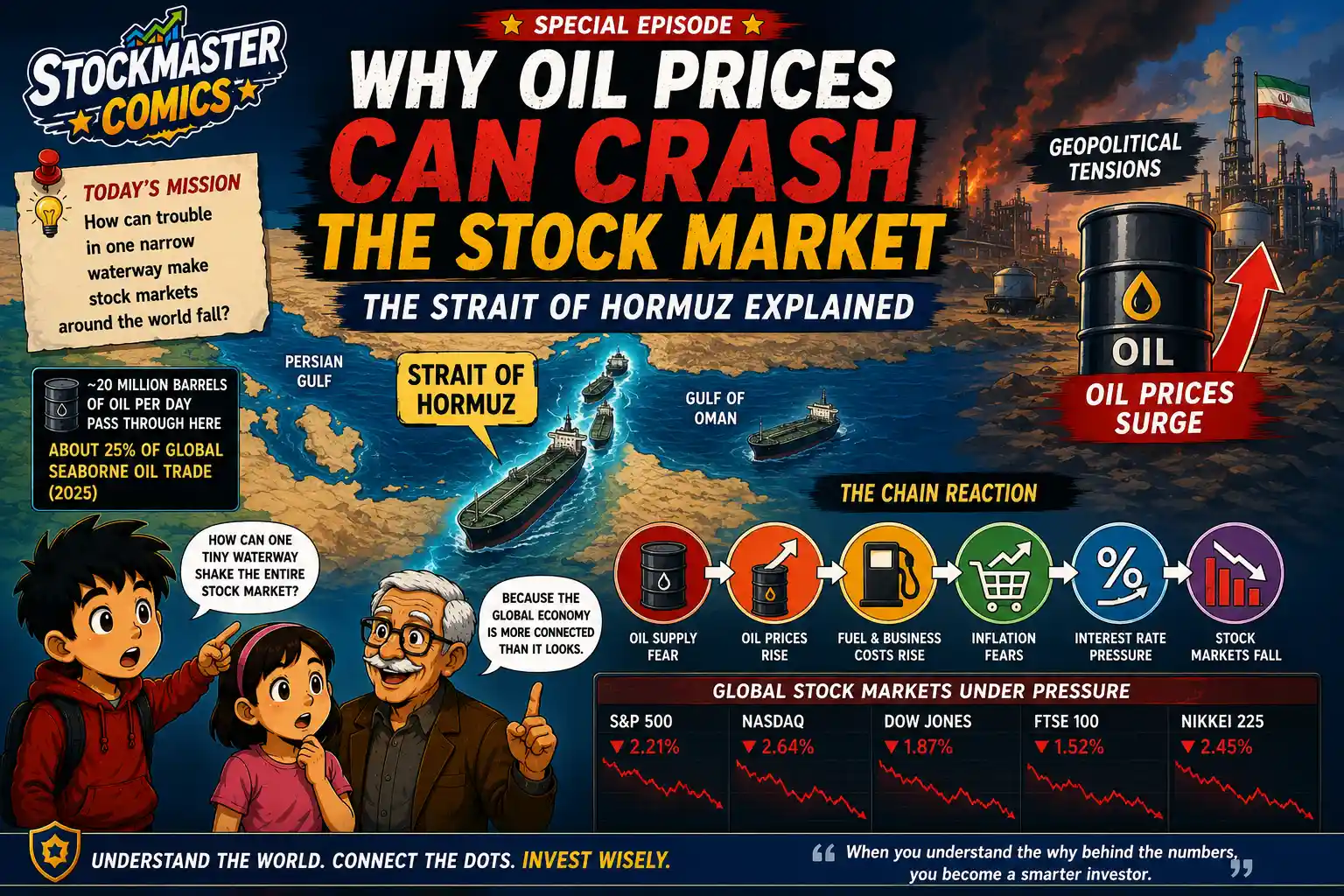
Imagine a narrow waterway that is important enough to make investors around the world watch every ship passing through it.
That place is the Strait of Hormuz.
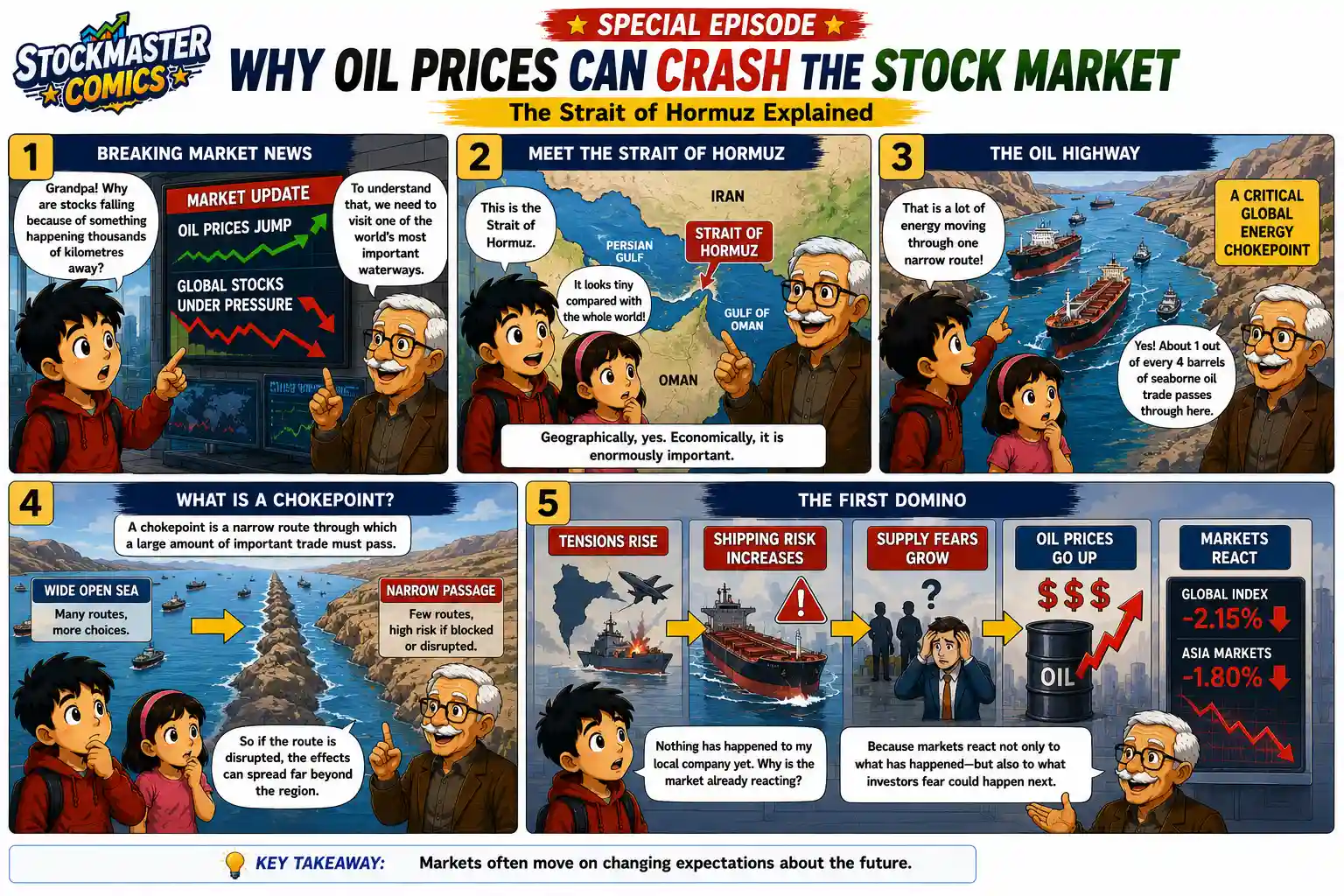
Located between Iran and Oman, it connects the Persian Gulf with the Gulf of Oman and the wider Arabian Sea. It is one of the world’s most important energy chokepoints. In 2025, around a quarter of the world’s seaborne oil trade passed through the strait, while alternative routes had only limited capacity.
But what does a shipping route have to do with the stock market?
A lot.
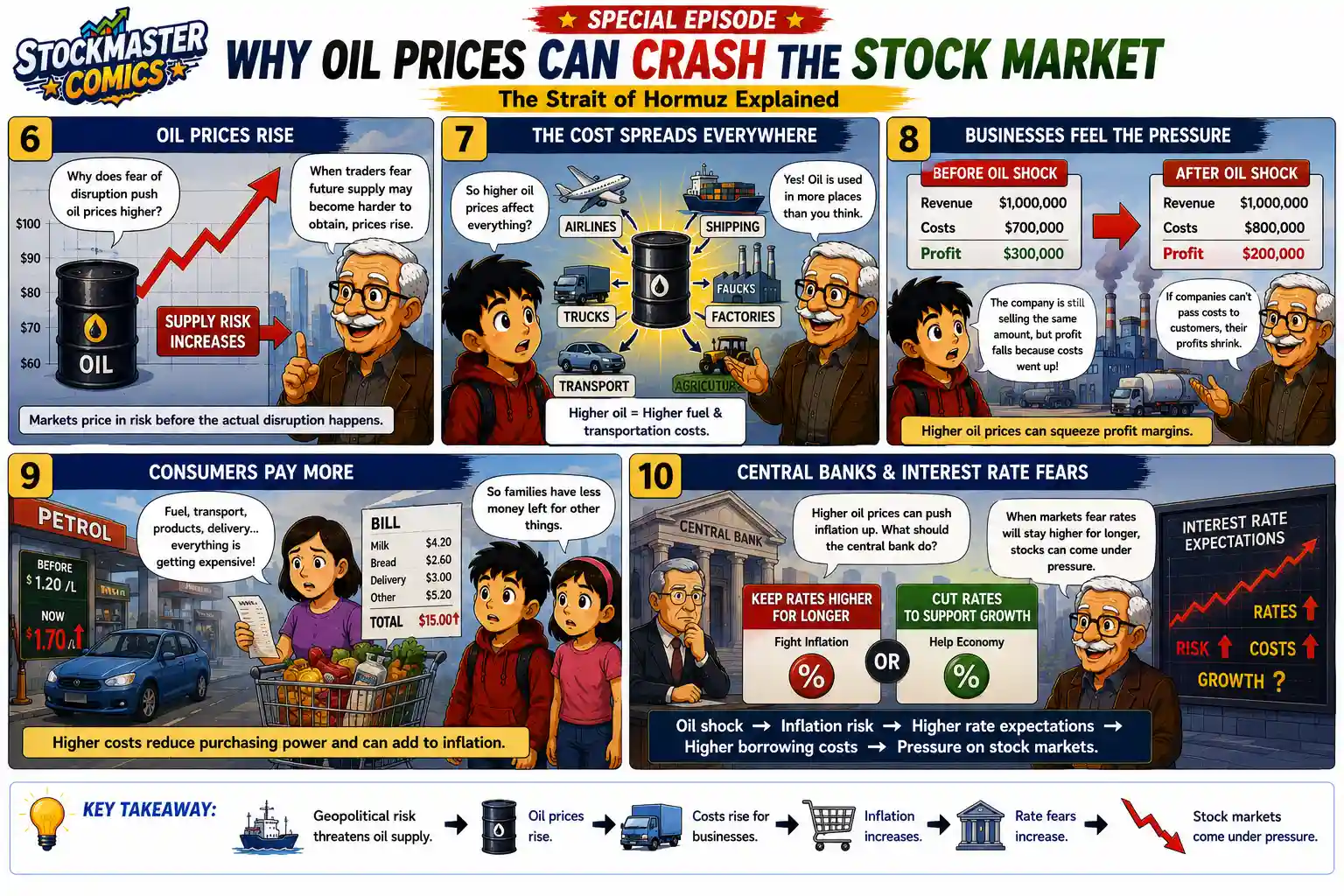
Modern economies depend heavily on energy. Oil helps power transportation, aviation, manufacturing and global supply chains. When investors fear that oil supplies could be disrupted, the expected price of oil can rise quickly.
More expensive oil can mean higher fuel and transportation costs. Businesses may have to spend more to manufacture and deliver products. Airlines may pay more for fuel. Consumers may spend more on transport and energy.
This can create concerns about inflation.
If inflation remains high, central banks may have less room to reduce interest rates—or markets may fear that rates could remain higher for longer. Higher borrowing costs can hurt consumers, companies and the valuations investors are willing to pay for stocks.
That creates a powerful chain reaction:
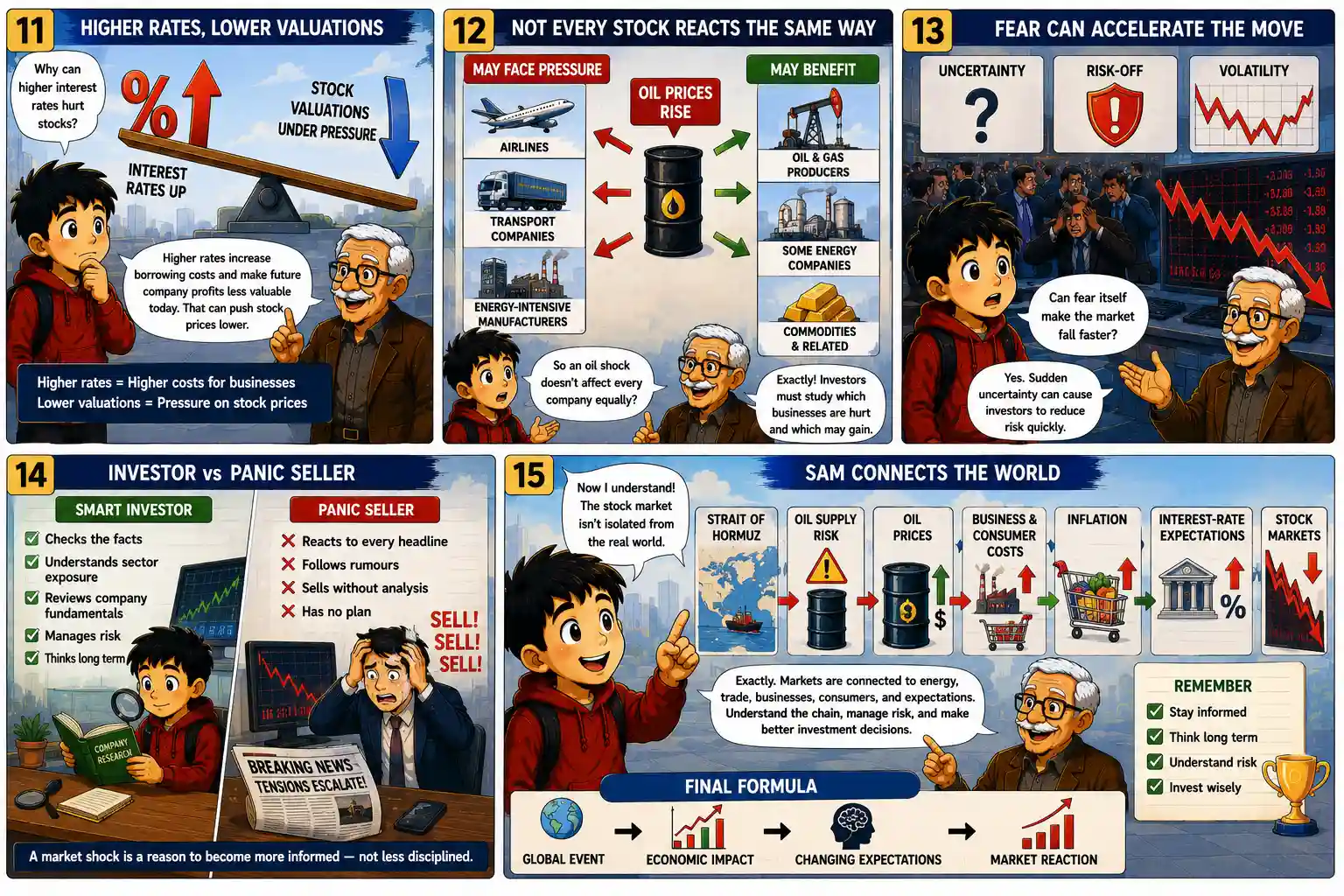
Geopolitical Risk → Oil Supply Fear → Higher Oil Prices → Inflation Fear → Interest-Rate Pressure → Stock-Market Volatility
However, an oil shock does not mean every stock automatically crashes. Energy producers may sometimes benefit from higher oil prices, while airlines, transport companies and other energy-intensive businesses may face higher costs.
In this special StockMaster Comics episode, Sam and Maya discover how one narrow waterway can send financial shockwaves around the world.
Lesson Summary
Why the Strait of Hormuz Matters
The Strait of Hormuz is a narrow but strategically important shipping route connecting major Gulf energy producers with global markets. Around a quarter of global seaborne oil trade passed through the strait in 2025, and the capacity to bypass it is limited. This makes the strait a chokepoint. When geopolitical tensions threaten shipping, markets may quickly reassess the possibility of future energy shortages. The key word is expectations. Financial markets do not wait until every possible disruption has occurred. Traders and investors continuously adjust prices based on new information and changing probabilities. That is why oil prices can move sharply when the perceived risk of supply disruption changes.
How an Oil Shock Reaches the Stock Market
Oil is connected to many parts of the economy. Higher prices can increase transportation, aviation, manufacturing and logistics costs. A company facing higher costs has several choices. It can absorb those costs and accept lower profits, raise prices for customers, reduce other expenses, or find ways to become more efficient. If many companies raise prices, inflationary pressure may increase. If consumers must spend more on fuel and essential goods, they may have less money available for other purchases. Investors then begin asking new questions: Will company profits fall? Will inflation stay higher? Will interest rates remain elevated? Will economic growth slow? These changing expectations can affect stock valuations. However, the impact is not uniform. An airline and an oil producer can react very differently to the same rise in crude prices. This is why investors analyse individual industries and companies rather than assuming that every stock will behave in the same way.
What Smart Investors Learn From Market Shocks
The biggest lesson is that the stock market is connected to the real economy. A geopolitical event can affect a shipping route. A shipping risk can affect energy prices. Energy prices can affect businesses and consumers. Those changes can influence inflation and interest-rate expectations, which can then affect financial markets. But investors should avoid assuming that every scary headline automatically leads to a lasting market crash. The eventual outcome depends on the duration and severity of the disruption, alternative supplies, government responses, economic conditions and investor expectations. Smart investors therefore focus on understanding the transmission mechanism—the chain through which an event could affect a company. Instead of asking only: “Is the market falling?” Ask: “What changed, which businesses are affected, and does this change my long-term investment thesis?” That is the difference between reacting to a headline and analysing an event.
Key Takeaways
- The Strait of Hormuz is one of the world’s most important energy chokepoints.
- Markets can react to the risk of disruption before the full economic impact is known.
- Higher oil prices can increase costs for businesses and consumers.
- Energy shocks can contribute to inflation concerns.
- Inflation can change expectations about central-bank interest rates.
- Higher rates and weaker profit expectations can pressure stock valuations.
- Different sectors can react differently to the same oil shock.
- Market volatility is not the same as a guaranteed long-term crash.
- Smart investors analyse the chain reaction instead of reacting blindly to headlines.
Vocabulary
Chokepoint – A narrow route through which a large amount of important trade passes.
Crude Oil – Unrefined petroleum used to produce fuels and many other products.
Inflation – A broad increase in the general level of prices over time.
Geopolitical Risk – Financial or economic risk created by international conflicts, political tensions or major global events.
Volatility – The degree to which market prices move up and down.
Smart Investor Tip
When breaking news moves the market, follow the economic chain—not the emotion.
Ask:
What happened? → What prices or costs change? → Which companies are exposed? → Could profits change? → Has the long-term investment case changed?