
Why One Week Can Change the Whole Stock Market
Introduction
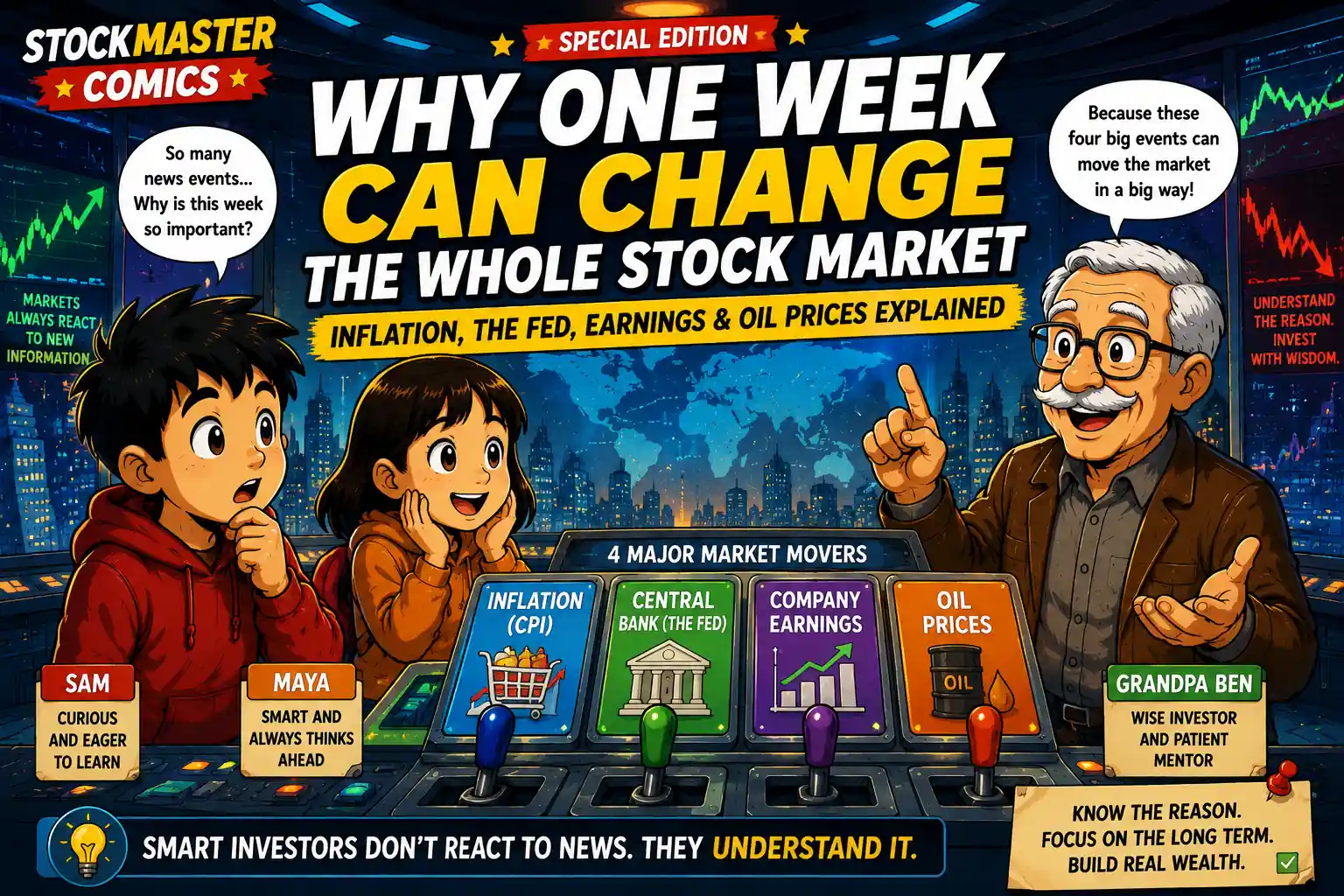
Sam was excited. Every time he opened a finance app, the stock market seemed to be moving dramatically. Some stocks were soaring, while others were falling. News headlines mentioned inflation, central banks, oil prices, and company earnings. It all seemed confusing.
“Grandpa Ben,” Sam asked, “why is everyone talking about this week? Can one week really change the stock market?”
Grandpa Ben smiled and invited Sam and Maya into the Market Control Room, a giant room filled with four glowing control levers.
“Every day thousands of events happen,” Grandpa Ben explained. “But sometimes several important events happen in the same week. Investors around the world pay close attention because these events can influence expectations about the economy.”
Maya looked at the glowing levers.
“What do they control?”
Grandpa Ben pointed one by one.
“The first represents Inflation.”
“The second represents the Central Bank.”
“The third represents Company Earnings.”
“And the fourth represents Oil Prices.”
“None of these levers directly control stock prices,” Grandpa Ben continued. “Instead, they influence how millions of investors think about the future.”
Sam looked surprised.
“So the market isn’t reacting to magic?”
Grandpa Ben laughed.
“No. Markets react to new information.”
“Today we’ll discover why understanding the news is far more valuable than simply reacting to it.”

Lesson Summary
Why Markets Move
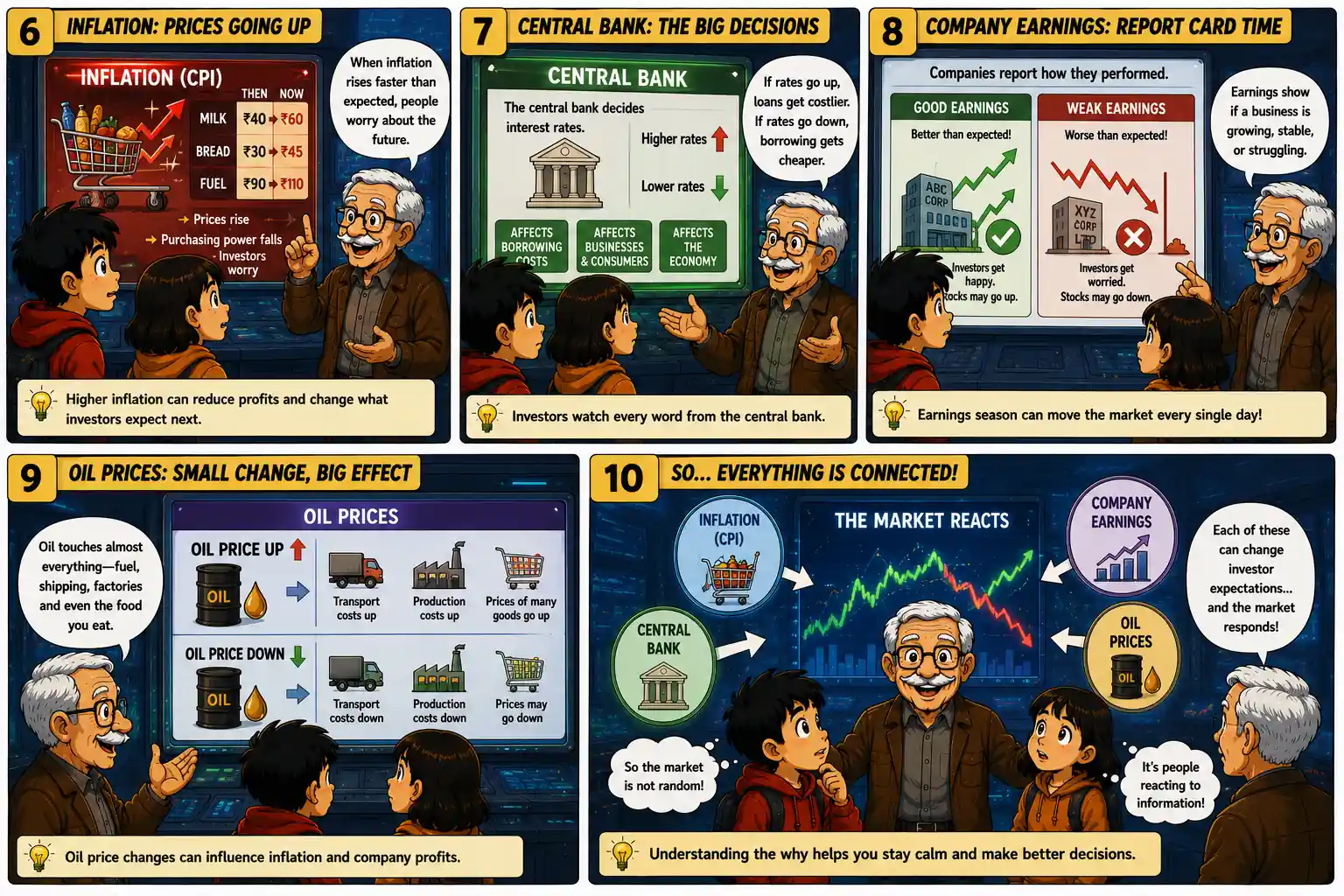
Markets respond whenever investors receive important new information. Inflation reports, interest-rate decisions, company earnings and energy prices help investors estimate what the future might look like. Different investors interpret the same information differently, causing prices to move.
Why Headlines Create Volatility
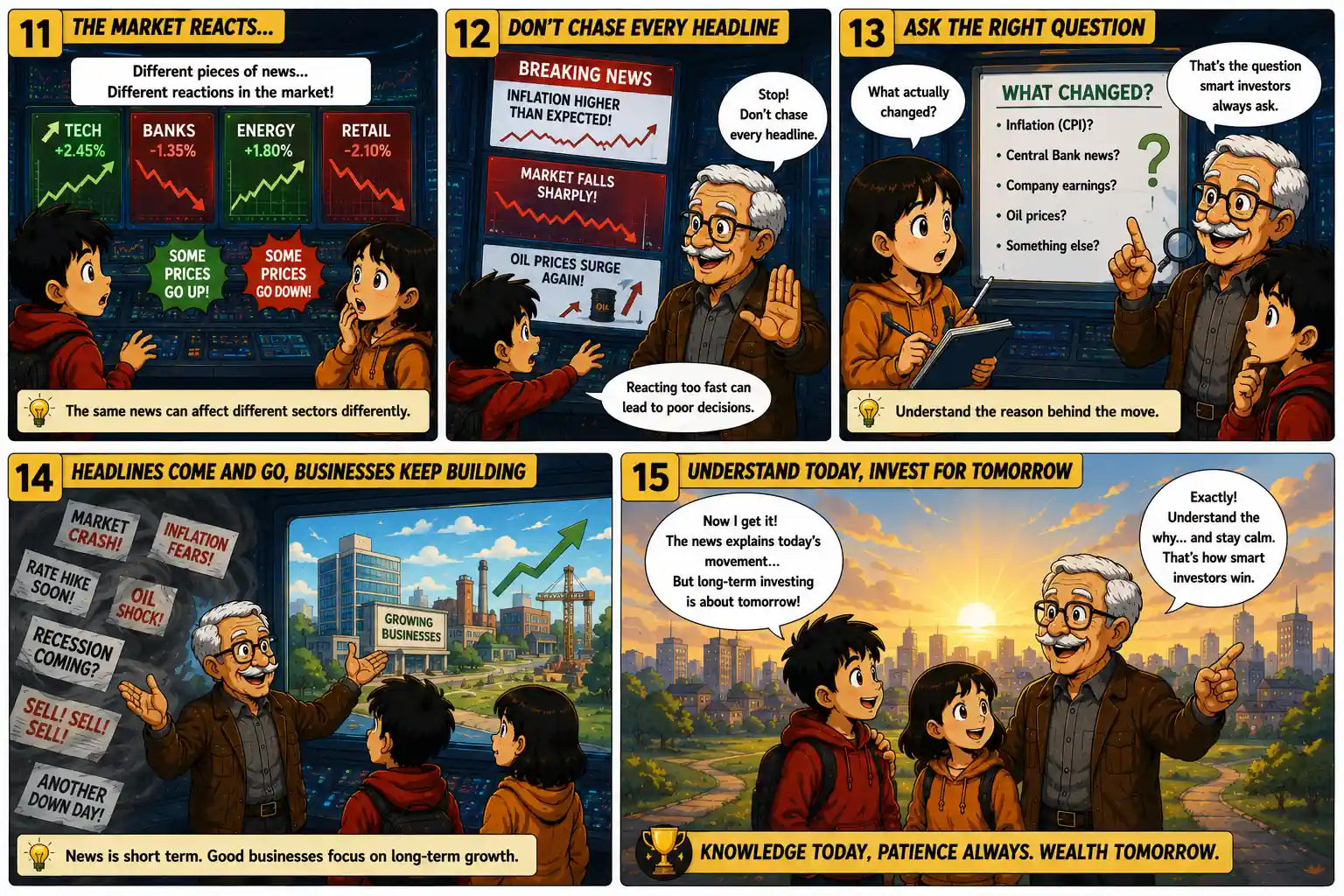
Financial news can create excitement and fear. Some people buy immediately. Others sell immediately. But headlines often describe today's events—not necessarily a company's long-term future. Smart investors try to understand the reason behind the news instead of reacting emotionally.
Focus on Understanding, Not Guessing
Nobody can predict every daily market movement. Instead of trying to guess tomorrow's prices, investors can focus on learning: Why markets move How businesses create value How risk affects decisions Why patience remains important Knowledge helps investors make more thoughtful decisions.
Key Takeaways
- Markets react to new information.
- Inflation can influence investor expectations.
- Central-bank decisions matter because they affect borrowing costs and the economy.
- Company earnings reveal how businesses are performing.
- Oil prices can influence inflation and many industries.
- Headlines create short-term volatility.
- Long-term investors focus on understanding rather than reacting emotionally.
Vocabulary
Inflation – The general increase in prices over time.
Central Bank – An institution that helps manage a country’s monetary policy.
Company Earnings – A company’s financial results, including revenue and profit.
Volatility – Frequent or significant price movements.
Expectation – What investors believe may happen in the future.
Smart Investor Tip
Read beyond the headline.
Before making any investment decision, ask yourself:
“What changed—and does it really affect the long-term value of the business?”
Understanding the reason behind market movements is often more valuable than reacting to them immediately.