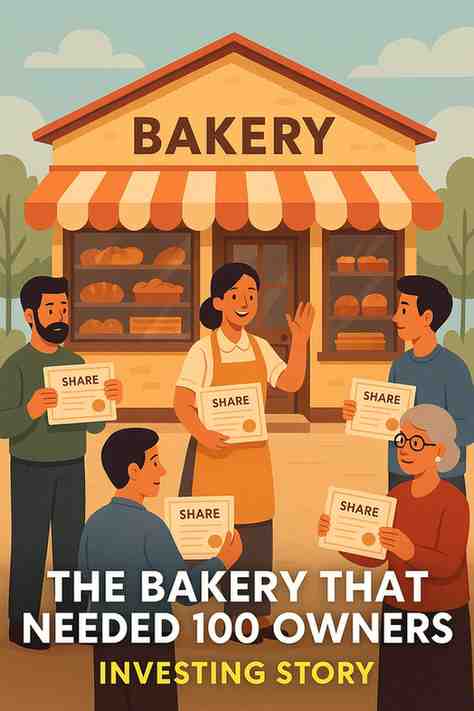
 The village of Sundarvan was famous for many things—its warm sunsets, friendly streets, and a fragrance of freshly baked bread that floated across the marketplace every morning. That fragrance came from Mira’s Bakery, a small shop painted in soft yellow with a red roof that made it look cheerful even on cloudy days.
Mira was not just a baker—she was an artist. Her breads were soft, her cakes were fluffy, and her smile sweeter than anything she sold. People lined up outside her shop before sunrise, hoping to get a share of her latest creations.
But Mira had a problem.
Despite the huge demand, she still produced everything using one small oven and two part-time helpers. Some customers walked away disappointed because she ran out of items too quickly. Others complained that they had to wait too long.
Mira knew she needed to expand. She dreamt of a bigger shop with multiple ovens, a proper delivery system, and a small café where people could sit and enjoy her creations. But dreams needed money—a lot more than she had.
One evening, she sat alone in her shop, staring at her little register. The numbers were clear. The bakery made good profit, but not enough to fund her big expansion. She sighed and closed the book.
Just then, an elderly man stepped into the shop. Dressed in a simple robe and carrying a walking stick, he looked peaceful, almost like a wandering sage.
It was the Market Monk.
“Long day, Mira?” he asked gently.
“Very long,” she replied. “I want to grow this bakery, but I don’t have the money. I don’t want a loan because the interest will become a burden. I don’t know what to do.”
The Monk smiled. “Then perhaps you should find new owners.”
Mira blinked. “Owners? You mean… sell the bakery?”
“No,” the Monk said. “Share the bakery.”
He took a seat and continued, “What if your bakery had 100 owners instead of one? Not partners who interfere, but people who support your dream in exchange for a tiny share of your business.”
Mira frowned. “Would people even want to own a small bakery?”
“People love businesses with a future,” the Monk replied. “They line up every morning for your bread. They believe in you. If you explain your vision, many might want to be part of it.”
“But how would that work?” she asked.
The Monk leaned forward.
“Let’s imagine your bakery is worth $10,000 today. You want to raise another $10,000 to expand. You can divide your bakery into 100 pieces—shares. Each share is priced fairly, and people who believe in your bakery buy them. You get the funds to expand. They get a small piece of the business.”
Mira’s eyes widened. “So shareholders help me grow, and in return they share the benefits?”
“Exactly,” the Monk said. “If your bakery becomes bigger and more successful, their shares become more valuable. They are not just customers—they are investors.”
Mira sat silently. The idea felt both strange and exciting.
“But managing 100 owners?” she asked nervously.
The Monk chuckled. “They won’t run your bakery. They simply support your growth. You remain the leader. Your new owners simply watch your progress, hoping the business grows over time.”
Mira breathed deeply. “This is like… going public?”
The Monk nodded. “Yes. At a very small scale. This is the story of every great business. They start small. They grow with support. They expand with shared dreams.”
The next morning, Mira stood in front of her shop, holding a large handmade board that read:
“Mira’s Bakery is Growing.
Become an Owner of Our Dream.”
Crowds gathered instantly. People loved her bakery so much that many were excited to hear her plan.
One young man asked, “If I buy a share, what does that mean?”
“It means you own a small part of this bakery,” Mira explained. “As the bakery grows, your share grows in value.”
An elderly woman asked, “But what if the bakery slows down someday?”
Mira nodded respectfully. “Then your share might not grow as much. That is the risk every investor takes. But I promise I will give my best to make this bakery bigger and better.”
People appreciated her honesty.
Within a week, all 100 shares were sold. Each shareholder received an ownership certificate, and Mira received the money she needed.
She renovated the shop, bought two new ovens, hired skilled workers, and introduced new items. The bakery started operating smoothly—even more customers came than before.
Six months later, the bakery was almost twice its original size.
Shareholders felt proud. They didn’t just eat Mira’s bread—they were part of the journey. Some visited often, not to check profits but to admire how far the bakery had come.
One afternoon, Aryan—the curious investor who had been learning from the Market Monk—visited the bakery. He wanted to see firsthand how investing actually worked.
The Monk stood beside him.
“This,” he said, pointing to the bustling shop, “is why stock markets exist.”
Aryan watched Mira speaking happily to customers. Workers moved efficiently. Fresh bread came out of the ovens like clockwork.
“This bakery is not magic,” the Monk said. “It is a real business. And people who believed in it early now own a part of its success.”
“But what about the share price?” Aryan asked.
The Monk smiled. “If Mira’s bakery grows more in the future, people may want to buy those shares from the existing owners. Then the value goes up. Not because of rumours. Not because of predictions. But because the business truly became better.”
Aryan nodded slowly. It finally made sense.
“So investing is not gambling,” he said. “It is owning a small piece of someone’s dream.”
The Monk placed a gentle hand on his shoulder. “Yes. And the market is simply a place where these dreams are bought and sold.”
Both stood quietly, watching the bakery glow golden in the afternoon sun. Inside, the ovens hummed, the workers smiled, and Mira looked happier than ever.
Sharing her dream had not reduced her ownership.
It had multiplied it.
And that, Aryan realized, is the true spirit of investing.