Why Your Brain Hates Market Crashes

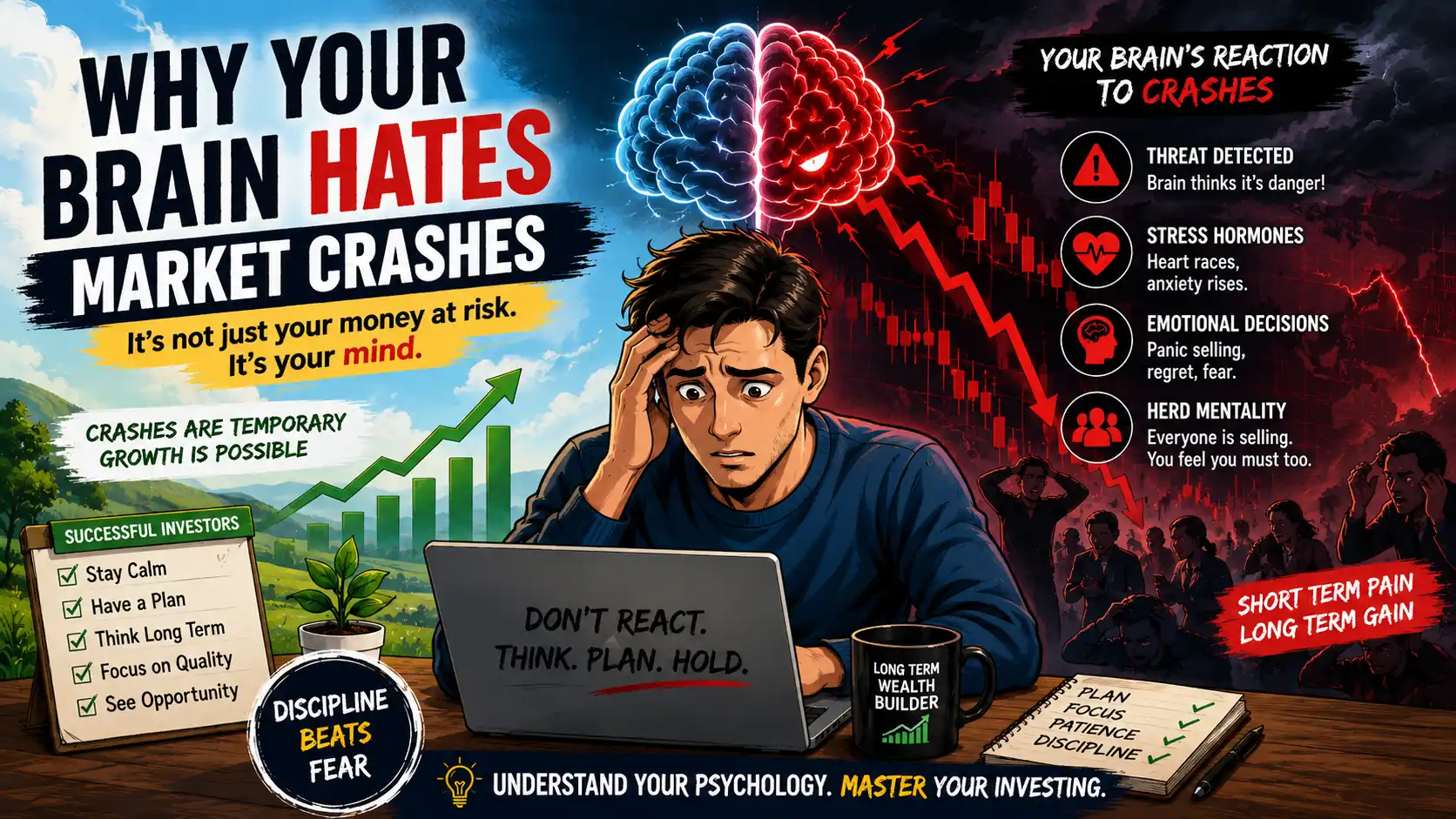
Why Your Brain Hates Market Crashes infographic showing a worried investor, a split brain representing fear and logic, a falling stock market chart, panic psychology, loss aversion, herd mentality, and tips for staying calm during market crashes.

Introduction

Imagine opening your investment app one morning and seeing a sea of red. Every stock in your portfolio is down 10%, 20%, or even 40%. Your heart starts racing. You wonder, “Should I sell everything before it gets even worse?”

If you’ve ever felt this way, you’re not alone.

Market crashes don’t just affect your portfolio—they affect your brain. Our brains evolved to help us survive dangerous situations like predators, famine, and natural disasters. Unfortunately, the same survival system reacts to falling stock prices as if they were life-threatening.

That’s why even experienced investors can panic during market crashes.

Understanding why your brain reacts this way is the first step toward becoming a calmer and more successful investor.

A Short Story

Emma had been investing for three years. She carefully built a portfolio of strong companies and planned to hold them for at least ten years.

Then a sudden market crash hit.

Every news channel screamed, “Markets in Free Fall!” Social media was filled with fear, and everyone around her was talking about selling.

Emma couldn’t sleep. She checked stock prices every few minutes. Finally, she sold almost everything because she couldn’t handle the stress.

Six months later, the market recovered, and many of her former investments reached new highs.

Emma didn’t lose because she picked bad companies.

She lost because fear took control of her decisions.

Why Does the Brain React Like This?

Your brain is designed to protect you from danger.

When you see your investments losing value, your brain interprets the losses as a threat. It activates the body’s fight-or-flight response, releasing stress hormones that make calm decision-making much harder.

This reaction was useful thousands of years ago when escaping danger quickly increased the chances of survival.

In the stock market, however, reacting emotionally often leads to poor decisions.

The Psychology Behind It: Loss Aversion

One of the strongest concepts in behavioural finance is Loss Aversion.

Research shows that people usually feel the pain of losing money much more intensely than the happiness of making the same amount.

For example:

  • Gaining $1,000 feels good.
  • Losing $1,000 feels far more painful.

Because losses hurt more than gains feel rewarding, investors often panic during market declines.

Why Market Crashes Feel Worse Than They Really Are

Several psychological factors make crashes feel even more frightening:

  • News channels focus on dramatic headlines.
  • Social media spreads fear rapidly.
  • Seeing others sell creates herd behaviour.
  • Watching your portfolio every few minutes increases stress.
  • Your brain assumes today’s decline will continue forever.

Together, these factors can make temporary declines feel like permanent disasters.

What Successful Investors Do Differently

Successful long-term investors understand that market crashes are a normal part of investing.

Instead of reacting emotionally, they:

  • Review their original investment plan.
  • Focus on business fundamentals rather than daily prices.
  • Avoid checking portfolios constantly.
  • Maintain diversification.
  • Keep cash available for future opportunities.
  • Think in years instead of days.

They recognise that every major bull market has followed periods of fear and uncertainty.

How to Stay Calm During a Crash

Here are practical ways to manage your emotions:

  1. Remember why you invested in the first place.
  2. Avoid making decisions on the worst market days.
  3. Reduce exposure to sensational financial news.
  4. Check your portfolio less frequently.
  5. Continue investing regularly if your financial situation allows.
  6. Keep a long-term perspective.

Small habits like these can make a big difference during periods of market volatility.

Key Takeaways

  • Your brain treats financial losses like real danger.
  • Fear during market crashes is a normal human reaction.
  • Loss aversion makes losses feel more painful than gains feel rewarding.
  • Emotional decisions often lead to selling at the wrong time.
  • Long-term investing requires discipline, not perfect predictions.
  • Understanding your psychology is just as important as understanding financial statements.

Did You Know?

Some of the world’s biggest investment opportunities appeared during periods of extreme market fear. Investors who stayed disciplined through past crashes were often rewarded when markets eventually recovered.

Quote of the Day

“Be fearful when others are greedy, and greedy when others are fearful.” — Warren Buffett

Final Thoughts

Market crashes are uncomfortable, but they are also a natural part of investing. Your brain will always try to protect you by encouraging quick action. The challenge is learning when not to act.

The investors who build lasting wealth aren’t the ones who never feel fear—they’re the ones who understand it, manage it, and continue following a disciplined plan even when the market feels uncertain.

Scroll to Top