
Episode 43 – The Panic Button

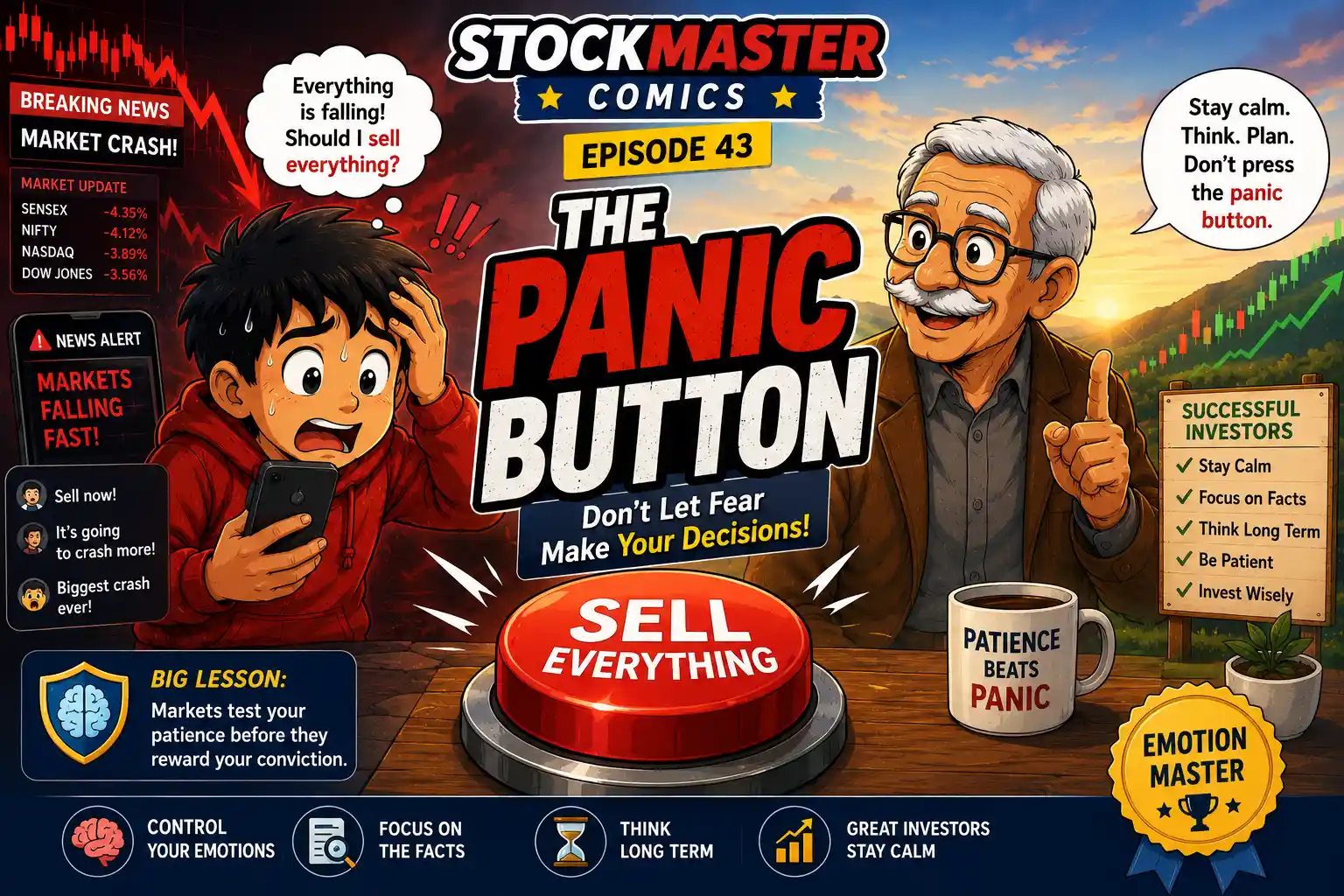
StockMaster Comics Episode 43 The Panic Button showing Sam panicking during a stock market crash while Grandpa Ben teaches him to stay calm and avoid panic selling.

Introduction

The stock market can sometimes feel like a giant roller coaster. One day prices are climbing, and everyone is excited. The next day, headlines scream “Market Crash!” and investors begin selling in fear. During these moments, emotions often become stronger than logic.

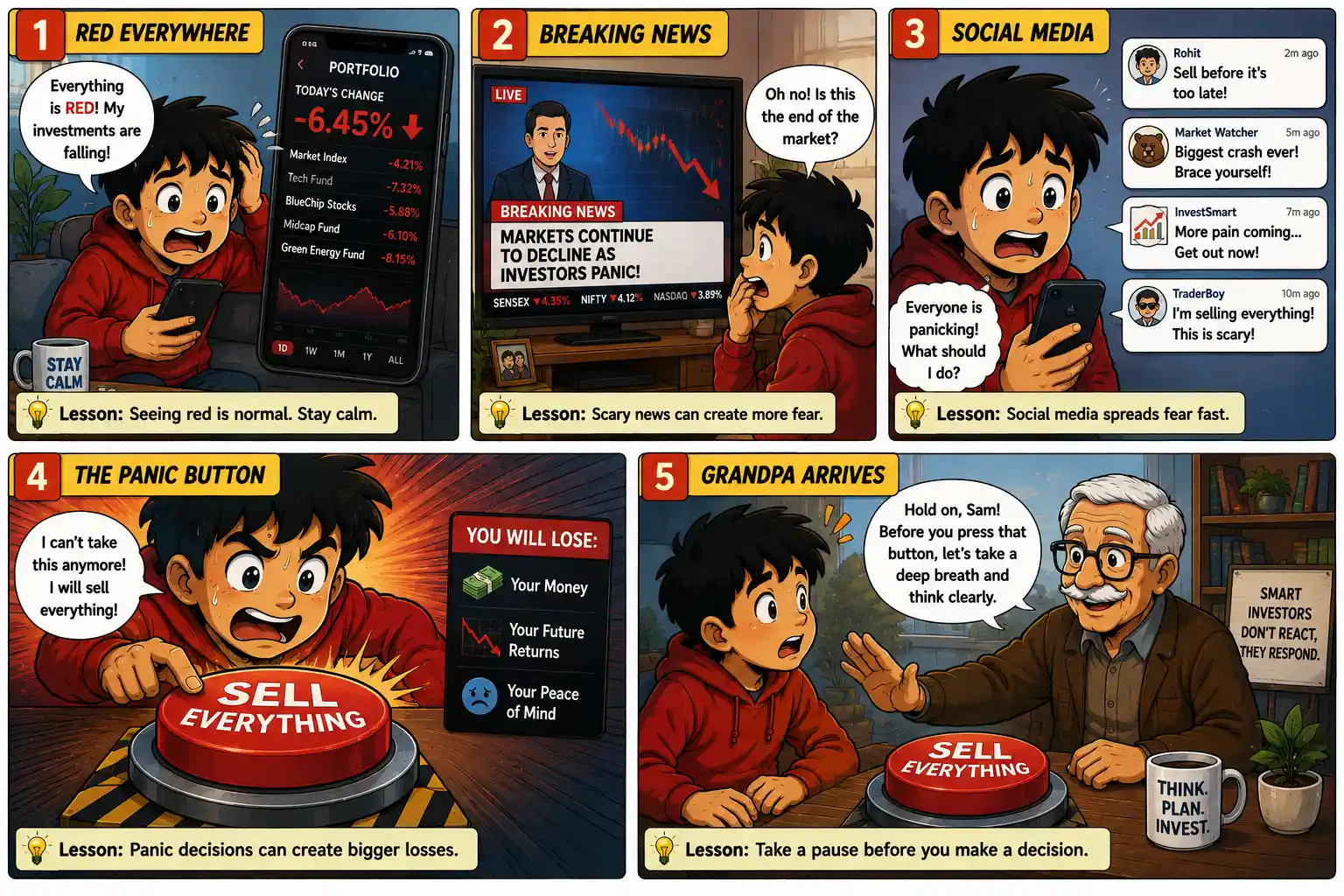
In Episode 43 – The Panic Button, Sam experiences his first big market drop. His phone is filled with alarming news alerts, television experts predict more losses, and social media is flooded with fearful comments. Convinced that everything is going wrong, Sam is ready to press the “panic button” and sell all his investments.

But Grandpa Ben remains calm.

Instead of reacting to the falling prices, he teaches Sam one of the most valuable investing lessons: markets often test your emotions before they reward your patience.

This episode explains why market corrections happen, why panic selling can hurt long-term investors, and how successful investors learn to control their emotions during uncertain times. Through an engaging comic story, readers will discover that fear is a natural part of investing—but making decisions based only on fear can lead to costly mistakes.

By the end of this episode, you’ll understand that the greatest battle in investing is often not against the market—but against your own emotions.

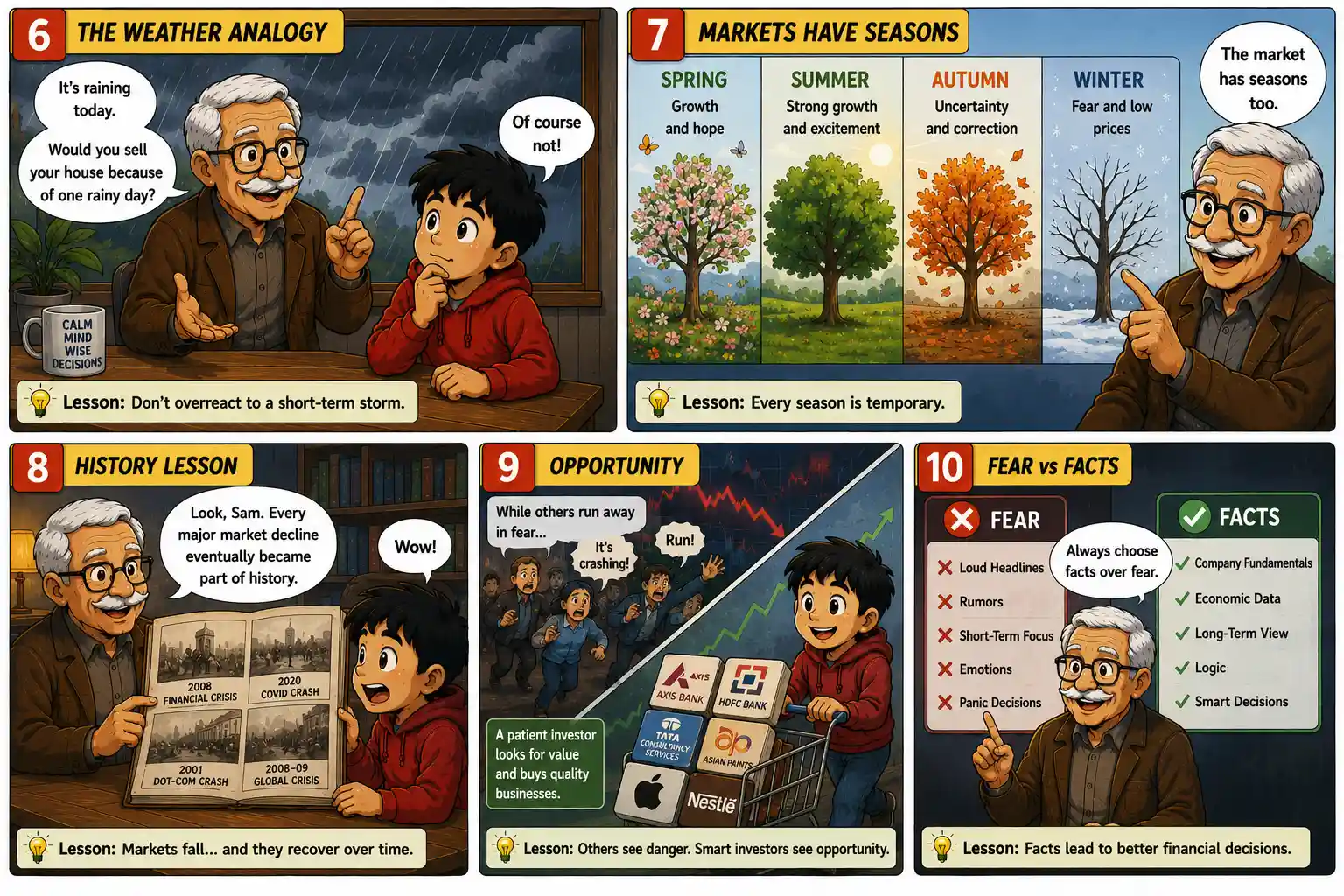
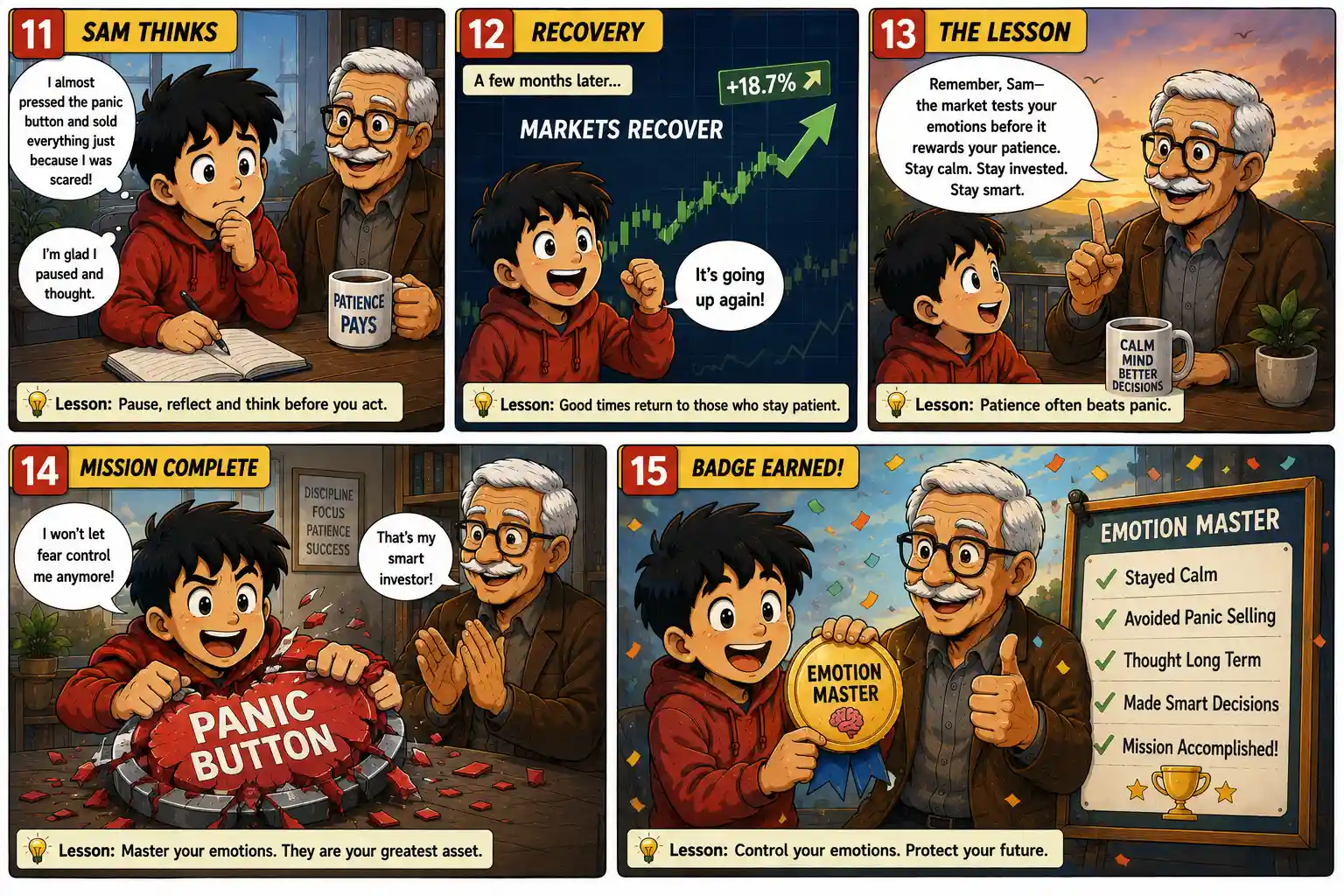
StockMaster Comics Episode 43 panels 1 to 5 showing Sam reacting to falling markets, scary news, social media fear, the panic button, and Grandpa Ben stopping him from making an emotional decision. StockMaster Comics Episode 43 panels 6 to 10 explaining the weather analogy, market cycles, historical recoveries, investment opportunities during fear, and choosing facts over emotions. StockMaster Comics Episode 43 panels 11 to 15 showing Sam learning emotional discipline, market recovery, patience, destroying the panic button, and earning the Emotion Master badge.

Lesson Summary

Why Do Investors Panic?

Market declines are a normal part of investing. Prices can fall because of economic news, company earnings, geopolitical events, or changes in investor expectations. During these periods, many people focus only on short-term losses. Fear spreads quickly through television, news websites, and social media, making investors believe the situation is worse than it may actually be. Panic is a natural human emotion, but reacting emotionally can lead to poor financial decisions. Selling simply because prices are falling may lock in losses and prevent investors from benefiting if markets recover later.

Why Staying Calm Matters

Successful investors understand that markets move in cycles. History shows that markets have experienced many corrections and bear markets, yet over long periods many broad markets have recovered and continued growing. This doesn't mean every investment will succeed, but it highlights the importance of making thoughtful decisions instead of emotional ones. Before buying or selling, ask yourself: Has the company's long-term business changed? Am I reacting to facts or emotions? Would I make the same decision if today's headlines didn't exist? Thinking calmly often leads to better decisions.

Control Your Emotions, Not the Market

No one can control daily market movements, but every investor can control how they respond. Having a long-term plan, staying diversified, and reviewing investments thoughtfully can help reduce emotional decision-making. The goal isn't to ignore risks—it's to understand them and respond wisely. Great investors don't eliminate fear; they learn not to let fear make every decision. Remember Grandpa Ben's advice: "Never let today's panic decide your tomorrow."

Key Takeaways

  • Market corrections are normal.
  • Fear spreads faster than facts.
  • Emotional investing often leads to mistakes.
  • Think before buying or selling.
  • Long-term plans should not change because of one bad day.
  • Patience is one of an investor’s greatest strengths.

Vocabulary

Market Correction – A decline in stock prices, often considered a normal part of market cycles.

Bear Market – A period when stock prices fall significantly and investor confidence weakens.

Volatility – The amount and speed of price movements in the market.

Panic Selling – Selling investments because of fear rather than careful analysis.

Long-Term Investor – Someone who invests with a time horizon of many years.

Smart Investor Tip

💡 When markets are noisy, slow down instead of speeding up. Give yourself time to understand what’s happening before making investment decisions. A calm mind usually makes better decisions than a fearful one.

Next Episode Preview

Episode 44 – Everyone Is Buying!

Sam notices that everyone around him is talking about the same “hot” stock. His friends, neighbors, social media influencers, and even the taxi driver insist it’s a guaranteed way to make money. Excited and afraid of missing out, Sam wonders if he should buy it immediately. Join Grandpa Ben as he explains herd mentality, the fear of missing out (FOMO), and why successful investors think independently instead of blindly following the crowd.

Coming next: Episode 44 – Everyone Is Buying!

Scroll to Top