Introduction
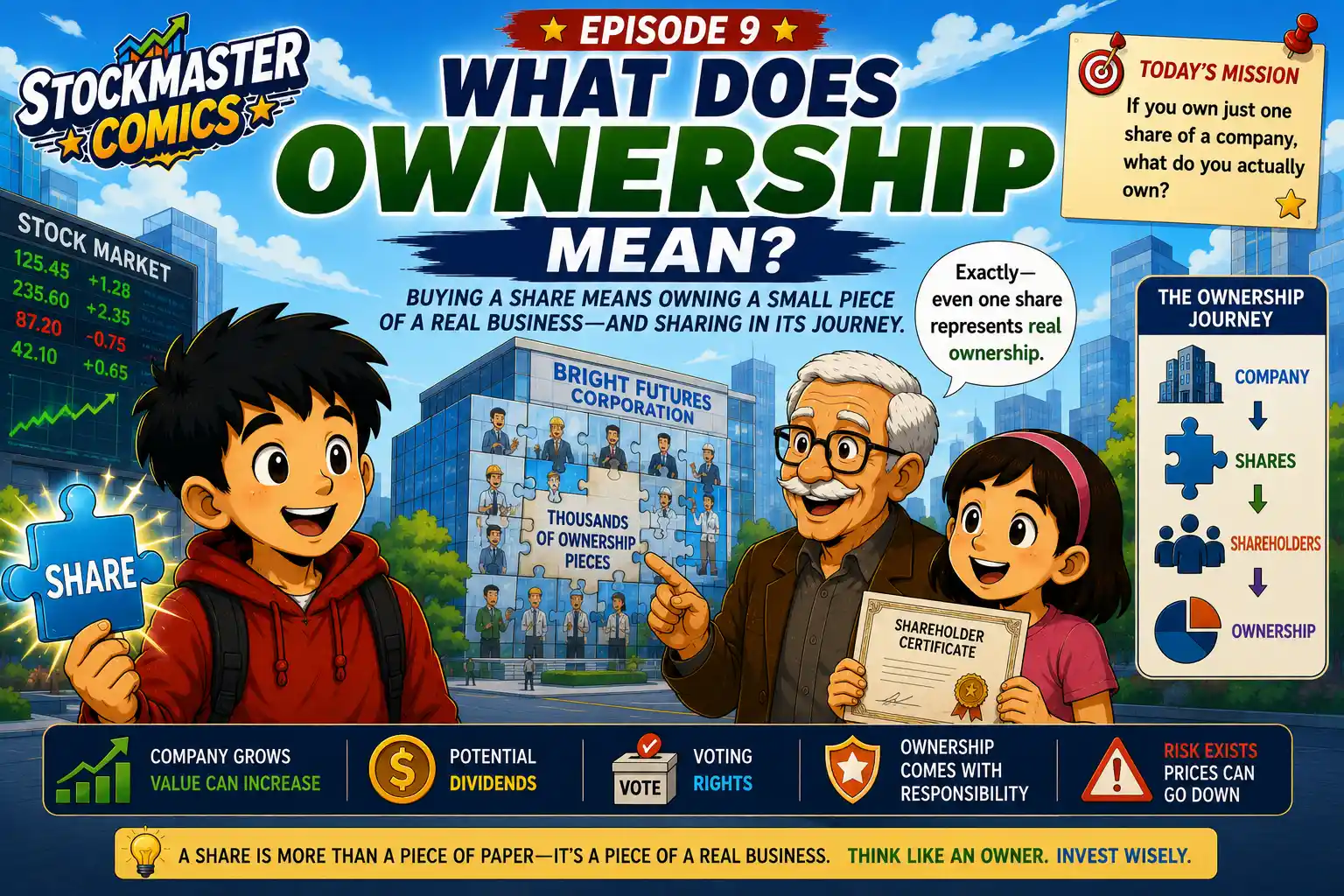
In the previous episodes, Sam discovered the stock market and learned how people can buy shares of publicly traded companies. But buying a share raises an important question: What does ownership really mean?
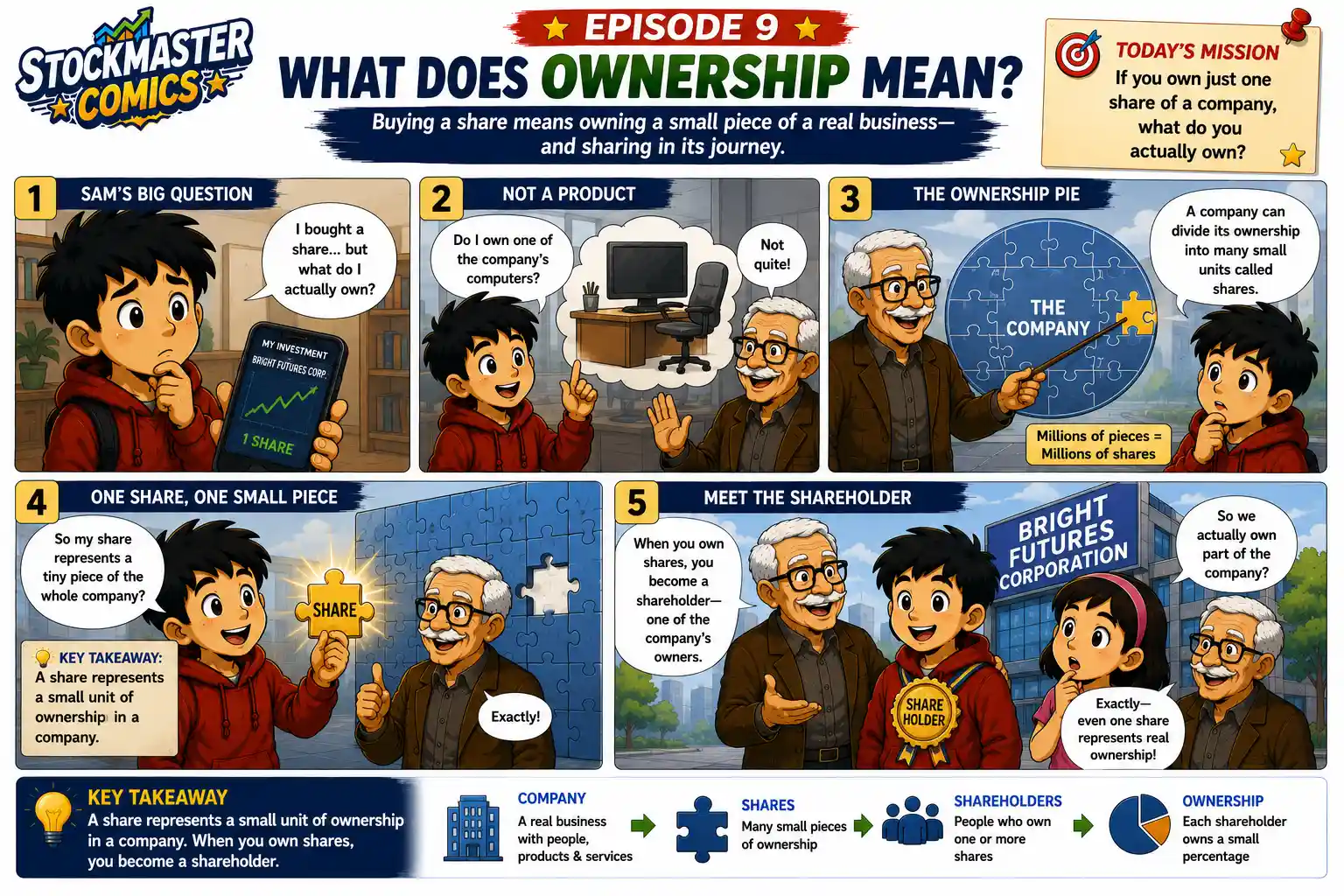
Imagine a huge company with thousands of employees, factories, offices, products, customers, and valuable ideas. You probably cannot buy the entire company. However, a publicly traded company can divide its ownership into millions—or even billions—of smaller units called shares.
When you buy one of those shares, you become a shareholder. That means you own a very small percentage of the company.
But owning shares does not mean you can walk into the company’s office and take home a computer, chair, or delivery truck. Your ownership is financial. Your investment represents a claim on a portion of the company and its future economic success.
If the business grows, becomes more profitable, and investors believe its future is bright, the value of its shares may rise. Some companies may also share part of their profits with shareholders through dividends. However, ownership also involves risk. If the business struggles, the share price may fall.
Shareholders may also receive certain rights. Depending on the type of shares they own, they may be able to vote on important company matters, such as electing members of the board of directors.
In this episode, Sam and Maya will discover that buying a share is more than watching a number move on a screen. Behind every stock is a real business, and behind every share is a small piece of ownership.