Introduction
In the previous episodes, Sam learned that buying a share means becoming a small owner of a real business. But this created an even bigger question in his mind: How does a business itself become valuable?
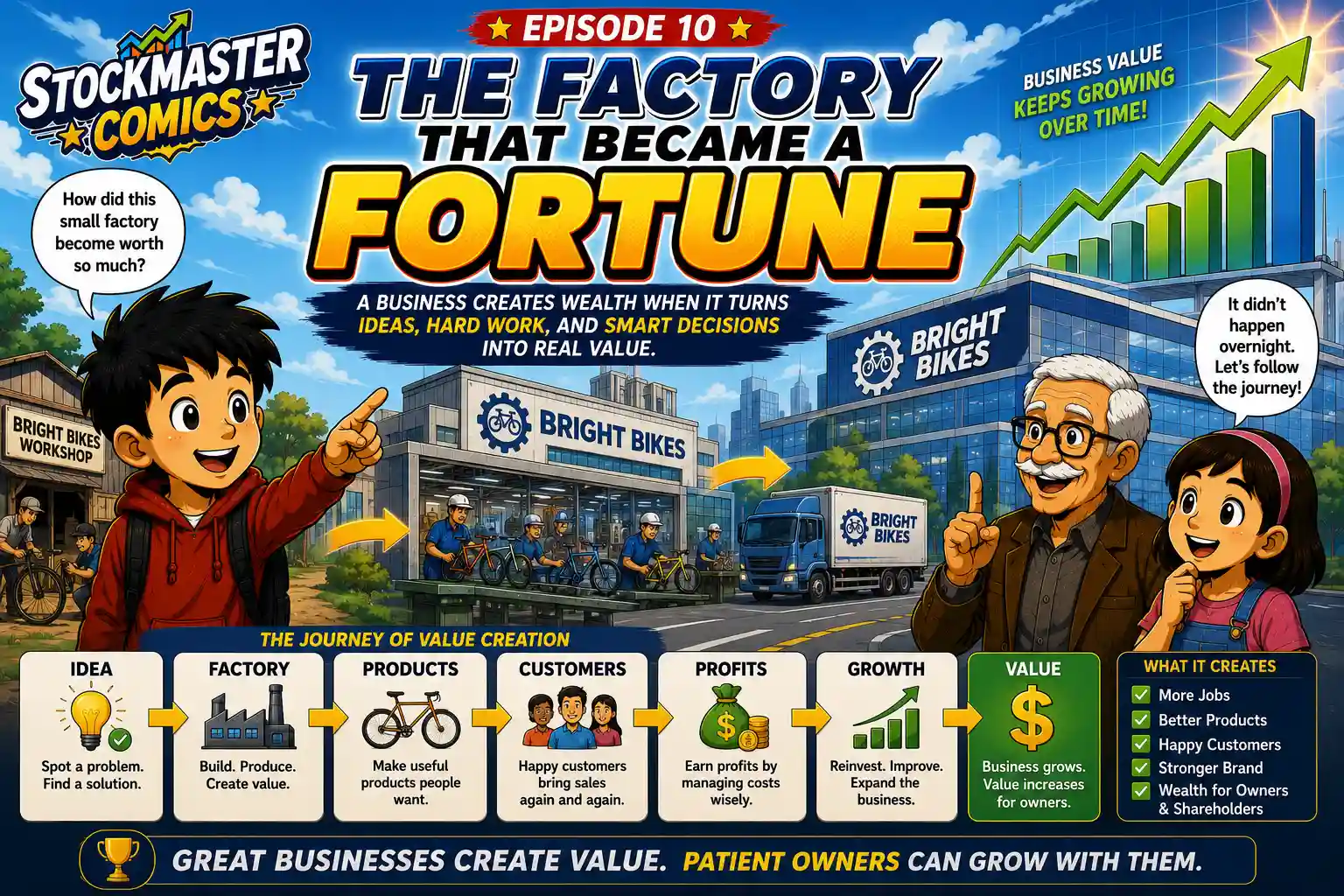
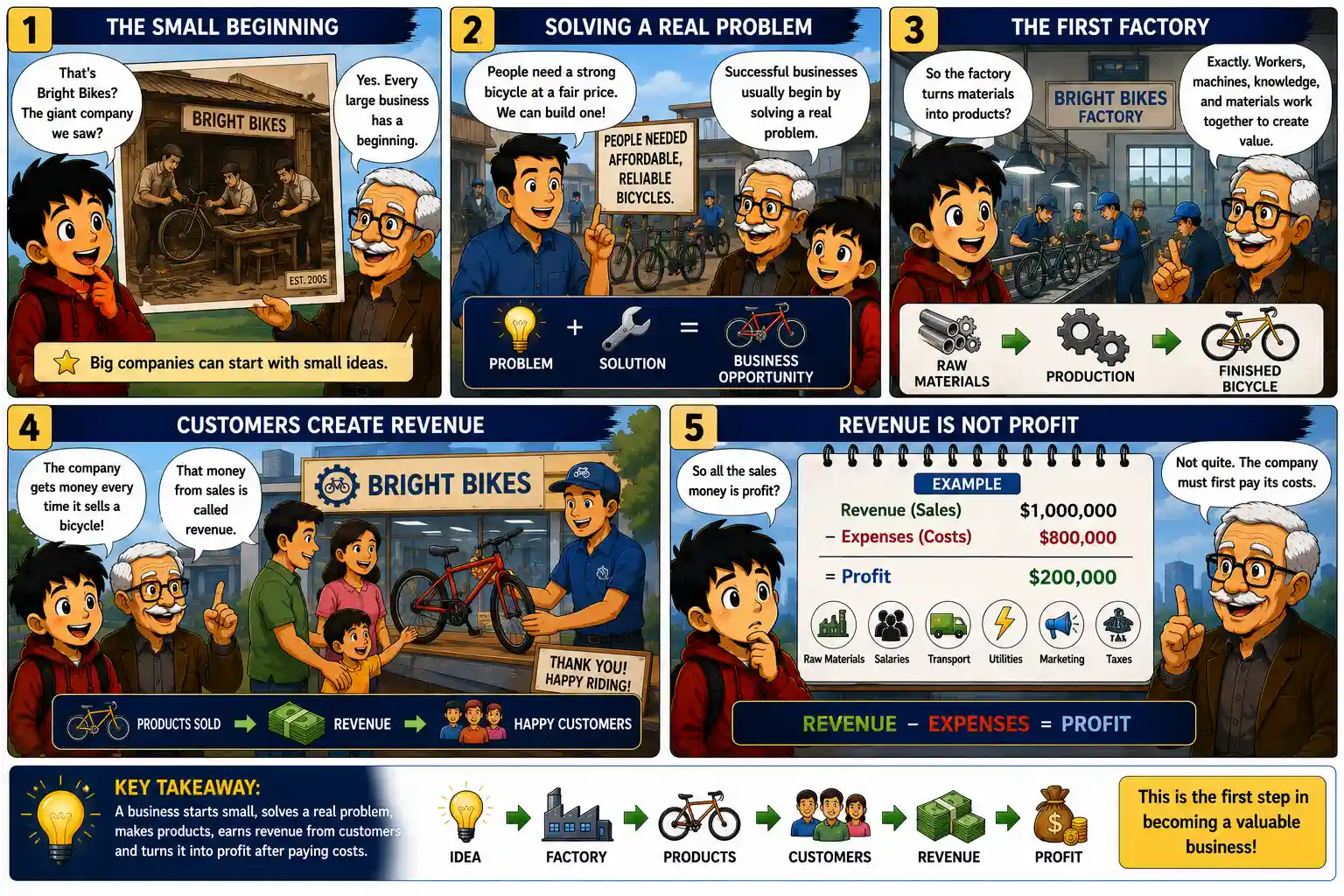
One morning, Grandpa takes Sam and his sister to visit Bright Bikes, a fictional bicycle company that started many years ago as a tiny workshop. In the beginning, the company had only a few workers, some basic machines, and one simple goal: make useful bicycles that customers wanted to buy.
Over time, something remarkable happened.
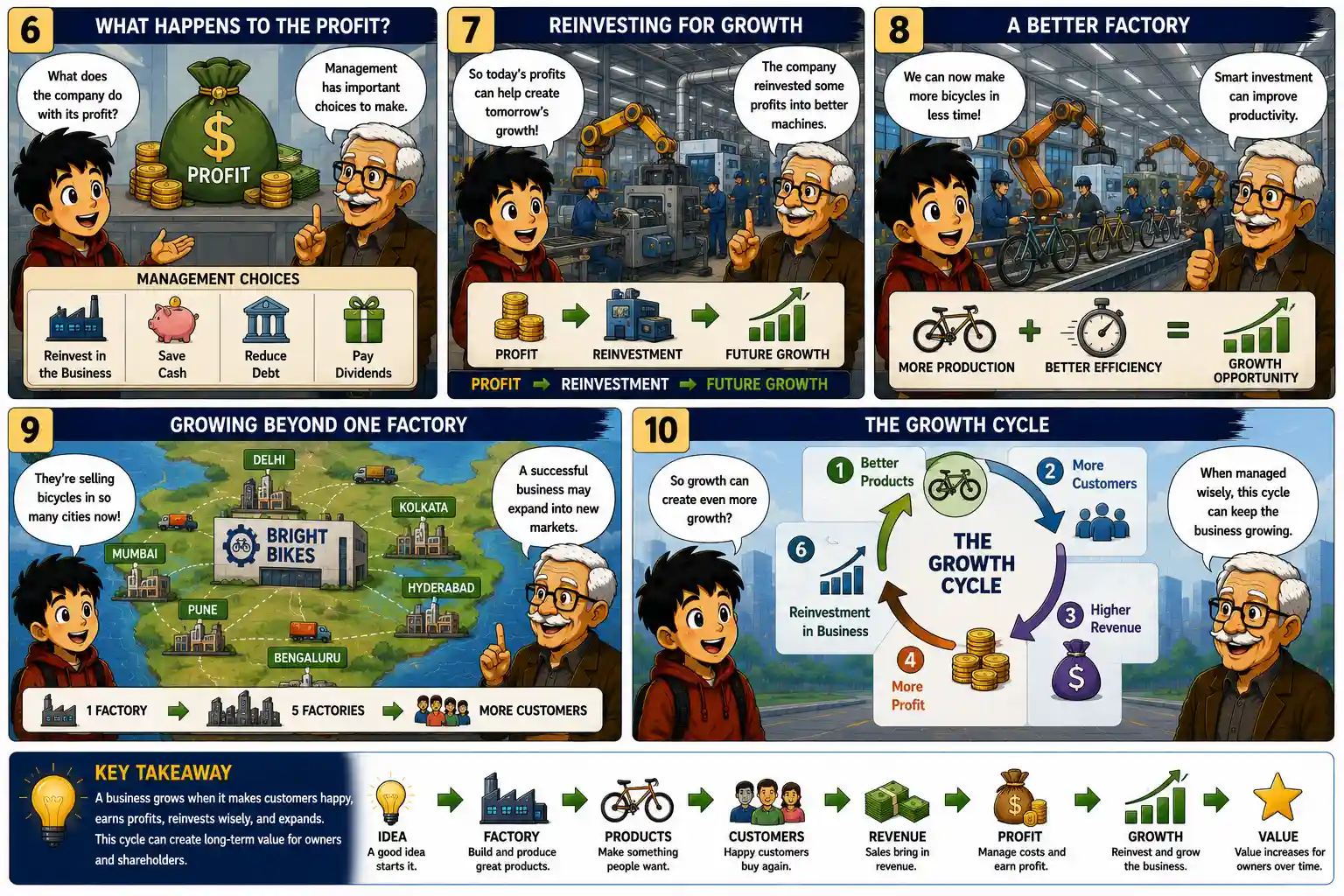
More customers began buying the bicycles. The factory hired more workers, purchased better machines, developed new products, and opened stores in new cities. As sales increased, the business started earning profits. Instead of spending all those profits immediately, the owners reinvested some of the money back into the company.
The factory grew.
But Sam soon discovers that a company does not become valuable simply because it owns a big building or expensive machines. A successful business must create something people actually want. It must manage its costs, satisfy customers, compete with other companies, and make smart decisions about its future.
When a company consistently sells useful products, earns profits, and finds new opportunities to grow, investors may become willing to pay more to own a piece of that business.
That is where the connection between a factory and a fortune begins.
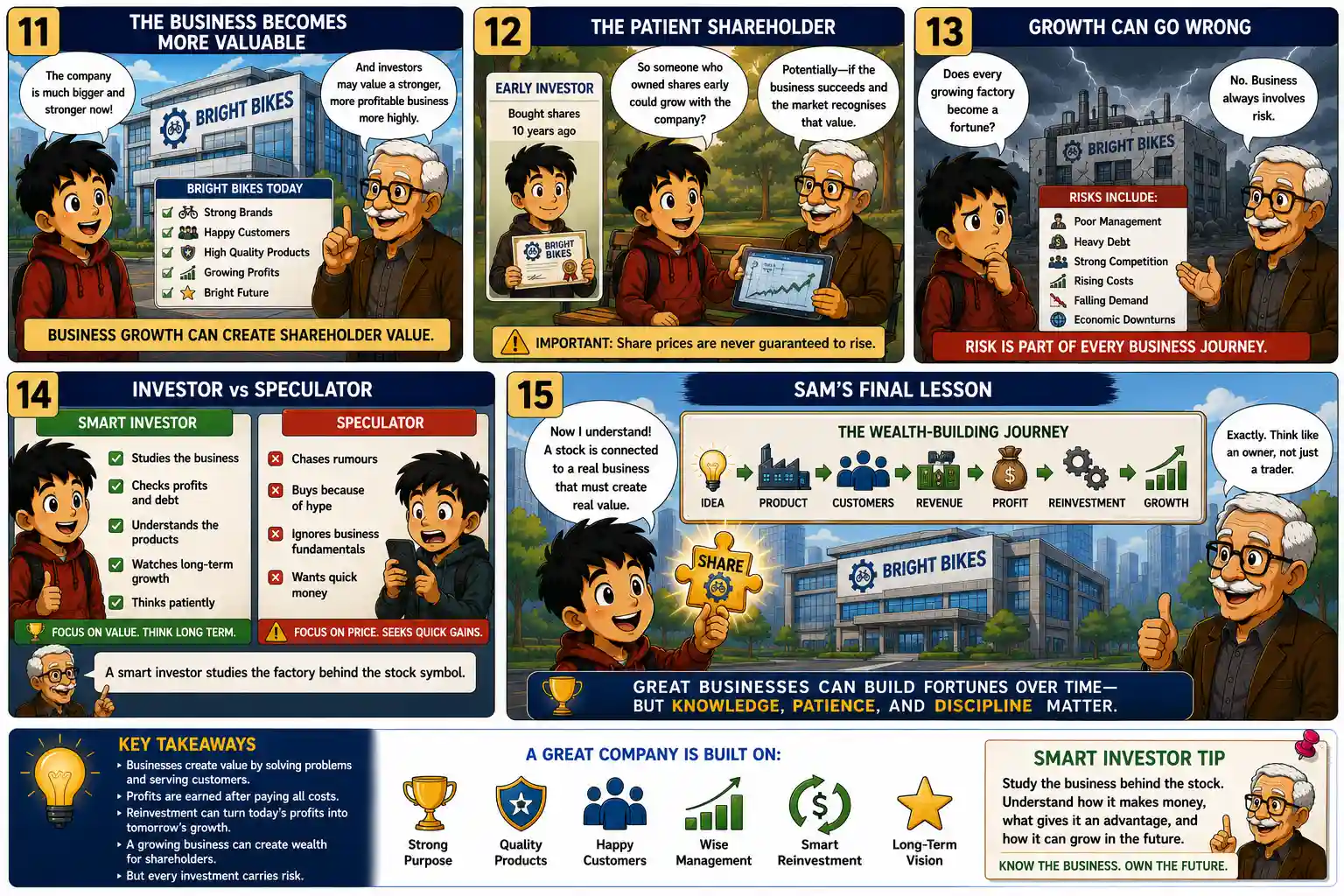
In Episode 10, Sam follows the journey of Bright Bikes from a small workshop to a growing company. He learns how revenue becomes profit, how reinvestment can create future growth, and why patient shareholders may benefit when the underlying business becomes stronger.
But there is an important lesson too: growth is never guaranteed. Factories can face competition, rising costs, changing customer preferences, poor management, and economic downturns.
The real secret is not simply finding a company with a big factory.
It is learning to understand how the business creates value.