
Episode 4 – Where Do Banks Keep Your Money?

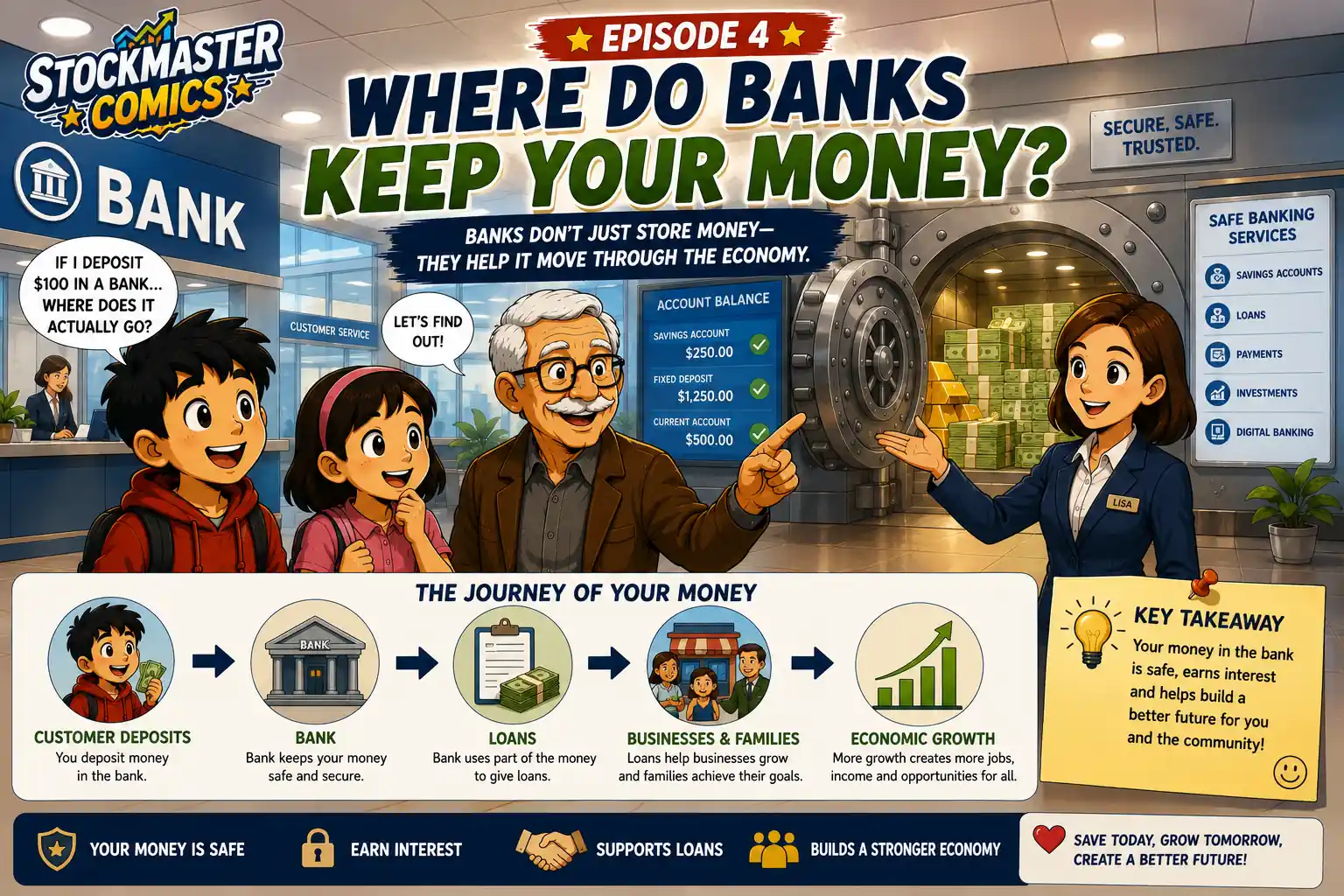
StockMaster Comics Episode 4 hero image showing Sam and Maya visiting a bank where Grandpa Ben and Bank Manager Lisa explain how banks safely store deposits, provide loans, and support economic growth.

Introduction

After learning how to save money, Sam proudly deposits his savings into a bank account. As he leaves the bank, a question pops into his mind.

“Does my money just sit inside a giant vault forever?”

Grandpa Ben smiles and arranges a visit to the local bank. There, Bank Manager Lisa gives Sam and Maya a behind-the-scenes tour. They discover that banks are much more than secure buildings filled with cash. Banks protect deposits, process payments, help families buy homes, support businesses with loans, and keep the economy moving.

In this episode, you’ll learn what happens after you deposit money, why banks pay interest, how loans work, and why banks are an important part of everyday life.

By the end of this adventure, you’ll understand that your savings can play a role in helping communities grow while remaining safely recorded in your account.

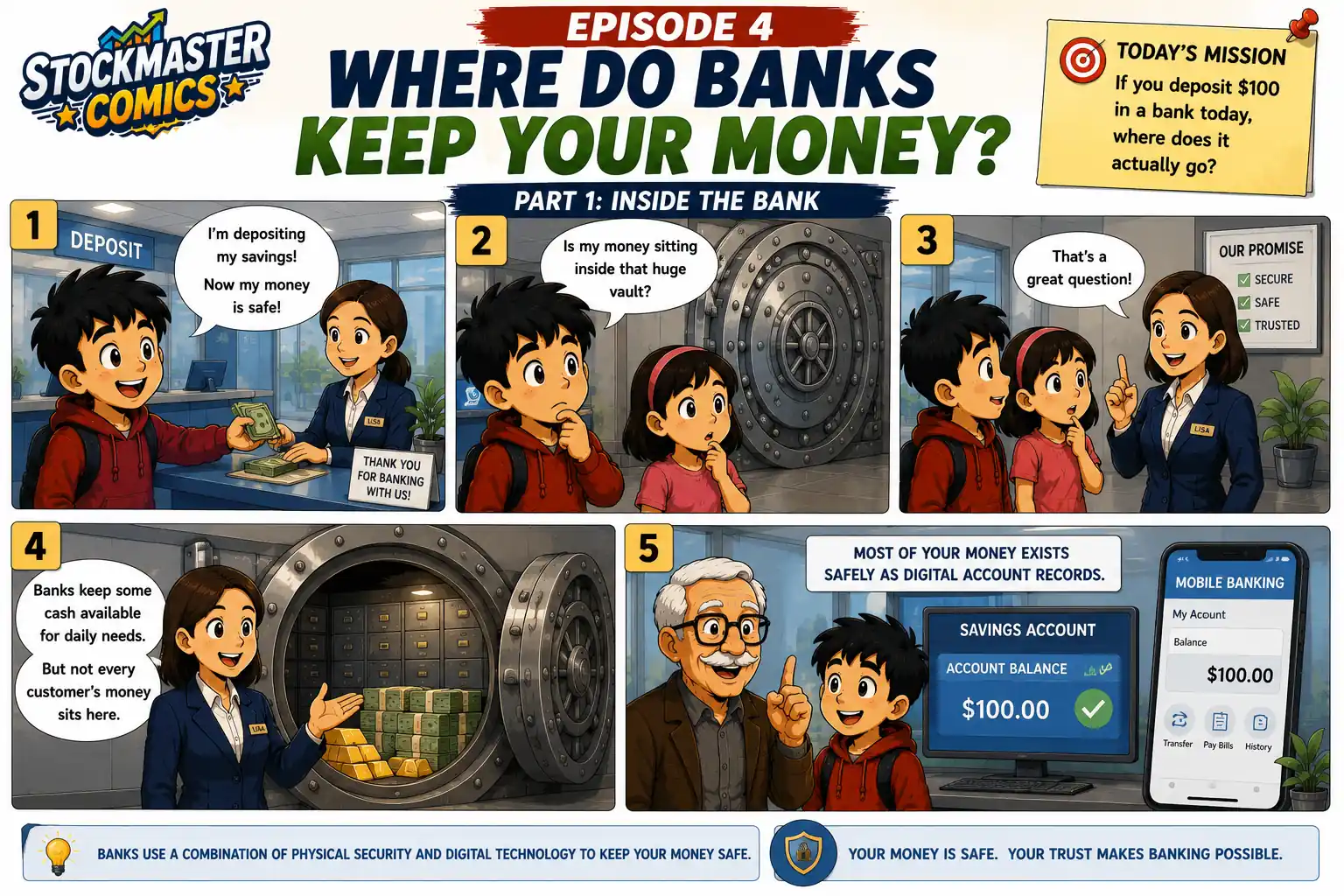
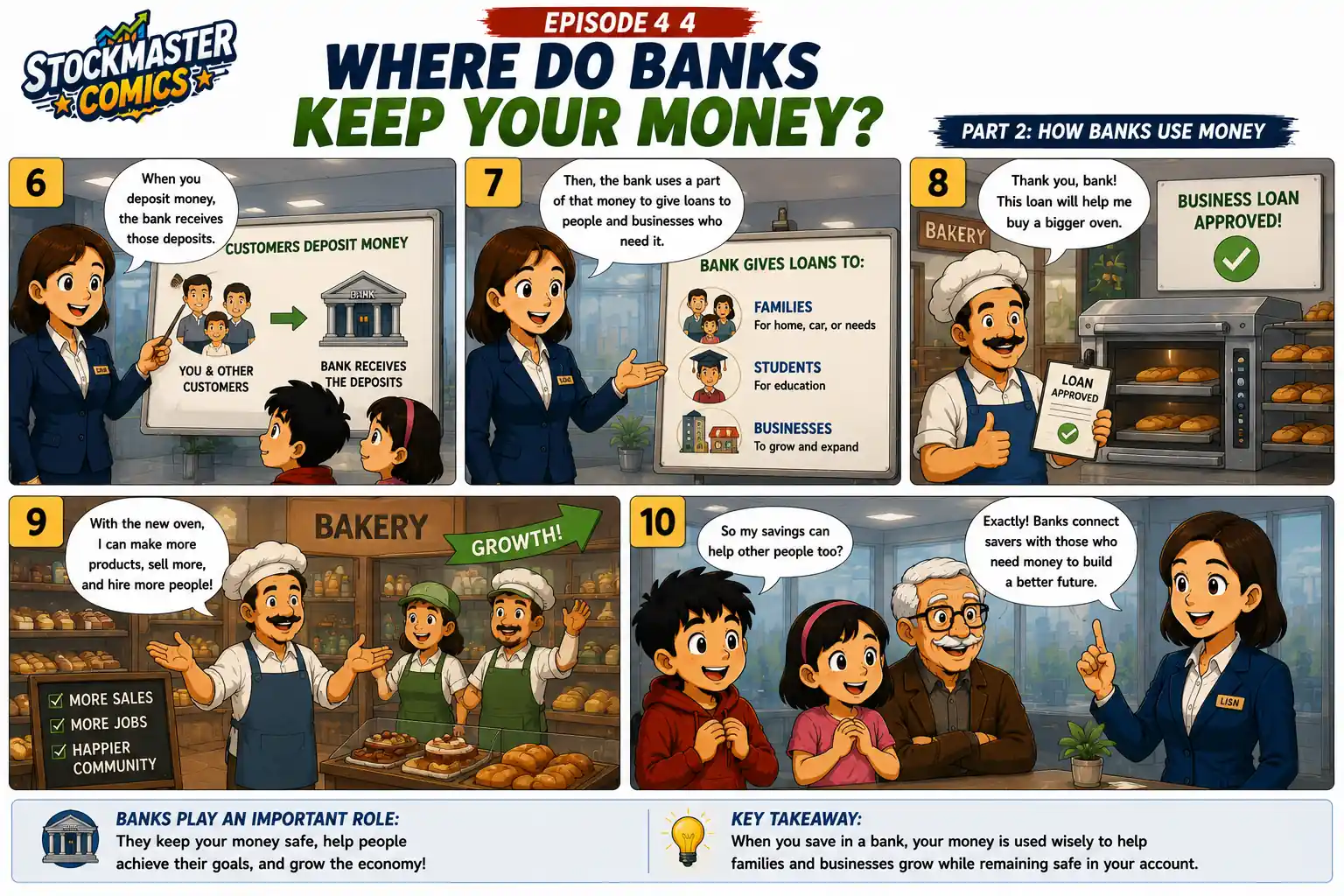
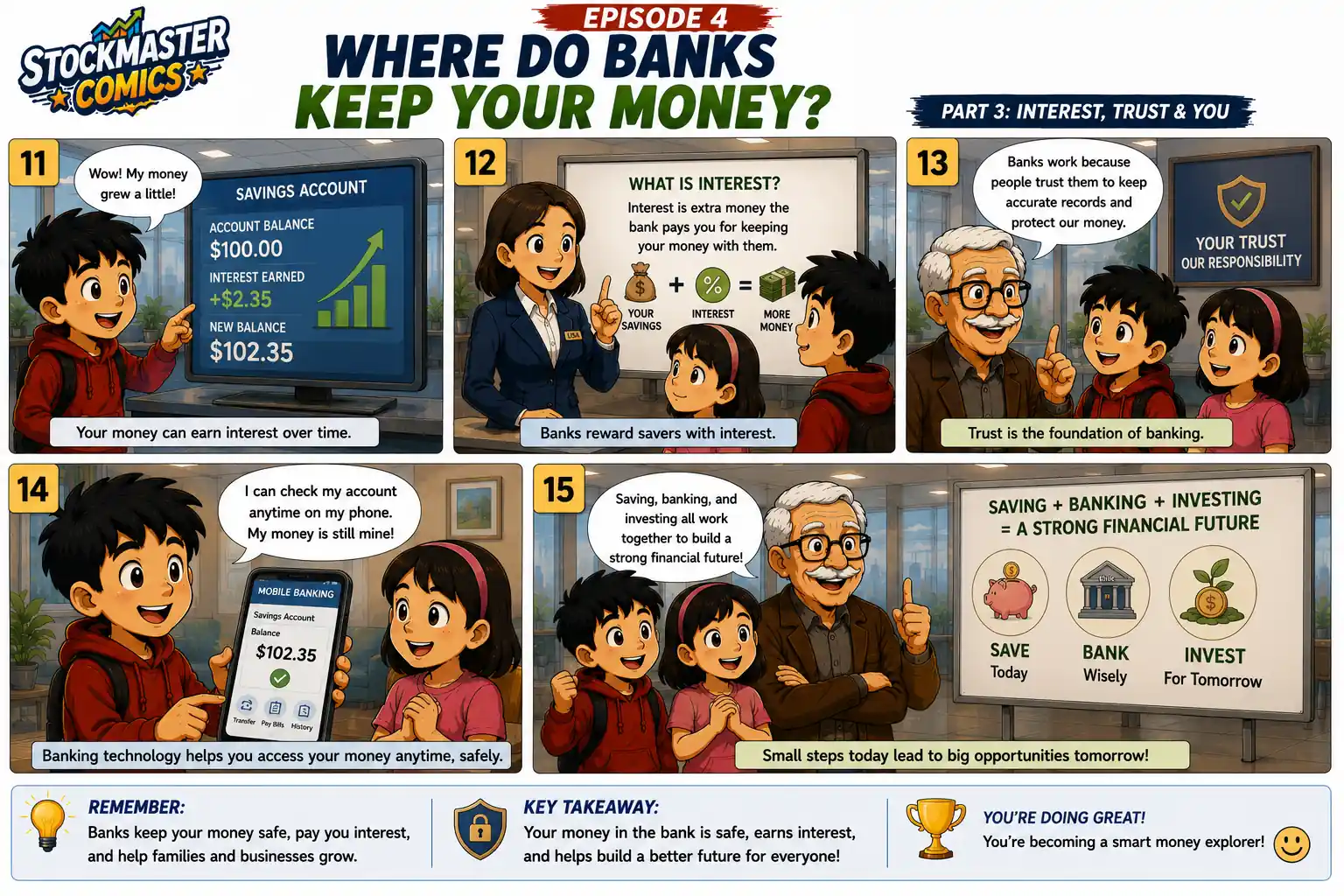
StockMaster Comics Episode 4 comic panels 1–5 showing Sam depositing money into a bank, exploring the bank vault, and learning that most money is securely stored as digital account records. StockMaster Comics Episode 4 comic panels 6–10 explaining how banks use customer deposits to provide loans to families and businesses, helping communities and the economy grow. StockMaster Comics Episode 4 comic panels 11–15 explaining bank interest, trust, digital banking, and how saving, banking, and investing work together to build a strong financial future.

Lesson Summary

What Is a Bank?

A bank is a financial institution that helps people keep their money safe, save for the future, borrow money, make payments, and manage their finances. While many people think of banks as buildings with large vaults full of cash, modern banks do much more than simply store money. They are an important part of everyday life and play a major role in helping the economy grow. When you open a bank account, your money is recorded securely in the bank's computer systems. You can access your money whenever you need it using cash withdrawals, debit cards, mobile banking, online banking, or digital payment apps.

What Happens When You Deposit Money?

When you deposit money into your bank account, the bank records the amount as part of your account balance. While banks keep enough physical cash available for customers who need it, most of the money is managed electronically through secure digital records. This means your money doesn't simply sit inside a vault waiting for you to return. Instead, the bank safely manages deposits while ensuring that you can access your funds whenever needed. Every transaction is carefully recorded so your balance always belongs to you.

What Is Interest?

Interest is money that is earned or paid based on the use of money. When you keep money in certain savings accounts, the bank may pay you interest as a reward for saving. This allows your savings to grow gradually over time. On the other hand, when someone borrows money from a bank, they usually repay the loan along with interest. This helps banks cover their operating costs and continue providing financial services to customers. Although interest rates vary depending on the type of account or loan, the basic idea is simple: saving can help your money grow, while borrowing comes with the responsibility of repaying the money plus interest.

Key Takeaways

    • Banks keep your money secure.
    • Most money is recorded digitally.
    • Banks help people save and borrow.
    • Loans help businesses grow.
    • Interest rewards saving.
    • Trust is essential to banking.

Vocabulary

  • Bank – A financial institution that keeps money safe and provides financial services.
  • Deposit – Money placed into a bank account.
  • Interest – Money earned on savings or paid on loans.
  • Loan – Money borrowed with an agreement to repay it.
  • Savings Account – A bank account designed to hold money while earning interest.

Smart Investor Tip

A bank account is often the first step toward financial independence. Saving regularly and understanding how banks work builds confidence for future investing.

Next Episode Preview

Episode 5 – What Is Interest and Why Does It Matter?

Sam notices his savings account balance has increased slightly. He asks Grandpa Ben, “Where did this extra money come from?” Together they explore the fascinating world of interest, and discover how time can help money grow.

Coming Next: What Is Interest and Why Does It Matter?

Scroll to Top