Introduction
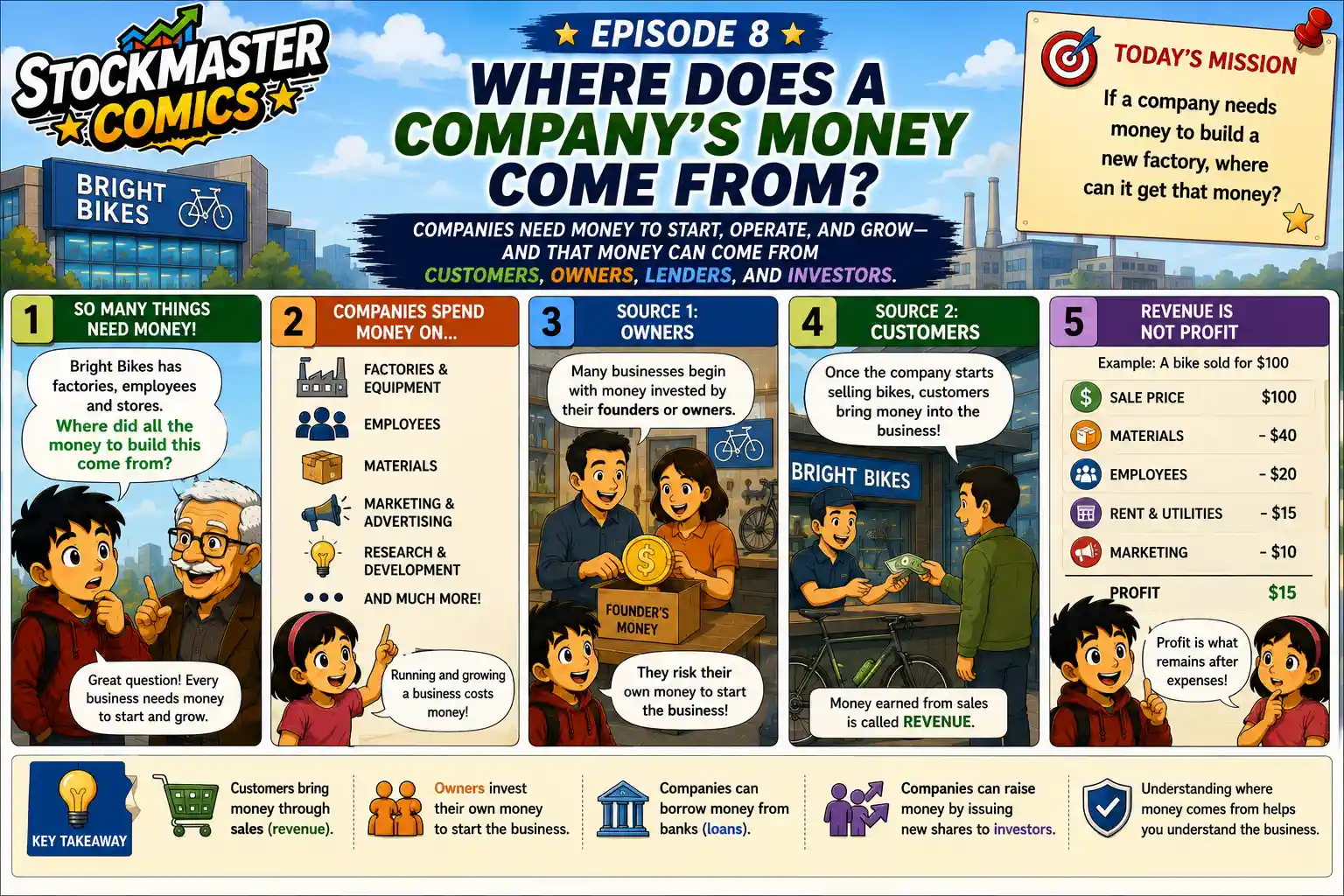
Every company needs money. A small bakery needs money to buy an oven and ingredients. A bicycle company needs money to purchase materials, pay employees, operate factories, advertise products, and develop new ideas. A technology company may need millions—or even billions—of dollars to build products and expand around the world.
But where does all this money come from?
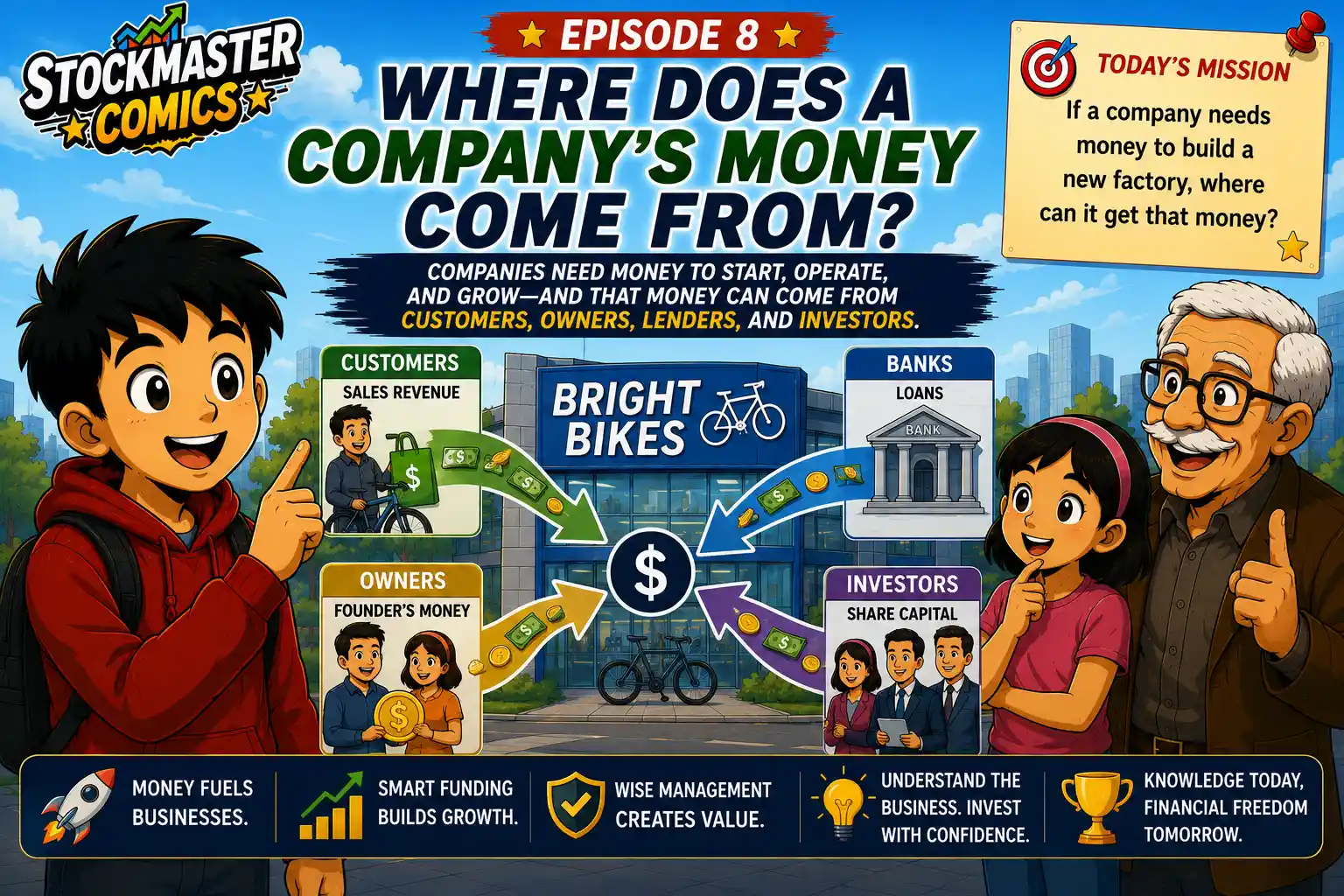
A company can receive money from several sources. When a business first begins, its founders may invest their own savings. As the company starts selling products or services, it earns revenue from customers. A growing business may also borrow money from a bank or other lender. Larger companies can sometimes raise money from investors by selling new shares.
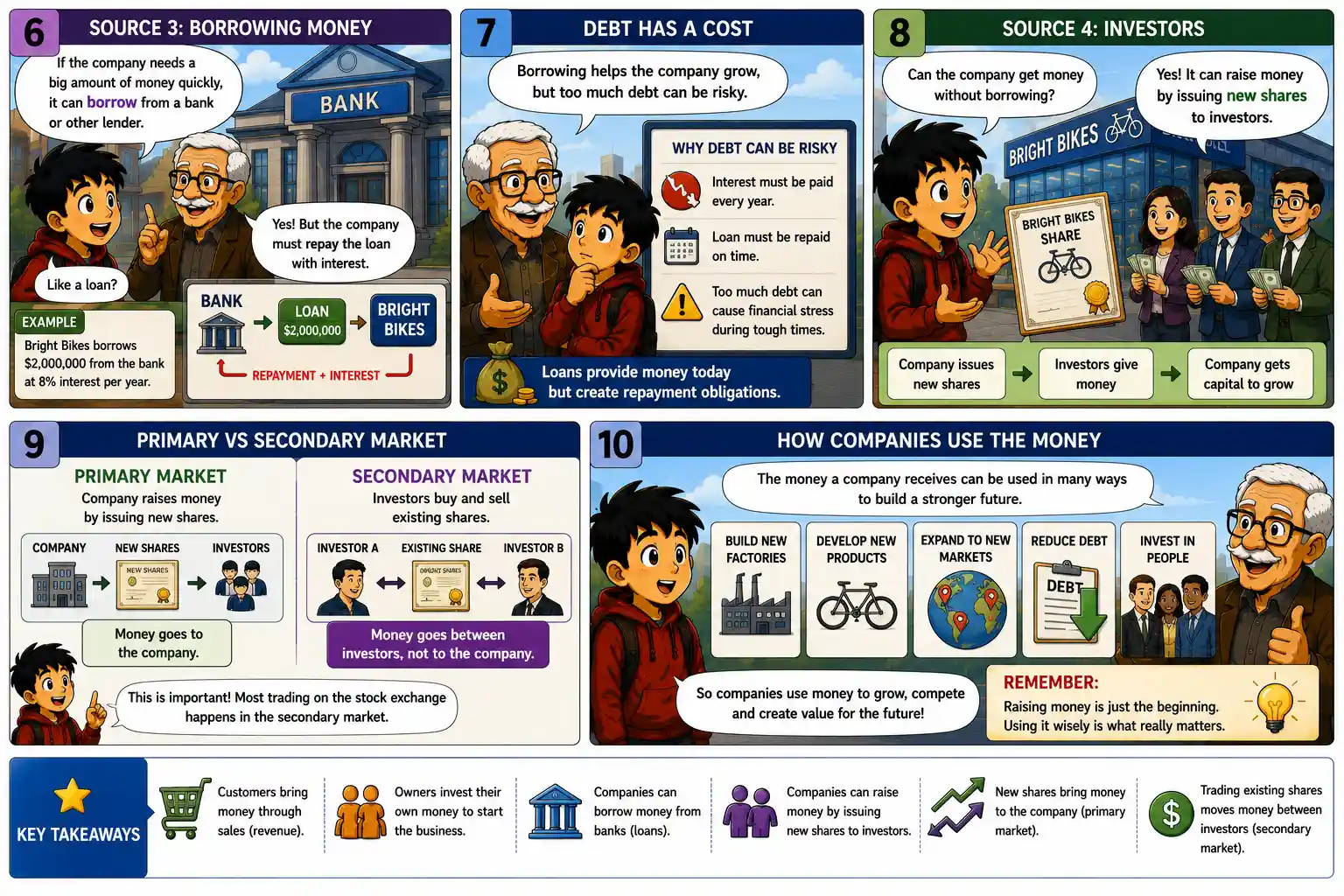
These sources of money are not all the same. Revenue is earned by selling products and services. A loan must usually be repaid with interest. Money raised by issuing shares generally does not have to be repaid like a bank loan, but investors receive an ownership stake in return.
Understanding this difference is an important step in becoming a smart investor.
In this episode, Sam explores the fictional Bright Bikes company to discover how money flows into a business. He learns why companies need funding, how revenue differs from profit, why businesses borrow money, and how selling newly issued shares can help a company raise capital.
There is also an important stock-market lesson: when investors buy and sell existing shares from one another on the stock exchange, that money normally goes between the investors—not directly to the company. A company directly raises equity capital when it issues and sells new shares, such as through an IPO or another share offering.
Follow Sam as he discovers the different ways businesses get the money they need to operate, compete, innovate, and grow.